U.S. intelligence casts doubt on whether bombing can break Iran
A Washington Post assessment finds continued strikes are unlikely to soften Tehran, even as Washington publicly insists escalation is producing results.
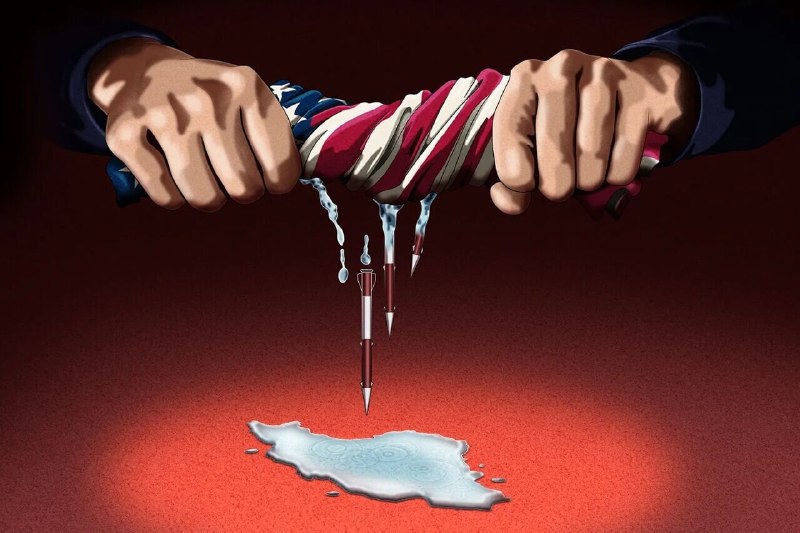
On 20 July 2026, the Washington Post reported that a new U.S. intelligence assessment concludes continued American military strikes are unlikely to significantly weaken Iran's government or force Tehran to soften its negotiating position. The document, described as a fresh review rather than a classified annex to a previous estimate, lands as the United States is publicly brandishing the threat of further escalation. Two days earlier, the same paper ran reporting that Washington is "teetering on an all out war with Iran," a phrase its sources used to describe the gap between official rhetoric and operational reality.
Strip the alarmism away and the picture is more prosaic. American intelligence agencies have, in effect, told policymakers what most Iran-watchers have argued for years: that the Islamic Republic's decision-making is diffuse, ideologically hardened, and structured to absorb punishment. A campaign of strikes can degrade facilities and slow a weapons programme; it cannot, on the evidence so far, dictate terms to a state that has spent four decades preparing for exactly this kind of pressure.
What the assessment actually says
The Post's reporting, relayed through wfwitness on Telegram at 04:13 UTC on 21 July, is unusually blunt for an on-record summary. Strikes are assessed as unlikely to either "significantly weaken Iran's government" or "force Tehran to soften its negotiating position." That is a tighter formulation than the usual hedging; it implies the ceiling on coercive leverage is low, and that further bombing is more likely to entrench the regime than to crack it.
The second thread, an Unusual Whales post at 21:17 UTC on 20 July, frames the same material as a near-miss: the United States, per the Post, "teetering on an all out war with Iran." Read together, the two items point to a contradiction at the heart of U.S. policy. The escalatory posture is intact; the underlying confidence in its efficacy is not.
Why the standard frame struggles
Coverage of Iran's nuclear file has long followed a familiar arc: sanctions tighten, talks collapse, sabres rattle, a strike is threatened or carried out, and Tehran recalibrates. That sequence is often told as a story of pressure successfully compelling negotiations. The Post's assessment undercuts that arc. If strikes cannot weaken the regime or shift its red lines, then the implied promise of escalation, that more pain produces more compliance, has no analytical foundation.
The structural point is straightforward: Iran's leadership has built redundancy into its command structure, its regional proxy network, and its nuclear programme precisely because it anticipated this kind of pressure. A single strike on a single site moves the needle on the timeline of a weapons programme; it does not move the political incentives of a state that has spent decades treating survival as the principal objective. The standard frame mistakes tactical damage for strategic effect.
Counter-narrative from Tehran
Iranian outlets, including state-aligned outlets such as Tasnim and PressTV, routinely argue that U.S. coercion is a feature, not a bug, of the Islamic Republic's consolidation. In their telling, external pressure justifies domestic mobilisation, hands the security services an enduring mission, and gives the regime a permanent foil. The Post's assessment, read from Tehran, is the latest data point in that argument: pressure has not produced the concessions Washington publicly demanded, and the domestic architecture designed to ride out a long siege is doing what it was built to do.
That framing is not exculpatory. It is, however, a serious description of how the Iranian state understands itself. Treating it as mere rhetoric means the next round of policy will be designed against a phantom opponent: a Tehran that secretly wants to capitulate and only needs a few more bombs to do so. The Post's reporting suggests the intelligence community no longer buys that opponent.
Stakes, and what to watch next
The practical question is what follows a public assessment that the policy is not working. Two paths are plausible. The first is a quiet retrenchment: back-channel talks resume, sanctions enforcement becomes the principal lever, and the strikes are described as having "degraded" facilities without claiming a political result. The second is a doubling down, in which the assessment is treated as an obstacle to be overruled and the United States commits to a campaign large enough to make the intelligence question moot.
The honest reading is that both paths are now live. What is no longer live is the original sales pitch: that escalation is producing negotiating leverage. If the intelligence community is willing to put that in writing, even in the form the Post describes, then the policy it has been underwriting has lost its central justification. The next visible move, whether it is a sanctions package, a new round of talks, or a wider air campaign, will tell observers which side of that argument the White House has settled on.
The Monexus desk treats Iranian state media as a primary, attributable source for the regime's own framing; the underlying factual claims about strike effectiveness here rest on the Washington Post reporting relayed by the two channels cited above.
Wire provenance
This editorial synthesis draws on the following public wire/social posts:
- https://t.me/wfwitness
- https://en.wikipedia.org/wiki/United_States%E2%80%93Iran_relations
- https://en.wikipedia.org/wiki/Joint_Comprehensive_Plan_of_Action