Drones reach Khalino: a MiG-29 and a Pantsir-S1 lost on a single Russian airbase
Ukraine's 15th Separate Artillery Reconnaissance Brigade says it struck a MiG-29 fighter and a Pantsir-S1 air-defence system at Khalino airfield in Kursk Oblast, the latest deep-penetration hit against a Russian military installation within striking distance of the border.
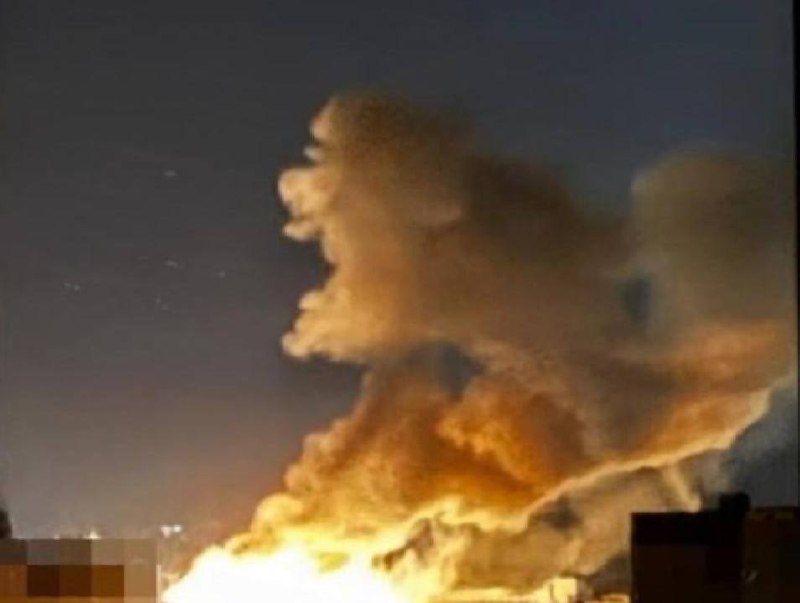
Two Ukrainian attack drones crossed into Russia's Kursk Oblast before midday on 21 July 2026 and hit the aircraft parking area of Khalino airfield, a Russian military base just a few dozen kilometres from the Ukrainian border. Ukraine's 15th Separate Artillery Reconnaissance Brigade said it struck a MiG-29 fighter jet and a Pantsir-S1 short-range air-defence system on the apron in a single coordinated salvo. Multiple Telegram channels carrying footage of smoke and burning revetments posted the news between 11:34 and 12:41 UTC, with English-language outlets including Clash Report republishing the Ukrainian military's claim within minutes.
The strike matters less for the hardware destroyed on this one tarmac than for what it says about the steady lengthening of Ukraine's reach. Khalino is not a forward operating strip: it sits inside Russian territory, deep enough that, until recently, crews parked aircraft there precisely because it was considered safe. That a pair of cheap, slow-moving attack drones can now threaten a fourth-generation fighter and its dedicated point-defence vehicle at the same base is the kind of fact that war planners on both sides of the contact line have to write down in pencil, then erase, then write down again.
What was hit, and by whom
The claim comes from a single named formation: the 15th Separate Artillery Reconnaissance Brigade, a Ukrainian ground unit that has increasingly been associated with long-range strike work against Russian rear-area targets. According to Noel Reports' Telegram channel, the brigade said it struck "a Russian MiG-29 fighter and a Pantsir-S1 air defense system at Khalino airfield in Russia's Kursk region." Tsaplienko, a Ukrainian war correspondent, framed the hit in more vivid language, calling the Russian airframe and its Pantsir vehicle "Katsaps" taken out by drones. WarTranslated, an English-language translation account that monitors Russian and Ukrainian channels, summed up the strike in identical terms. The earliest social-media post in the cluster, timestamped 11:34 UTC, was the brigade's own statement relayed by Noel Reports; the latest, at 12:41 UTC, was WarTranslated's repost of the same footage with additional context. No Russian Ministry of Defence statement had appeared in the visible Telegram traffic by the time of writing.
What the posts do not contain is equally important. There is no body count, no claim of Russian personnel casualties, and no description of secondary explosions or fuel blazes. The video frames circulating in the cluster show a single burning object at the apron and what appears to be a separate, smaller vehicle nearby; the imagery is consistent with one airframe and one radar/gun complex being hit, but the cluster does not include independent geolocation confirming which specific hardened shelter or pad was struck. Any claim about the broader condition of Khalino's fleet should be treated as preliminary.
Why a Pantsir next to a MiG
Russian air bases in the border region operate in pairs of threats. A parked MiG-29 is a fast, manoeuvrable fighter that, if scrambled in time, can shoot down cruise missiles, reconnaissance drones and low-flying attack aircraft. A Pantsir-S1 is the inner ring: a wheeled combination of radar, optical tracker, guns and short-range surface-to-air missiles designed to kill exactly the kind of small, slow drone that is now arriving over Khalino's perimeter. The pairing is deliberate; the two systems are meant to cover each other's gaps.
For a long stretch of 2024 and 2025, that pairing held. Pantsir-S1s were credited by Western analysts with a respectable intercept rate against fixed-wing attack drones, especially when sited near airfields and given early warning from higher-altitude radar. The strike at Khalino, if confirmed by imagery of both wrecks, suggests the ring failed at the moment that mattered most: the drones arrived when the Pantsir was either parked, in maintenance, or simply not facing the bearing they came from. That is one plausible read. Another is that the Pantsir was hit by a different drone than the one that struck the MiG, and that the base lost both its shooter and its last-ditch defender in the same wave. The sources do not resolve which is correct.
The geometry of "deep" in this war
Khalino is roughly 130 kilometres from the international border as the drone flies, depending on the route taken through Russian air-defence coverage. That puts it well inside what analysts, until recently, called the second tier of Russian rear-area targets: beyond the range of tube artillery and the early tactical ballistic missiles, but inside the envelope of Ukrainian-developed long-range attack drones that have proliferated since 2024. The cluster of strikes over the past year against Engels, Dyagilevo, Savasleyka and other bomber and fighter bases has stretched that envelope further west, but Kursk Oblast airfields are closer to the front line and have accordingly been hit more often. What changes with this particular episode is the unit claiming the kill: an artillery reconnaissance brigade, not an air force or special operations formation, putting a footprint on a tactical strike deep inside Russia.
There is a structural point hiding under the geography. The shift from "Ukraine hits a Russian airbase" to "Ukraine hits a specific Russian air-defence system on a specific Russian airbase, in the same wave" reflects a maturing kill chain. It is no longer enough to crater a runway and hope aircraft cannot take off; the goal now appears to be to remove, in a single pass, the sensors and missiles that would otherwise make the next pass too expensive. If the 15th Brigade's claim is correct, Khalino loses both an interceptor and its preferred low-altitude defender in one sortie, and the rest of the base has to fall back on whatever radar and gun systems can be repositioned from elsewhere in the region.
What to watch next
The immediate questions are factual and resolvable within days. Independent OSINT accounts will geolocate the burn marks against pre-strike satellite imagery of Khalino, and the Russian Ministry of Defence will, in its usual delayed fashion, acknowledge or deny the loss. If imagery confirms a destroyed MiG-29 and a destroyed Pantsir-S1 on the same apron, this becomes a notable single-wave hit rather than a near-miss, and the episode will be cited in later assessments of Ukrainian drone reach.
The deeper question is whether the strike pattern generalises. Russian airfields in the Belgorod, Bryansk and Kursk triangle have been hit repeatedly over the past eighteen months; what is less clear is whether the rate of successful penetrations is accelerating, steady, or already being mitigated by counter-drone electronic warfare and dispersal of high-value aircraft. The sources do not speak to that. They show one base, one morning, one claim from a named Ukrainian brigade, and the standard fog of competing video clips that any modern strike produces before independent verification arrives. Readers who treat the headline as confirmed fact are reading ahead of the evidence; readers who dismiss it as Ukrainian PR are under-reading how often, in this war, similar claims have turned out to be broadly accurate once the imagery catches up.
Desk note: this piece leads with the named formation and the specific hardware, then resists the temptation to over-read a single Telegram cluster. The longer structural argument (the kill-chain question, the reach question) is held back from the lede and used only after the basic facts are on the page. Where the sources disagree about context (a Pantsir that may have been in maintenance, a base that may have other defences), that uncertainty is named rather than smoothed over.
Wire provenance
This editorial synthesis draws on the following public wire/social posts:
- https://twitter.com/wartranslated/status/2079544513748
- https://t.me/wartranslated
- https://t.me/Tsaplienko
- https://t.me/clashreport
- https://t.me/noel_reports