"We took over Venezuela": Trump tells a story the war record cannot yet support
In remarks to reporters on 21 July 2026, Donald Trump claimed a one-day war with Venezuela and called its political shift "unbelievable." The cable and Caracas press do not corroborate the framing.
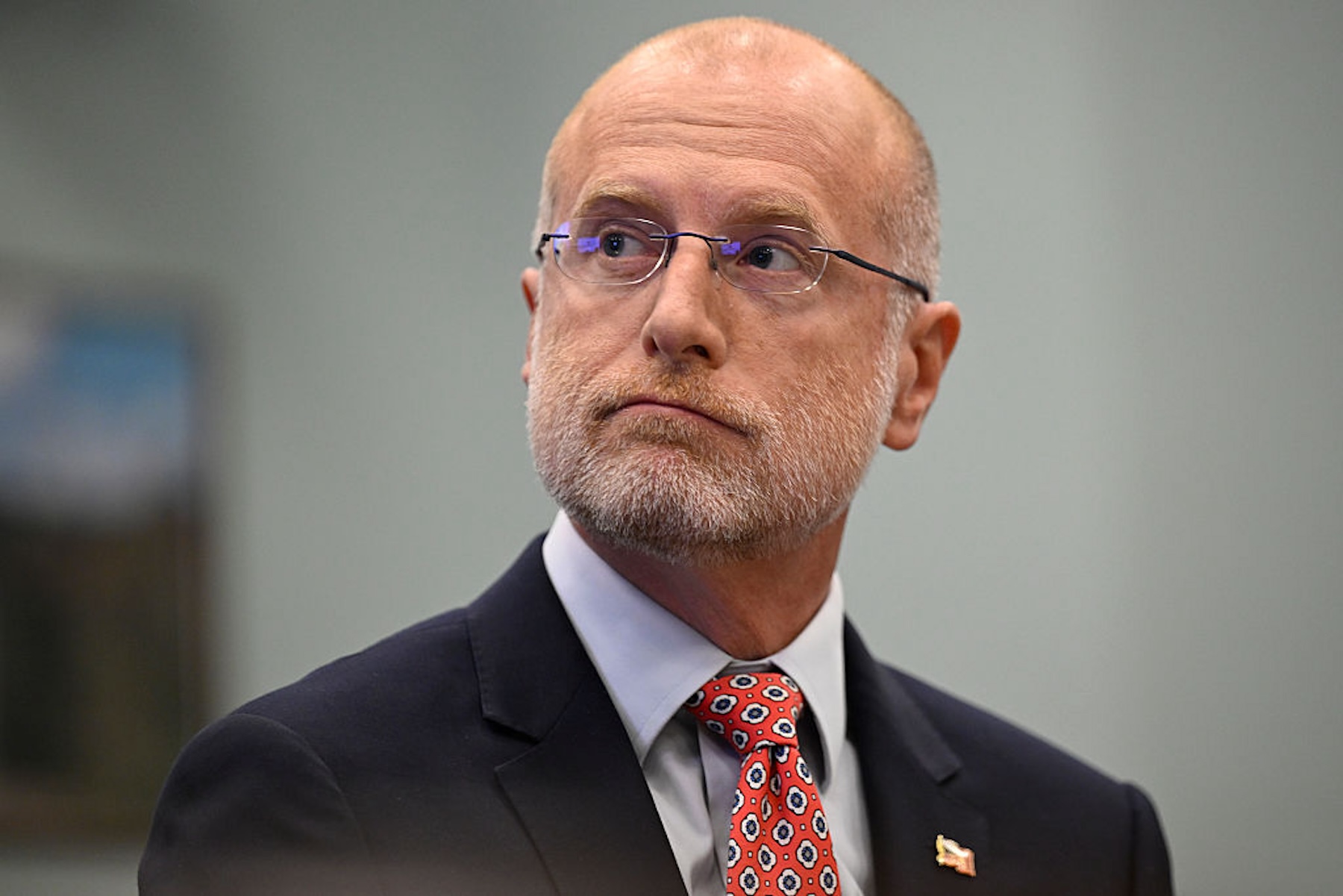
At 15:39 UTC on 21 July 2026, Donald Trump told reporters in the Oval Office that the United States "went to war with Venezuela and the war ended in one day." Asked by a correspondent to elaborate, he added, at 15:54 UTC, that Venezuela had experienced "a movement, a shifting of the earth, that was unbelievable," a phenomenon he said residents "had never seen anything like it" and "would call … an earthquake." The two remarks, carried in real time by the Telegram channel Clash Report, were unaccompanied by any documented military operation, casualty figure, or third-party confirmation of combat in or around Venezuelan territory.
The quotes matter less for their content than for what they reveal about a White House operating style: confident narrative first, supporting record later, with the gap between the two rarely closed inside the same news cycle. By the time fact-checkers finish parsing the Venezuela claim, the next presidential sentence is already travelling through the wire. The pattern is not novel. It is, however, accelerating, and the diplomatic ripple now extends from Caracas to Beirut.
A war of one day
Trump's Venezuela framing is unusually stark. "We took over Venezuela," he said, a formulation that on its face asserts sovereign transfer rather than sanctions pressure, naval interdiction, or regime isolation. There is no public record of a kinetic operation of the scale implied. The US posture toward Caracas during 2025 and 2026 has consisted primarily of oil-sector sanctions, secondary-tariff enforcement on third-country buyers of Venezuelan crude, and a protracted dispute over the validity of Nicolás Maduro's 2024 re-election. The administration has not publicly claimed credit for any singular battlefield-style victory.
The "earthquake" remark compounds the ambiguity. Trump appeared to be describing a domestic political shock inside Venezuela, then reached for a geological metaphor. The line reads as rhetoric, not a briefed policy statement. It also fits a familiar template: a maximalist first sentence designed to harden supporters and test the boundaries of the press's appetite for repeating presidential claims without caveat. By 15:54 UTC, the second sentence was already the one being clipped and shared.
Lebanon in the same breath
Forty-one minutes before the Venezuela line, at 14:18 UTC (15:18 in the thread's local stamp), Trump was asked about Lebanon and offered a string of remarks the same channel logged in sequence. He called the country "probably a dangerous place in a lot of ways," described it as "a very mistreated country for a long period of time," and added, at 15:43 UTC, "I understand Lebanon." The most quotable line came at 15:18 UTC, when he responded to Lebanese President Joseph Aoun's greeting ("You are a great president") with: "He knows how to get to me. He can have anything."
Read in isolation, each Lebanon remark is the sort of small talk presidents offer visiting counterparts. Read in sequence with the Venezuela claim, however, a different picture emerges. Trump is announcing, in real time and in front of cameras, the perceived scale of his influence across two hemispheres: a Caribbean state he says he has absorbed, and a Mediterranean one he describes as available on request. Aoun's government in Beirut has been navigating a fragile post-conflict stabilisation since late 2024, and any signal of unconditional American goodwill lands inside a Lebanese political marketplace where patronage is itself a commodity.
The structural frame
What ties the two exchanges is not subject matter but register. The president is substituting verdict for argument. "We took over" and "He can have anything" are conclusions, not analyses, and they are delivered with the cadence of a man who has decided the press will print them regardless. Cable networks have spent two decades building routines for adjudicating presidential claims; those routines have visibly thinned in 2025 and 2026, partly because the volume of unverified assertion has outpaced the desk capacity to caveat it, and partly because the political incentive to correct a sitting president in real time has weakened on both sides of the aisle.
The deeper pattern is the merger of foreign policy and personal branding. A sentence like "I understand Lebanon" is not a policy. It is a credential, and it is being offered in the same visual frame as the Venezuela claim, to the same audience, on the same afternoon. Whether the underlying relationship with Beirut is warm or transactional, the public-facing product is the same: the projection of a commander-in-chief who can pick up and put down governments.
What the record will need to show
For the Venezuela claim to graduate from rhetoric to fact, three things would have to surface: an executive order or formal proclamation naming the transfer of authority; a confirmed military action with corresponding Pentagon or Southern Command reporting; and on-the-ground confirmation from inside Venezuela that a sovereign hand-off has occurred. None of those artefacts is currently in the public record. What is in the record is a Telegram transcript, a handful of still images, and a White House press pool filing.
For the Lebanon remarks, the verification bar is lower. Aoun did call Trump a "great president"; Trump's response was on camera. The diplomatic question is whether "He can have anything" was a flattery or an opening offer, and whether the Lebanese government will treat it as either. Beurit has incentive to play the line for domestic credit; Washington has incentive to read it as leverage. The mismatch is itself the story.
What remains uncertain, and what the sources do not resolve, is whether the Venezuela sentence was a slip, a trial balloon, or a deliberate marker of intent for an operation not yet visible. The evidence thins fastest exactly where the claim is largest. Until the record catches up, the responsible reading is also the plain one: the president said a thing, the wire carried it, and the architecture of US policy toward Caracas and Beirut has not visibly changed in the same hour.
Desk note: Monexus treats Trump's 21 July remarks as primary-source presidential speech, not as confirmed policy. Where wire reporting has not corroborated the Venezuela framing, the desk flagged the gap rather than paraphrasing the claim as established fact.
Wire provenance
This editorial synthesis draws on the following public wire/social posts:
- https://t.me/ClashReport
- https://t.me/ClashReport
- https://t.me/ClashReport
- https://t.me/ClashReport
- https://t.me/ClashReport
- https://t.me/ClashReport