Beirut opens for American carriers: what Trump’s Lebanon flight order actually changes
On 21 July 2026 the President directed US carriers to resume direct flights to Beirut, days after Israeli media reported Damascus drafting contingency plans against Hezbollah. The move recasts a fault line the war in Gaza redrew.
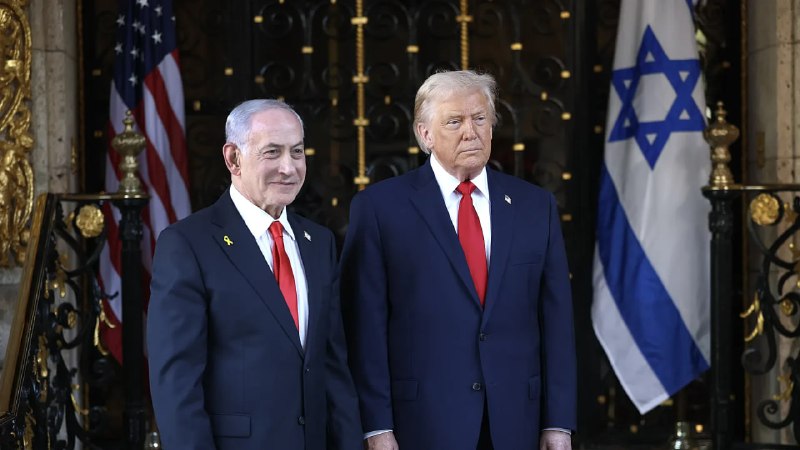
At 19:30 UTC on 21 July 2026, US President Donald Trump announced he was directing his administration to allow all American airline carriers to fly directly to Lebanon, framing the move as a way for US citizens to "visit this beautiful land," in remarks carried by the Insider Paper Telegram channel. The directive lands less than 90 minutes after Israeli public broadcaster Kan, as relayed by the wfwitness Telegram channel at 18:01 UTC, reported that Syria's security establishment was drafting contingency plans for potential operations against Hezbollah inside Lebanon if deemed necessary. The two items, posted within the same news window, are formally unrelated and substantively inseparable.
What the order changes is small in aviation terms and large in political ones. US carriers have not operated scheduled passenger service into Beirut-Rafic Hariri International Airport for years, a freeze that hardened after the 2024–25 war in Gaza and the subsequent Israeli campaign against Hezbollah across the Lebanese border. Reopening the route under a presidential directive is not, on its own, a normalisation with Beirut's government: the US still classifies Hezbollah as a terrorist organisation, and Lebanon remains on a watchlist that complicates visa issuance and financial transfers. It is, instead, a signal that the White House is willing to stake capital on a Lebanese state it believes is now strong enough, or American-leaning enough, to host US tourists and the security footprint that follows them.
What "allowing" carriers actually means
Aviation access between the United States and Lebanon has been governed since the late twentieth century by a mix of bilateral air-transport arrangements and security determinations. When the US Federal Aviation Administration, the Department of Homeland Security or the State Department concludes that an airport environment cannot guarantee the safety of US-flag operations, carriers are effectively grounded regardless of commercial appetite. The State Department's travel advisories, which currently place Lebanon at Level 4 ("Do not travel"), function as the practical ceiling.
A presidential instruction to "allow" airlines does not by itself lift those advisories, nor does it waive the carrier-by-carrier security vetting that the Department of Homeland Security performs for routes flagged by US intelligence. What it does is remove the most visible political obstacle: the implication, broadcast from the top of the US government, that a US flag on a widebody at Beirut's gate would be welcomed rather than tolerated. Carriers will still perform their own route economics; fuel, insurance and overflight permissions in adjacent airspace will determine whether the route is flown.
The framing the President chose is striking. He did not describe the order as a confidence-building measure toward a new Lebanese government, nor as a reward for any specific security concession. He described it as an invitation to American tourists to visit "this beautiful land." That register matters: it shifts the burden of credibility onto private carriers and the State Department's machinery, while preserving the White House the option of reversing course if a security incident makes the policy untenable.
The Syrian variable
The Israeli reporting on Syria, filed in the same 90-minute window, complicates the picture in ways the White House's announcement does not acknowledge. According to Kan, as reproduced by the wfwitness and megatron_ron Telegram channels, Syria's security establishment is preparing contingency plans for operations against Hezbollah on Lebanese territory if Damascus judges them necessary. The Israeli framing is that the new Syrian leadership, having broken with the long Iranian-aligned axis that ran through Damascus, is now sketching the operational template for a cross-border strike into Lebanon that Israel could not, or would not, mount alone.
Three things are worth separating. First, the plans are described as "contingency," meaning they have not been activated. Second, the source is Israeli and the framing is Israeli: Kan's reporting should be read as Israeli intelligence's preferred public posture, not as a verified description of Syrian intent. Third, the diplomatic upside for the White House is real if the reporting is accurate. A Syrian security apparatus willing to plan against Hezbollah is also a Syrian security apparatus Washington has been trying to coax away from Tehran's orbit. Allowing US carriers into Beirut looks like a parallel bet on the same trend, viewed from the Lebanese end of the corridor.
That is also where the risk sits. Lebanon's political equilibrium since the 1989 Taif Agreement has depended on the fiction that Hezbollah's arsenal is a domestic matter and that the country's other confessional communities, Sunni, Christian and Druze, can coexist with it. A Syrian-security operation against Hezbollah on Lebanese soil, with or without Israeli coordination, would puncture that fiction. Reopening the Beirut route before any of that is settled is an act of sequencing that some of Washington's regional partners will read as premature.
Aviation, sanctions and the dollar plumbing
The order also has to be read against the financial architecture that surrounds any US-licensed flight into Lebanon. Lebanese banks have spent the better part of a decade under layered US Treasury actions, including designations targeting financial facilitation for Hezbollah, that have made correspondent-banking relationships for the country fragile. A US carrier flying into Beirut collects ticket revenue in US dollars, settles airport fees through banks that may themselves be cautious, and repatriates cash through channels the Treasury monitors.
None of that is impossible. It is, however, the kind of operational terrain where a casual White House directive and the compliance machinery of OFAC and FinCEN can collide without either side intending to make a point. The administration's decision to lead with tourism language rather than with a detailed financial-corridor package suggests it is willing to let the aviation move precede the slower plumbing of sanctions clarification. That order of operations can either look like confidence, or like improvisation, depending on what happens next.
There is also a soft-power layer. US carriers into Beirut would restore a tourism channel that Gulf state carriers and the Beirut-bound diaspora traffic from West Africa and Latin America have partially filled. Re-entering that market with the US flag on the fuselage reasserts a presence that Iran-aligned media outlets have spent the post-2024 period framing as a US withdrawal from Lebanon. The directive tells a different story to Lebanese television viewers, and that is part of its purpose.
What to watch before the first flight
Three dates will define whether the directive becomes a route. The first is the State Department's next scheduled travel-advisory revision cycle for Lebanon, where the Level 4 designation would have to be downgraded, or at least carved into a region-specific exception for Beirut airport, before any major US carrier would price a schedule. The second is the carrier-side response: airlines will want indemnity language and DHS clearance for their crews before they commit equipment. The third is the Lebanese government's posture, specifically whether the Beirut aviation authorities publish a security regime that meets the standards US carriers are required by their own insurance underwriters to insist on.
The Syrian contingency reporting adds a fourth watch-item: any confirmation, from Damascus or Washington, of the kind of operational coordination the Israeli framing implies. If confirmed, the Beirut aviation move will look in hindsight like the civilian half of a larger security reorganisation along the Levant's eastern Mediterranean rim. If it is not confirmed, and the Israeli reporting ages into a familiar pattern of unverified regional signalling, the directive risks being remembered as a flight order whose biggest consequence was a moment of clarity about who, exactly, the US is willing to land in the Middle East in 2026.
Desk note: where wire reporting carried the directive as a tourism gesture and Israeli reporting carried the Syrian contingency as a security story, Monexus treats both as parts of a single regional reorganisation, sequenced from Washington rather than from any single Middle Eastern capital.
Wire provenance
This editorial synthesis draws on the following public wire/social posts:
- https://t.me/insiderpaper
- https://t.me/megatron_ron
- https://t.me/wfwitness
- https://en.wikipedia.org/wiki/Rafic_Hariri_International_Airport
- https://en.wikipedia.org/wiki/Taif_Agreement
- https://en.wikipedia.org/wiki/Hezbollah
- https://en.wikipedia.org/wiki/Israel%E2%80%93Hezbollah_conflict_(2023%E2%80%93present)
- https://en.wikipedia.org/wiki/United_States%E2%80%93Lebanon_relations
- https://t.me/insiderpaper
- https://t.me/megatron_ron
- https://t.me/wfwitness
- https://en.wikipedia.org/wiki/Rafic_Hariri_International_Airport
- https://en.wikipedia.org/wiki/Taif_Agreement
- https://en.wikipedia.org/wiki/Hezbollah
- https://en.wikipedia.org/wiki/Israel%E2%80%93Hezbollah_conflict_(2023%E2%80%93present
- https://en.wikipedia.org/wiki/United_States%E2%80%93Lebanon_relations