Trump on Lebanon: a tweet-shaped opening, a country-shaped problem
Two off-the-cuff Trump remarks within twenty-four hours, on Lebanon and on Britain, expose how presidential rhetoric now travels faster than any policy paper. The harder question is what either outburst actually changes on the ground.
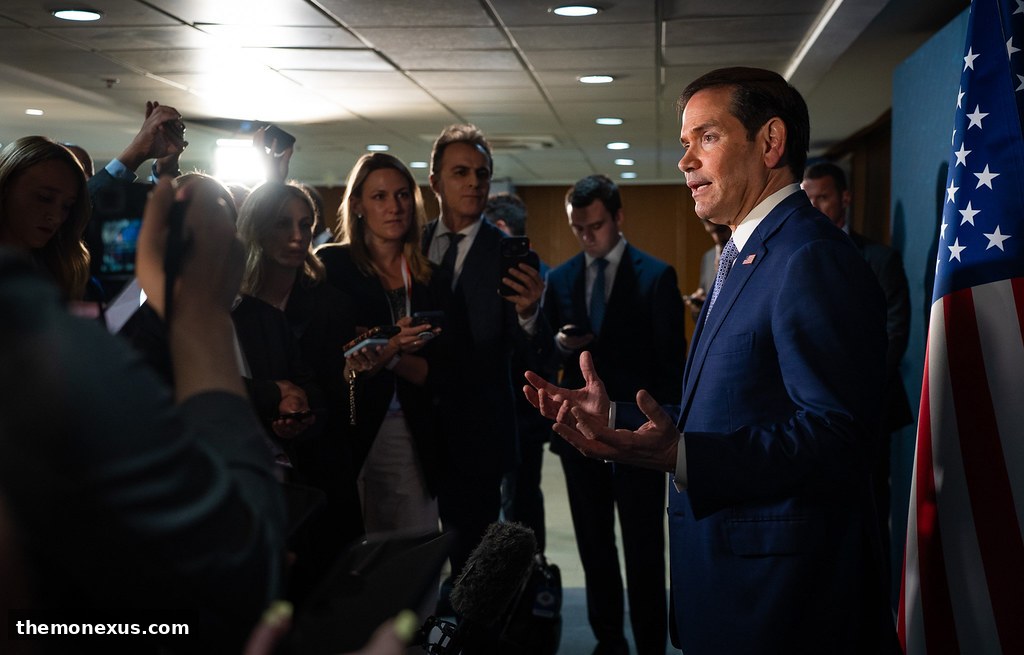
On 21 July 2026, at roughly 15:16 UTC, the Telegram channel Clash Report carried two adjacent quotes from President Donald Trump on a country most American cable panels had largely stopped discussing. "Lebanon is probably a dangerous place in a lot of ways," Trump told reporters. "Lebanon has been a very mistreated country for a long period of time." The pair of sentences, separated by a comma in the original wire, did two things at once. They confirmed, in the clipped idiom of a sitting president, that Lebanon remains on the administration's mental map. They also implied, without spelling out, that Washington may now see the country as both a hazard and an injustice.
Twenty-four hours earlier, on 20 July 2026 at 22:56 UTC, the prediction-market account @polymarket on X had flashed a more theatrical line in the same transatlantic register: Trump calling the United Kingdom a "poverty-stricken disaster." The juxtaposition is the story. Two North-Atlantic allies, two countries at very different stages of economic distress, summoned by the same White House mouth within a day, in a tone that is neither strategy nor theatre but something more combustible than either.
The pattern is worth naming plainly. Presidential rhetoric now moves faster than any accompanying policy paper. By the time a cable news panel has convened three foreign-policy hands to interpret a single Trump line, the next one is already on the wire. The cost of misreading is small for the speaker and large for the country being described. Lebanon, in particular, has spent four decades learning to read foreign leaders' moods as a survival skill.
What Trump actually said, in order
The Lebanon line is more measured than the Britain one and reads, on the transcript, as a man gesturing at a place he has not been asked to fix. The phrase "very mistreated country" is a callback to a strand of Trump-speak that has surfaced on and off since the first term: the language of grievance about foreign leaders, foreign systems, and foreign populations he reads as ill-served by their own elites. In that frame, Lebanon is not a dossier. It is a mood: a coastline that has been bombed by its neighbour, bankrupted by its own central bank, and abandoned by a Gulf it once served.
The Britain line, by contrast, was a provocation in the older style. Calling a major NATO and G7 partner a "poverty-stricken disaster" is not a description; it is a verdict, and one that collides with the actual data on UK living standards. The Polymarket post sits in a different category from a Reuters flash: prediction-market accounts are sentiment thermometers, not newsrooms, and the platform has previously amplified lines that turned out to be exaggerated or sourced to a single hot-mic moment. The post itself did not name the venue, the audience, or whether the remark was on the record.
Why Lebanon reads both lines at once
For Beirut, the words land in a specific local context. The country is still working through the aftermath of the 2024 Israeli campaign against Hezbollah, an economy that lost roughly a quarter of its output in the war's first year, and a political class that has not produced a president of its own in the better part of two years. Any American signal that Lebanon has been "mistreated" is read in two registers. In the first, it is a backhanded compliment: Beirut's suffering is finally legible in Washington. In the second, it is a warning. The phrase implies that mistreatment has authors, and that those authors may soon be addressed.
The structural point underneath the rhetoric is that Lebanon's geopolitics are not owned by Lebanon. Iranian-aligned Shia movements, a Gulf anxious about Hezbollah reconstitution, an Israel still trading strikes across the border, a France still invested in the 2020 framework, and a United States that wants the frontier quiet without paying for it: each of these actors holds a piece of the file. A US president calling the country mistreated is, in effect, opening a file that most of his predecessors preferred to keep closed.
The Britain comparison is the warning
The same twenty-four hours also produced a separate, uglier outburst aimed at the United Kingdom. The two together matter because they sketch a posture: allies are spoken about in the language of catastrophe, and the louder the country complains about its condition, the more available it becomes for that posture. That is the inversion of the usual diplomatic grammar. Traditionally, a NATO partner in economic trouble receives steadier rhetoric and more discreet aid, on the theory that public humiliation weakens the alliance. Under the new register, the partner is named, ranked, and lectured.
Britain, with its still-functioning currency, its still-large defence budget, and a gilt market that has survived worse, is structurally insulated from the worst reading of the line. Lebanon is not. A country whose banking sector is in resolution, whose currency has lost several zeros in a decade, and whose state still does not control its own southern frontier is uniquely exposed to a rhetoric that treats national condition as a verdict to be delivered.
What the sources do not yet settle
It is worth being honest about the limits of the wire. The Clash Report quotes are short, context-free, and have not been independently corroborated by a mainstream Western outlet in the materials available to this desk. The Polymarket post is a single X item, timestamped, but prediction-market accounts have previously amplified lines that did not survive a second read. Whether Trump's Lebanon remarks were a press gaggle, an interview answer, or a rally aside; whether the Britain line was delivered to a journalist or shouted across a tarmac; whether either remark will turn into a sanctions package, a diplomatic demarche, or a quiet phone call to Beirut: none of that is in the record yet.
The reasonable read is that the Lebanon line is closer to reconnaissance than to policy. A US president telling reporters that a country is both dangerous and mistreated is signalling two things at once: that the file is being reopened, and that Washington has not yet decided what to do about it. The Britain line is closer to provocation than to policy: a NATO partner insulted in public for domestic audience reasons, with no visible policy mechanism attached. Conflating the two would be the standard error. Reading them as part of a single rhetorical posture, in which allies are sorted into categories of trouble, is the more useful one.
Monexus reads these two wires together because they travelled on the same day and in the same voice. The wire services carried them as separate items; the framing question is what a sitting US president gains from treating two very different allies as the same kind of problem.
Wire provenance
This editorial synthesis draws on the following public wire/social posts:
- https://t.me/ClashReport