Trump's Iran bluster hides the only question that matters
On 21 July 2026 the US president threatened to hit Iran's centrifuge halls 'very heavily' while his envoys say Tehran is 'desperate' to talk. The gap between the rhetoric and the negotiation is now the story.
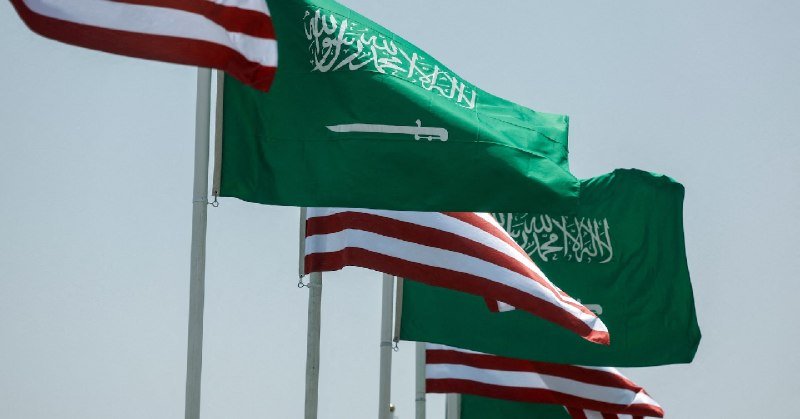
On the afternoon of 21 July 2026, with the clocks in Washington and Tehran barely aligned for the working day, President Donald Trump told reporters that the United States would be hitting the area where Iran's nuclear centrifuges are reportedly sited "very probably pretty soon," and "very heavily." The remark was unscheduled, off-camera only in the loosest sense, and delivered in the cadence of a man who has learned that a single sentence can move the oil tape. Within hours, the same administration was leaking, through friendly outlets, that Iran is "desperate to meet" for talks.
The contradiction is not a slip. It is the operating system. A credible threat of force, floated publicly and unsubstantiated, is what gives the negotiating room its leverage. The question worth asking is not whether Trump means the strike; it is whether the threat itself, sustained long enough, produces the diplomatic outcome Washington keeps claiming is within reach.
The threat, the timetable, the missing target
Trump's comments came in two registers. In the first, reported on Telegram by DDGeopolitics and Intel Slava and corroborated across the ecosystem by Clash Report, he framed the prospect of action in the register of a grievance: "Honestly, they haven't seen anything yet. We've been nice. I don't believe they could ever rebuild." In the second, captured in a reporter exchange that Middle East Eye logged at 16:45 UTC, he insisted the US "follows the material" rather than fixed coordinates, a hedge that lets Washington retain both the option of action and the option of walking it back.
No timeline was offered. No target list was confirmed. The phrase "that area" did the work of precision without paying for it.
That is the rhetorical point of the exercise. A declared target gives Iran something to move; an undeclared one obliges Tehran to insure the entire suspect footprint. Underground halls at Natanz and Fordow, missile workshops, centrifuge assembly lines, the engineering teams at Isfahan: any of them could be next, and none of them can be certain they aren't.
Talks that may or may not exist
Sixteen minutes before the threat, Middle East Eye had logged a separate Trump claim that Iran is "desperate to meet." That formulation travels: it casts Tehran as the supplicant and Washington as the uninterested party, which is how this White House prefers to enter a negotiation. It is also unverifiable on the public record. The Iranian foreign ministry has not, in the items available to readers in real time, confirmed any active request for a meeting, nor has it denied one.
What can be verified is the plumbing. Round-the-clock back-channel work between Omani, Qatari, and Swiss intermediaries has been a feature of every Iran file since 2018. The pattern is consistent: a maximalist public posture in Washington, quiet movement in Muscat or Doha, and an eventual round of talks announced as a concession by the harder side rather than a compromise by both. The reporting on 21 July fits that template.
What the strike would actually do
A serious attack on Iran's enrichment infrastructure would set the programme back, not end it. Centrifuges are replaceable; the scientific cadre that runs them is not, and the knowledge base lives in people's heads and in a documented, distributed supply chain that took the better part of two decades to build.
There is also the second-order risk that an air campaign on hardened, deeply buried facilities is unlikely to reach without a runway-denial accompaniment. That implication, drawn from a decade of open Israeli and American exercises against similar targets, has typically been left undiscussed in Washington until just before it is unavoidable.
What stays opaque
The sources do not specify which sites the US has prioritised. They do not state whether Israeli planners have been consulted in any operational sense, or what the Gulf states have been told. They do not address the IAEA inspection status of Iran's declared facilities, and they do not name the intermediaries handling the back-channel.
That opacity is itself information. The threat works only as long as the target remains uncertain. The moment an administration publishes a target list, the diplomatic leverage exits through the door the strike would enter.
Wire provenance
This editorial synthesis draws on the following public wire/social posts:
- https://t.me/DDGeopolitics
- https://t.me/IntelSlava
- https://t.me/ClashReport