Trump's 'take care of business' on the Houthis, and the case the White House won't make
A single presidential sentence on the Houthis does what months of naval posture have not: makes any future Red Sea escalation a question of credibility, not capability.
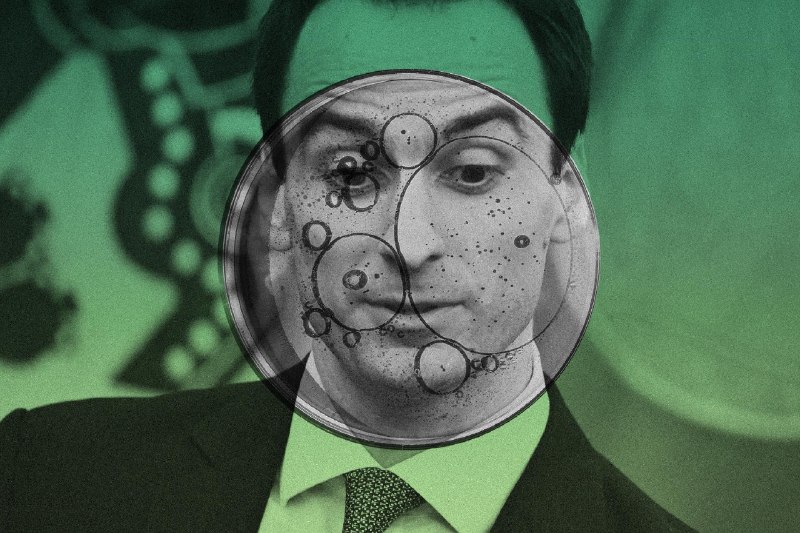
At 19:10 UTC on 21 July 2026, President Donald Trump told reporters that the United States would "take care of business" if Yemen's Iran-aligned Houthi movement, also known as Ansar Allah, moved to blockade commercial shipping in the Red Sea. The line was short. The standing it now has to clear is not.
The remark landed in a White House that, for most of the previous year, has styled its Red Sea posture as already adequate. Yet shipowners, insurers and the largest shipping lines have spent the past several quarters pricing for a corridor that nobody can guarantee. What Trump's comment changes is not the firepower on station; it is the threshold at which that firepower is meant to be used. The implicit warning is no longer "we will respond to attacks" but "we will treat a blockade attempt itself as a casus belli." That is a meaningful escalation in rhetoric, and it carries a quiet admission: that the deterrence-by-facts-on-the-ground the administration has been running has not, in fact, deterred.
What a Houthi blockade would actually do
The Bab el-Mandeb and the southern approaches to the Red Sea carry a non-trivial share of global container traffic and a much larger share of Europe-bound energy. A sustained blockade, even one achieved only by harassment rather than a formal declaration, would force commercial rerouting around the Cape of Good Hope. That adds roughly two weeks to a Europe-bound voyage from East Asia and burns fuel that liner operators have been told to conserve.
The Houthi record to date has been insurgency at sea, drones, anti-ship missiles, hijackings of vessels they describe as Israeli-linked, rather than fleet-on-fleet interdiction. Yet the leap from "we will hit ships we dislike" to "no ship passes" is one of capability and intent, not doctrine. The fact that Trump chose the word "blockade" in his own mouth, when speaking about Ansar Allah's options, is the news.
The other half of the same press conference
An hour before Reuters filed the warning, another clip from the same Trump appearance was circulating, Trump reframing the relationship with the Houthis as essentially uneventful: "We didn't have any problems with them," he said, in remarks translated and amplified by the Sprinter Press pool feed. The two sentences, read together, sketch the operating theory of this administration's regional posture: deny the existence of the dispute until the moment you need to escalate it, then escalate in language so personal and informal that allies and adversaries are left to parse the meaning.
That style is not new. It is, however, expensive when applied to a maritime corridor that is operated by private companies pricing risk in real time. Insurers do not read tweets; they read ambiguity and they price it. Uncertainty about what the United States considers a trigger is itself a kind of trigger.
What the framing leaves out
The standard Western wire line on the Red Sea reads as a security story: Iranian-backed forces threatening a global chokepoint, freedom of navigation under pressure, allied navies on station. It is not wrong. It is also incomplete. Coverage routinely defers to the language of official spokespeople, and the spokespeople in this case have an interest in describing the corridor as protected. The Ansar Allah side of the framing, its claim of a principled blockade in solidarity with Palestinians, its argument that the Western naval presence itself is the provocation, appears almost exclusively on outlets Western editors treat as adversarial and therefore discount.
The structural point underneath: any maritime order requires two things the present arrangement cannot guarantee. One, a clear and pre-published definition of what counts as a violation, not a Twitter line improvised in a press gaggle. Two, a deterrent cost that the infringer is willing to recognise as such. On both counts, the US posture is currently running on the fumes of capability rather than the architecture of policy.
What to watch by the next quarter
Three concrete signals will tell readers whether the escalation is real or rhetoric. First, the war-risk insurance premium published by the Joint Maritime Information Centre for Bab el-Mandeb transit: does it move by late September, or hold flat as it has for most of 2026. Second, the language in the next US Navy 5th Fleet advisory, whether a blockade "attempt" is named as a firing condition on its own, or whether it remains folded into the older attacks-on-shipping framing. Third, and most telling, the rate at which commercial operators voluntarily divert: the market will price the credibility gap faster than any Pentagon spokesperson can close it.
The deeper contradiction here is that the administration is trying to deter an event it has not defined, by means of a threat it has not yet demonstrated. Until one of those two moves, definition or demonstration, happens, "take care of business" is a phrase the market will have to clear on the ship's account.
Desk note: Monexus frames this as a credibility story, not a combat story, the threshold shift is the news, the kinetic action that may follow is not yet on the wire.
Wire provenance
This editorial synthesis draws on the following public wire/social posts:
- https://reut.rs/4wMIy4W
- https://t.me/sprinterpress/24051