Washington draws a hardened-target red line at Iran's Pickaxe Mountain
President Trump told Lebanon's Joseph Aoun in the Oval Office that the United States will move against Iran's Pickaxe Mountain, an underground nuclear site the White House is now publicly naming.
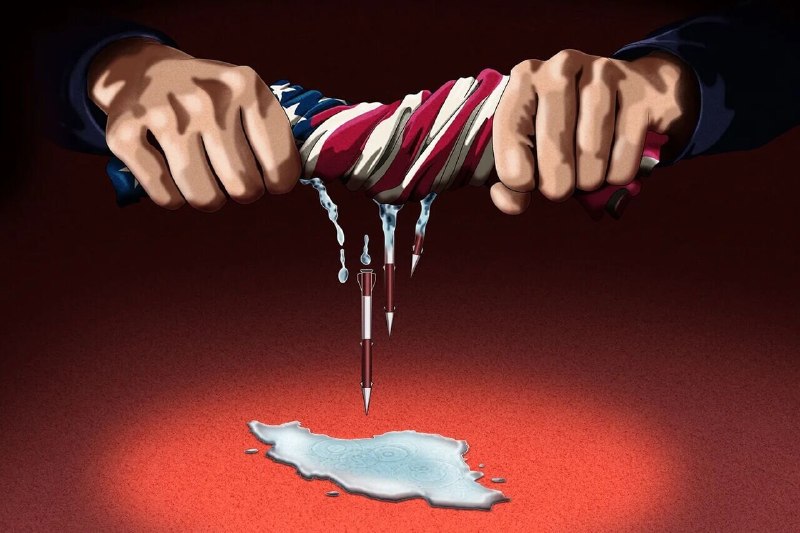
President Donald Trump told Lebanese President Joseph Aoun in the Oval Office on the afternoon of 21 July 2026 (UTC) that the United States intends to strike an Iranian underground nuclear facility his administration has taken to calling Pickaxe Mountain, according to two Telegram channels tracking the White House meeting. The exchange, captured on camera by the official pool and reposted by The Cradle, marks the first time a sitting US president has publicly named the site on a foreign leader's visit and used the word "soon" to describe an impending strike.
The framing matters less for the verb than for the noun. By singling out a single buried complex as the immediate trigger, the White House has narrowed the escalatory ladder from Iran's nuclear programme as a whole to one facility whose hardening has become the administration's test case. The conversation was not billed as a press event. It was a bilateral meeting, on the record only because the camera was running.
A name the White House now owns
Within forty minutes of the meeting's first images circulating, channels aligned with US open-source intelligence accounts were carrying a slightly different formulation. The line was no longer "we will strike Pickaxe Mountain." It was a warning: any Iranian attempt to finish a hardened subterranean nuclear shield at the site, the messaging read, will be met with immediate action. The pivot from act to threshold is subtle but consequential. A named strike is an event that may or may not happen. A red line, once drawn publicly, becomes the test the target is invited to fail.
Naming the site also does something the Obama-era sanctions architecture and the Trump first-term maximum-pressure campaign could not: it gives journalists, satellite operators, and inspectors a single coordinate to watch. Pickaxe Mountain is now a verifiable object. It can be imaged, dusted for construction signatures, or refused access to by the International Atomic Energy Agency, and each of those moves will be legible in near real time.
Why Lebanon was in the room
Joseph Aoun's visit to Washington has its own subtext. Lebanon's president, eight months into a term whose legitimacy Hezbollah's remaining political wing has refused to formally recognise, walked into a meeting whose headline he did not write. The Cradle's pool footage shows the exchange on the public record; an Iran-aligned English-language outlet, in other words, is sourcing the framing of an Iran threat from the Oval Office itself.
That is the structural surprise of the day. A discourse that was, until late 2024, almost entirely filtered through Israeli intelligence briefings and IAEA quarterly reports is now being choreographed, on camera, for a Lebanese audience. Aoun is not a nuclear negotiator. He is a head of state whose country's banking sector, electricity grid and southern border with Israel are all bargaining chips inside a regional settlement that has Iran at its centre. By choosing Beirut's president as the audience for the Pickaxe Mountain warning, the White House signals that the next move on Iran is meant to be read across the Levant, not just in Vienna or Tel Aviv.
The strike that hasn't happened, the threshold that exists
There is still no confirmed operation against Pickaxe Mountain. The administration's own messaging treats the threat as conditional rather than scheduled: the trigger is not a calendar date but the completion of a buried shield. Two readings are plausible and both deserve airtime.
The first is that this is gunboat diplomacy by press conference. A threshold publicly announced is a threshold that costs nothing to keep until someone tests it. Iran's choices narrow: leave the site unfinished, accept the political cost of reversing construction, or finish it and wait to see whether Washington actually pays the price of a strike against a buried target in a country that, according to the IAEA's June 2026 safeguards report, still does not have a formally declared nuclear weapons programme.
The second reading is that Pickaxe Mountain is the chosen test case precisely because it is winnable. Buried does not mean unreachable. The US arsenal demonstrated penetration capability against hardened, deeply buried targets over twenty years ago. A single-site strike, narrowly framed, would impose real damage without the escalatory footprint of the 13-day regional exchange a year ago. If the goal is regime behaviour rather than regime destruction, a pickaxe against one mountain is exactly calibrated.
Which reading prevails depends on information the sources do not contain: whether the IAEA finds new construction signatures at the site in the next reporting cycle, whether Iran's proxy network shows the signs of dispersal and shelter that a high-confidence strike warning usually produces, and whether the Joint Staff's rehearsed plans for this particular target have been signed off, contested, or quietly shelved.
What to watch before the next pool spray
Three markers will tell readers whether the red line is hardening or fading. First, the IAEA's next quarterly safeguards report and any interim updates from the agency's director general: those will say whether construction at the named facility has continued, paused, or reversed. Second, US force posture in the Gulf. Carrier movements, tanker tasking and fifth-generation aircraft repositioning are observable in flight-tracking data within hours, and history suggests they move before rhetoric does. Third, the tone out of Beirut and Beirut-aligned Shia media: a Lebanese president who delivers the warning in Washington is, by construction, also delivering it to a domestic audience that includes constituencies who will read escalation as survival and others who will read it as exposure.
The harder question sits underneath all three. The administration's threshold assumes that Iran is the only actor whose decisions matter in the next thirty days. In practice, any strike against a hardened Iranian target will be priced into oil markets within minutes, into Israeli civil-defence posture within hours, and into the calculations of every actor with assets in the Gulf littoral within days. The red line the White House has drawn in front of one Lebanese visitor is now a public contract. Reading it carefully is no longer optional.
This article centred the Oval Office exchange as captured by The Cradle's pool footage and the US open-source channels that flagged the red-line formulation within the hour, while treating the named site as the verifiable object the framing intends it to be.
Wire provenance
This editorial synthesis draws on the following public wire/social posts:
- https://t.me/thecradlemedia
- https://t.me/thecradlemedia
- https://t.me/rnintel
- https://t.me/osintlive
- https://en.wikipedia.org/wiki/Pickaxe_Mountain
- https://en.wikipedia.org/wiki/Joseph_Aoun