A tariff wall, a crypto council, and a sanctions workaround: three signals from one Monday
On 20 July 2026, Washington moved on Ottawa, Abuja created a virtual-asset council, and Moscow prepared to enshrine crypto in law. Read together, the day sketches a new geometry of dollar politics.
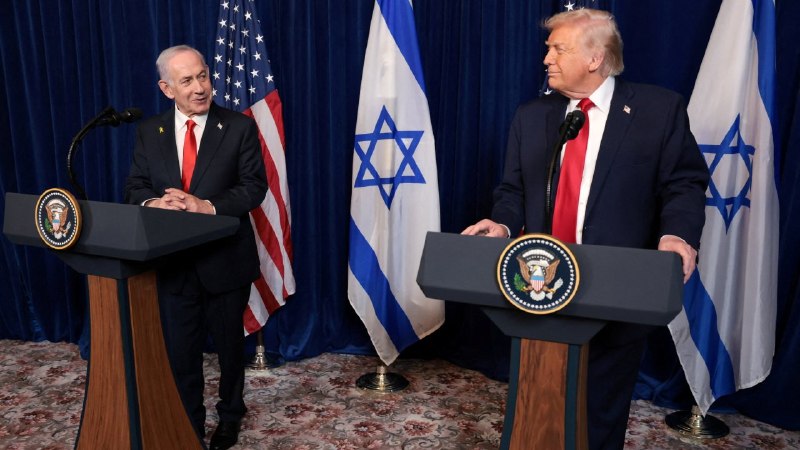
At 21:03 UTC on 20 July 2026, a tariff wall went up. The United States imposed a 50 percent duty on a wide tranche of Canadian goods, including lines covered by the United States-Mexico-Canada Agreement, the trade pact Washington signed in 2018 and renegotiated at the Democratic Party's insistence three years later. The announcement, distributed via Telegram by WatcherGuru at 21:03 UTC on 20 July 2026, lands on an already tense North American trading relationship and against a backdrop in which the USMCA joint review is scheduled for later in 2026.
Twelve hours earlier, at 09:55 UTC on 20 July 2026, the Russian government placed a draft bill on its legislative calendar for finalisation the following day. The text, again reported by WatcherGuru on 20 July 2026, would create a legal framework for cryptocurrency inside the Russian Federation. Three hours before that, at 18:03 UTC on 20 July 2026, WatcherGuru reported that Nigeria had established a virtual-asset council to coordinate digital-asset policy and regulation across the country's sprawling agencies.
Three signals, one Monday, three different corners of the dollar system.
What the tariff move actually does
A 50 percent duty is not a negotiating tool. It is the kind of number you reach for when you have decided to use trade as foreign policy. By folding USMCA-covered goods into the tariff line, Washington is signalling that even the legal architecture it built to manage North American supply chains is now up for renegotiation by tariff alone. Canadian steel, aluminium, lumber, and a long list of agricultural products have lived inside USMCA's dispute-mechanism framework for years; pulling them out of that framework and into a 50 percent tariff regime is a structural choice, not a tactical one.
The move has obvious domestic-political audiences. But the more consequential read is what it does to the credibility of USMCA itself. A trade agreement whose covered goods can be tariffed at 50 percent by one signatory is, in practice, no longer the agreement it was signed as. Mexico City and Ottawa will both be recalculating their exposure.
Moscow's legal frame, and what it opens
The Russian bill, due for finalisation on 21 July 2026 per the WatcherGuru item at 09:55 UTC on 20 July 2026, has been the subject of reporting in Moscow for months. The general direction has been clear: create a recognised legal category for cryptocurrency, license miners and exchangers, and bring cross-border settlement inside a regulated perimeter rather than leaving it in the grey zone where sanctions enforcement has spent the last three years trying to police it.
The framing on Western wires has tended to be sanctions-evasion. That reading is not wrong, but it is incomplete. A formal Russian framework also gives Russian regulators the instruments to police the same market; it gives Russian courts a venue to adjudicate disputes; and it gives Russian industrial users a settlement rail they can plan around. The bill is therefore both a workaround and a market-building exercise. The Western wire line tends to underline the first half; the structural read is that both halves matter.
Abuja builds a corridor
Nigeria's move, reported at 18:03 UTC on 20 July 2026, is the least loud of the three and arguably the most significant. Africa's largest economy has spent three years oscillating between the Securities and Exchange Commission's expansive posture, the Central Bank's prohibition-era caution, and a string of enforcement actions against peer-to-peer traders and informal exchangers. A virtual-asset council with cross-agency authority is the institutional answer to that fragmentation: one body, one rule-making process, one place for international counterparts to call.
For the dollar system, the council matters because Nigeria is one of the largest remittance corridors on earth and one of the largest crypto-adoption markets in retail terms. Coordinating Nigerian policy inside a single institution rather than across four competing agencies makes it possible, for the first time, to negotiate with Abuja on stablecoin oversight, on-chain settlement, and capital-controls design as a single counterparty.
The geometry underneath
Read separately, the three stories are a tariff, a bill, and a council. Read together, they sketch a single pattern: the financial architecture that governed cross-border commerce for the post-1990s era is being disassembled and reassembled in real time, piece by piece, and the disassembly is not happening on a single timetable.
Washington is using tariffs to renegotiate the terms on which goods move inside its own hemisphere. Moscow is writing the legal scaffolding for a parallel settlement system. Abuja is institutionalising the front door through which both retail crypto flows and any future bilateral arrangements will pass. None of these actors is coordinating with the others. All of them are responding to the same underlying pressure: a dollar infrastructure that is harder to route around in some respects and easier to bypass in others.
The counter-read is also worth holding. Tariffs are reversible by executive action; a Russian crypto bill is reversible by the next Duma; a Nigerian council can be defunded or ignored. None of these moves is a regime change in itself. What they are is the slow accumulation of optionality: each actor is creating the legal and institutional capacity to operate outside the existing architecture, on whatever terms the next crisis makes available.
What to watch next
The Russian bill is the shortest fuse. WatcherGuru's reporting at 09:55 UTC on 20 July 2026 said finalisation is scheduled for 21 July 2026, which means the first reading of the actual text will be in the public domain within twenty-four hours of this article publishing. The Canadian response to the 50 percent tariff, and whether Ottawa retaliates with a sector-specific duty or escalates to a WTO dispute, will be the first test of whether USMCA's remaining architecture has any operational meaning. The Nigerian council's first public rule-making action, expected once the body is staffed and convened, will be the first concrete signal of whether the new institution intends to expand the regulated perimeter or merely consolidate the existing one.
What the sources do not specify is how any of the three will interact. A Russian framework that recognises certain tokens, a Nigerian council that licences certain issuers, and a US tariff regime that reaches into third-country processing of USMCA-covered goods together describe a much more fragmented system than any of them describes alone. The pattern underneath is not a story about cryptocurrency, and it is not a story about tariffs. It is a story about what comes next when the old architecture stops being the only architecture on offer.
This publication reads these three moves as a single arc: the architecture of dollar-centric cross-border finance is being unbundled by its own principals, and the unbundling is happening faster in the policy plumbing than in the public conversation.
Wire provenance
This editorial synthesis draws on the following public wire/social posts:
- https://t.me/s/watcherguru
- https://t.me/s/watcherguru
- https://t.me/s/watcherguru