Unidentified projectile strikes tanker off Oman as Hormuz corridor quiet ends
A tanker eight nautical miles off Limah reported being hit by an unknown projectile, ending months of quiet on the Strait of Hormuz corridor and reviving questions about insurance, transit risk and who is shooting at commercial shipping.
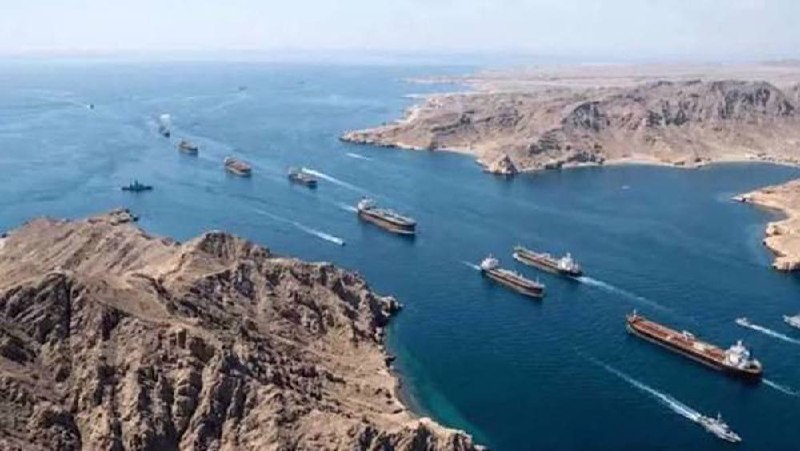
A tanker reported being struck by an unidentified projectile eight nautical miles northeast of Oman's port of Limah on 20 July 2026, according to an advisory issued by the United Kingdom Maritime Trade Operations (UKMTO) and carried by Open Source Intel at 22:35 UTC. The vessel used VHF Channel 16 to flag the incident. UKMTO, the Royal Navy-run maritime coordination cell based in Dubai, did not name the vessel, its flag, its cargo, or the suspected attacker in the initial notice. Two Telegram channels, @wfwitness and @IntelSlava, relayed the same advisory within minutes.
What makes the report significant is not the strike itself but the corridor it sits inside. The Strait of Hormuz is the narrowest chokepoint on the seaborne oil trade, and any armed incident within its approaches resets the insurance calculus for shipowners and the political calculus for the Gulf's external guarantors. The Limah report lands on a market already attentive to escalation between Tehran and the United States, and it does so without the basic facts that would normally let analysts triage cause and consequence.
What UKMTO actually said
UKMTO's advisories are deliberately thin. The cell logs incidents, broadcasts coordinates and times, and ships warnings to mariners; it does not assign blame, identify the projectile, or characterise the intent of the attack. That restraint is built into its operating model. UKMTO is a reporting and relay desk, not an investigative authority, and it sits inside the structure of British naval presence in the Gulf rather than any commercial or insurance regime.
The 20 July notice followed that template. A vessel at a specific position made a specific distress call on a specific frequency. The advisory, as relayed by Open Source Intel at 22:35 UTC, did not say whether the projectile was a missile, a drone, a stray munition, or something else; whether the vessel was damaged; whether any crew were hurt; or whether the tanker had been asked to alter course prior to the strike. None of that is unusual for a first UKMTO notice. It is the format. The fuller picture, when it arrives, typically comes from the vessel owner's statement, the flag-state administration, an insurance P&I club, or a recognised military spokesperson.
Who is shooting at tankers, and why the question matters
Attacks on commercial shipping in the Gulf have, since 2019, fallen into two broad patterns. The first is an Iran-linked campaign of limpet-mine and drone strikes, often via Iranian proxy forces or by Iranian Islamic Revolutionary Guard Corps units operating under plausible deniability, that ran most visibly through 2019 and again in 2021-22. The second is Houthi strikes in the southern Red Sea and Bab el-Mandeb, which escalated sharply after the start of the Gaza war in late 2023 and which have at times been characterised by the Houthis as solidarity operations with the Palestinian cause and by Western governments as Iranian-enabled. Each pattern carries a different geography, a different intended audience, and a different effect on freight rates.
The Limah incident is in the wrong place for the Houthi pattern. Limah sits on the Arabian Sea coast of Oman, looking out toward the Strait of Hormuz, several thousand nautical miles north of the Houthi operating area. It is, on the other hand, exactly where an Iran-linked campaign against shipping has historically chosen to act. Iran's Foreign Ministry did not immediately comment on UKMTO's notice. Iranian state-aligned channels carrying the report, including @IntelSlava, which flags Iran-related incidents, did not name a perpetrator either. The factual thinness of the early reporting is what makes the incident politically useful to multiple actors and analytically frustrating for everyone else.
Insurance, transit risk and the quiet that just ended
Through the first half of 2026, the Strait of Hormuz corridor had been unusually quiet. War-risk premiums on tankers transiting the strait had fallen from their post-October-2023 highs as Houthi strikes focused on the southern Red Sea and as Gulf-anchored shipping adjusted routes. That quiet was not the same as peace: it reflected a redistribution of risk rather than its disappearance. The Limah report, if confirmed as a deliberate strike rather than a navigational accident, will push insurers back toward re-pricing the strait as an active conflict zone.
The mechanism is mechanical. P&I clubs and underwriters at Lloyd's of London set war-risk premiums by reference to recent incidents in a defined zone. A single confirmed strike can move rates for a whole quarter. Larger tanker operators typically have standing contracts that absorb some of the shock; smaller operators and charterers on the spot market absorb more. The shipping market's reaction in the days after the 20 July notice will be one of the cleanest signals of how the industry is reading the strike.
What the sources do not yet show
Three things remain unknown. First, the identity of the vessel and its flag, without which the incident cannot be matched against a known ship's recent AIS track or its owner's prior incidents. Second, the nature of the projectile, missile, drone, or something else, which will determine whether the attack is classed as a state-grade strike, a proxy action, or an accident. Third, any Iranian government statement. The silence from Tehran's official channels in the hours after the advisory is, in itself, a kind of signal: Iran's Foreign Ministry has in past incidents moved quickly to deny involvement when it has wanted to; it has also stayed silent when, as Iranian commentators have occasionally argued, ambiguity serves deterrence.
The corridor does not need a long investigation to start acting on a partial picture. Freight desks, chartering desks, and oil traders will price in the incident before the politics is resolved. That is the pattern that has held through every previous round of Gulf shipping attacks: the market moves on the report, the attribution arrives later, and the gap between the two is where policy gets made.
Desk note: UKMTO's advisory has been carried by three independent Telegram channels, each flagging the Iran-angle, but no wire service has yet named a perpetrator. Monexus is treating this as an unverified first report and will update once vessel identity and projectile classification are established.
Wire provenance
This editorial synthesis draws on the following public wire/social posts:
- https://twitter.com/Osint613/status/
- https://t.me/wfwitness
- https://t.me/IntelSlava