Takaichi's Japan is rewriting the rules of work, before it rewrites the economy
Japan's prime minister publicly logs near-zero sleep and unveils a long-term fiscal blueprint in the same week. The contradiction is the point: a leadership cult of endurance is being welded to a state-led growth doctrine.
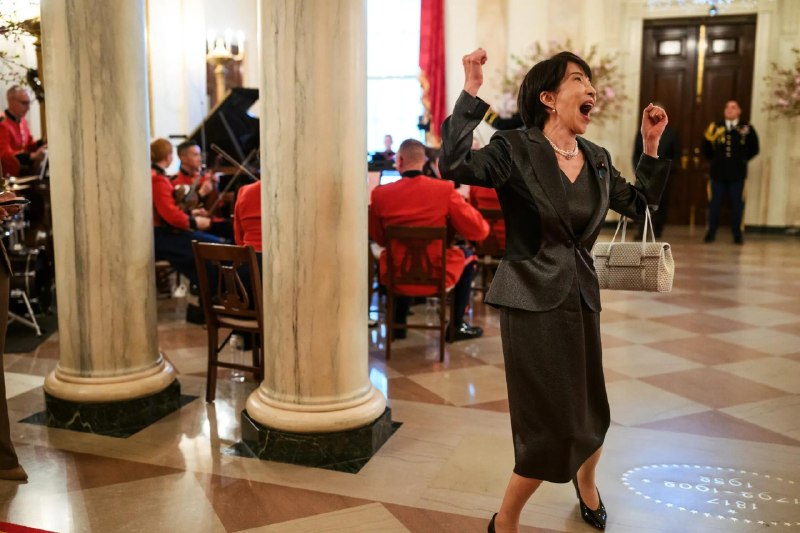
On 21 July 2026, Japanese Prime Minister Sanae Takaichi told a national audience that she has been sleeping between zero and three hours a night since assuming office. The one exception, she said, was 20 July, the final day of Japan's three-day weekend, when she managed a longer rest. The remark, carried by Telegram channel Clash Report in the same hour, was almost certainly intended as a flex. It also reads as policy.
Twelve hours earlier, Takaichi's cabinet had approved its annual economic and fiscal policy blueprint, the document that sets Japan's medium-term fiscal trajectory and signals to markets which sectors the state intends to back. Nikkei Asia's morning digest of the package, dated 21 July 2026 UTC, describes a long-term growth doctrine rather than a stop-gap stimulus. The pairing is not coincidental. A leadership cult of endurance is being welded, in real time, to a state-led growth agenda. The contradiction is the point: the same premier who cannot sleep is asking voters, bureaucrats and bondholders to stay awake with her.
The sleeplessness pitch
Takaichi's public disclosure is a recruiting signal, not a confession. Japan's bureaucratic and political class has long tolerated punishing hours; the new twist is that the prime minister is now branding her own deprivation as a national asset. The intended audience is twofold. Inside the governing coalition, it pre-empts the charge that the economic blueprint is someone else's idea: she owns the insomnia, therefore she owns the plan. Outside, it sets a tone of personal sacrifice that recasts austerity-via-fiscal-discipline as moral exertion rather than economic pain.
This is unusual framing for a country that has spent two decades arguing, often against itself, about whether overwork kills people. Karoshi, death by overwork, has been a documented social phenomenon in Japan since the 1970s, with statutory recognition arriving in 2014. A sitting prime minister declaring near-zero sleep as routine, in prime time, is therefore a deliberate departure from the post-bubble consensus that exhaustion is a cost, not a virtue. The pitch is that the country can choose: another decade of managed decline, or a few years of collective sleeplessness while the state re-industrialises.
What the blueprint actually does
The economic package is the more substantive half of the story. According to the Nikkei Asia readout, the cabinet approved a long-term growth framework rather than a short-term stimulus, with fiscal policy aligned to that horizon. The strategic significance is what the document is not: it is not a consumption handout, not a one-off cash transfer, and not a balance-sheet recapitalisation of the kind Japan reached for in the 1990s. It is a supply-side industrial statement, of the sort associated historically with Japan's Ministry of Economy, Trade and Industry (METI) rather than its Ministry of Finance.
The political reading is straightforward. Takaichi is gambling that Japan's demographic ceiling and its debt-to-GDP ratio, the highest in the OECD, can both be addressed by raising trend productivity through targeted state support for selected sectors. That bet has obvious failure modes: misallocation of capital, capture by incumbent keiretsu firms, and the demographic arithmetic that no industrial policy can fully offset. But it also has a non-trivial upside if executed with discipline. Japan retains deep capital pools, a sophisticated supplier base in semiconductors, batteries, robotics and defence components, and a currency that has already absorbed a meaningful round of depreciation. The blueprint asks those advantages to do the heavy lifting.
The structural frame
This is a recognisable pattern in late-stage developed economies with constrained fiscal headroom: when monetary policy has run out of conventional room, when demographic arithmetic has closed the consumption door, and when the debt stock rules out a Keynesian splurge, the only remaining lever is the composition of growth. State-directed capital allocation, sectoral subsidies, and a willingness to tolerate higher headline debt in exchange for higher trend output is the playbook. Several Asian peers, most prominently South Korea under successive administrations, have run versions of it. The West has flirted with it through the CHIPS Act, the Inflation Reduction Act, and the EU's industrial strategy.
The plain-English version: when you cannot print your way to growth and you cannot spend your way to growth, you direct your way to growth. That requires a state apparatus willing to pick winners and a society willing to accept the picking. Takaichi's argument, in substance, is that Japan is ready.
The plausible alternative reading
The counter-narrative is not fringe. It runs as follows: the same blueprint will entrench the firms that already dominate, hollow out small and medium enterprises that cannot match the paperwork or the patience, and deliver a modest productivity bump at the cost of a structurally weaker private sector. The sleeplessness messaging, on this read, is not discipline but compensation. A leadership class that cannot articulate a redistribution story reaches instead for a sacrifice story: we suffer, therefore the plan is legitimate.
There is also a foreign-policy dimension that the economic coverage underplays. Japan's regional security environment has tightened markedly in 2025 and 2026, defence spending has stepped up, and the industrial-policy scaffolding around chips, batteries and shipbuilding doubles as deterrence policy. Takaichi's blueprint sits inside that wider architecture whether she frames it that way or not. A growth doctrine that pours capital into dual-use sectors is also a posture document addressed to Beijing and Washington.
The remaining uncertainties
The Nikkei Asia summary is high-level; the line-item contents of the blueprint, including specific sector allocations and the fiscal trajectory beyond the current medium-term framework, will determine whether the package is judged a Takaichi doctrine or a continuation of late-Abe-era METI thinking in new packaging. The labour-market signal is also unresolved. A prime minister who publicly treats zero-to-three-hour sleep nights as a baseline is, wittingly or not, licensing the same behaviour in ministries and wards that are already under demographic strain. The country that spent the last decade legislating against karoshi is being asked, in 2026, to admire it from the top.
What to watch next: the release of the full blueprint text, the autumn supplementary budget that will translate the framework into yen, and the first round of METI-aligned sectoral guidance. The plan is on the page. The sleep pattern is on television. Whether Japan can metabolise both without breaking is the experiment of this political cycle.
Desk note: the wire coverage of Takaichi's economic blueprint treats the document as a fiscal event; Monexus is framing it as a labour-and-discipline story first, a fiscal document second, because the prime minister's own messaging makes that the dominant register.
Wire provenance
This editorial synthesis draws on the following public wire/social posts:
- https://t.me/ClashReport
- https://t.me/nikkeiasia