Spain's second title crowns a tournament built on Uefa's open wound
Spain lifted the FIFA World Cup for the second time on Sunday, but the headline out of the final was Aleksander Ceferin's empty seat, a procedural boycott that puts Europe's relationship with world football's governing body back at the centre of the agenda.
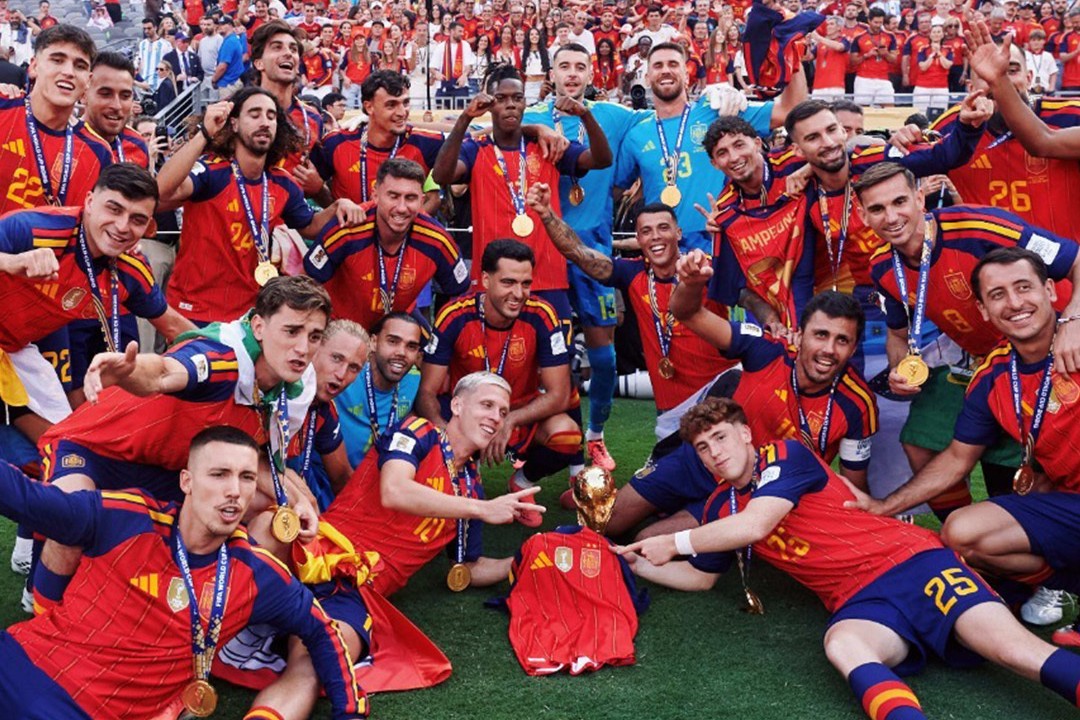
Spain are world champions for the second time. The final in the United States on 19 July 2026 ended with Spanish hands on the trophy, their first men's senior crown since the run in South Africa sixteen years ago, and Argentina, the holders, left the pitch with more than just defeat to digest.
Off the field, the match will be remembered less for what Spain did well than for the empty chair where Aleksander Ceferin, the president of Uefa, should have been sitting. According to BBC Sport, dated 20 July 2026 at 16:44 UTC, Ceferin boycotted the World Cup final in protest against Fifa, the kind of senior European absence at a flagship football event that is, in itself, the story.
The boycott, and what it costs
Ceferin's no-show is not a personal tantrum. It is the visible edge of a slow-rolling institutional fight that has dragged through the last year over governance, calendar control and the share of revenue flowing to the confederations that actually run the qualifiers. By staying away from the most-watched fixture of the cycle, the Uefa president put down a marker: the European game's leading office considers the relationship with Fifa, under president Gianni Infantino, broken enough to snub the trophy lift.
The risk for Uefa is that a boycott without leverage reads as theatre. A riskier calculation inside European football is that the boycott instead accelerates the long-discussed question of a coherent breakaway or alternative competition structure, the kind of move that has been threatened, denied, and threatened again in boardrooms for two decades and would, if it ever materialised, redraw the map of the sport.
The trouble in the stands
While the politicking played out in boardrooms, an uglier and more familiar scene broke out on the pitch. BBC Sport reported on 20 July 2026, also at 16:44 UTC, that Argentina are likely to face a Fifa investigation following ugly scenes at the end of the World Cup final. The specifics, including the use of pyrotechnics and confrontations between Argentine players and security staff near the tunnel, place a second disciplinary file on the desk of Fifa's disciplinary committee within the same week that the governing body's relationship with its biggest confederation is in public rupture.
That overlap matters. A Spanish win and a disciplined Argentine exit would have given Fifa a clean closing image for a tournament built on North American infrastructure and a swollen 48-team field. Instead the global body ends the cycle answering two questions at once: how to discipline the runners-up, and how to keep Europe's federations inside the tent.
The structural frame
The architecture under strain is not new. World football has run for two decades on a compact in which Fifa owns the marquee events, the broadcast rights and the sponsorships, while confederations like Uefa, Conmebol and the Asian Football Confederation carry the cost of organising competitions, developing players and underwriting the qualifying pyramid. When the centre of gravity in revenue terms pulls harder toward the host confederations and their clubs, the periphery grumbles; when it pulls toward the Zurich headquarters, the strongest periphery pushes back.
Ceferin's empty chair is the periphery pushing back in the most photogenic way available without doing actual damage to his own members' interests. Spain, the eventual champions, are a Uefa member. Argentina, the runners-up, are not. The tournament result lands cleanly inside the European federation's zone of influence, which makes the protest easier to defend domestically and harder to dismiss as sour grapes in world football's unofficial headquarters.
What comes next
The next few weeks will tell whether the boycott was an opening move or the high-water mark of a dispute that has, until now, been carried out mostly in communiqués. Argentina's disciplinary case, confirmed by BBC Sport on 20 July 2026, gives Fifa an early opportunity to demonstrate that even-handedness still exists between a South American federation that was in the final and a European federation that was absent from it; the optics of that file will be read closely in Nyon.
Inside European football, the more interesting race is over what Uefa does with the gesture now that it has been made. Boycotts are borrowing credibility from the future: every week that passes without a follow-up mechanism, a meeting, a published letter or a formal agenda item converts the protest into decoration. Spain's second title and Argentina's disciplinary date both arrive inside a window where the continental body will either spend the borrowed credibility, or quietly let it expire.
This article was filed from the sports desk. Where wire copy leads with the final score, Monexus reads the boycott as the more durable headline: a tournament that ended with a trophy is now also a test case for who, in world football, actually owns the room.
Wire provenance
This editorial synthesis draws on the following public wire/social posts:
- https://t.me/s/olympics
- https://t.me/s/olympics