Spain's youth, Argentina's wound: what MetLife actually settled
Spain beat Argentina 1-0 in extra time at MetLife Stadium to claim a second men's World Cup title, leaving Lionel Messi in tears and a 19-year-old holding the trophy.
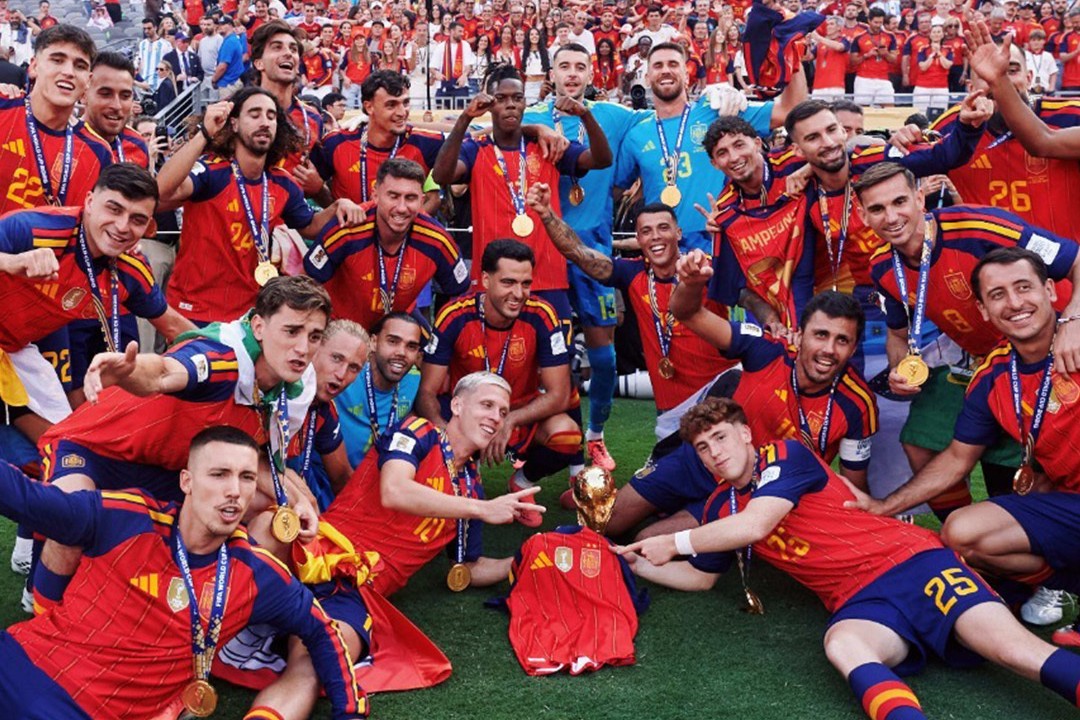
Ferran Torres struck in the 106th minute at MetLife Stadium on 19 July 2026, turning a final that had refused to behave into the kind of result dynasties are built on. Spain beat Argentina 1-0 in extra time to claim a second men's World Cup title, and Lionel Messi, at the other end of his career arc from Lamine Yamal, left the pitch in tears. The scoreline flattered Spain's control. The temperature of the match did not flatter anyone.
The final answer to the question every neutral viewer kept asking through 120 minutes is that Spain are now the standard, and Argentina are the team that chased three straight major trophies and ran out of road. Read forward, the night settles two arguments at once: it confirms Spain as the deepest footballing nation of their generation, and it puts the Argentina project that won in 2022 in a harsher, less forgiving light. Read sideways, it tells a quieter story about who gets to inherit a team's mantle, and at what age.
The match, in plain English
Spain did not dominate possession in the way the script suggested; Argentina, asked to defend a trophy they had spent four years carrying, sat in and waited for a counter. Neither side broke the deadlock inside 90 minutes. Torres, a Barcelona forward who has spent most of his career as a useful squad player rather than a headline act, finished the game's only goal in extra time, a window that opens for the side willing to commit a third body forward and that closes hard on the side still chasing shadows.
The match was bad-tempered in the way finals become bad-tempered when neither team trusts the other to play. BBC Sport's wrap framed the night as Spain's Lamine Yamal completing football at 19 while Argentina betrayed Messi, a phrase that captures the emotional geometry of the result better than the tactical shape did.
The Messi problem, stated honestly
The story the world wanted was the last dance. Messi himself made the framing harder to sustain. Speaking after the final, he said the pain was immense and that it would take time to heal, a remark reported by BBC Sport on 20 July 2026. That is not a man retiring on the pitch. It is a man registering the fact that a final played at walking pace for stretches had still produced one clean chance for him, and Spain had closed it down.
The competing read, surfaced in CBS Sports' post-mortem of the tournament, is that Argentina had become the villains of the competition as they chased a dynasty: a side that had learned how to win tight games at Qatar 2022 and had not unlearned the elbows that came with the craft. CBS's analysis, published in the early hours of 20 July 2026 UTC, treats the fouls and the petulance as evidence of a team that had absorbed too much of the psychology required to retain a trophy. There is something in that, and the bad-tempered texture of the final gives it weight. There is also the simpler version: a 38-year-old's legs gave out before his brain did.
The honest answer is that both readings are partly right. Argentina were the more cynical side across the tournament, and Messi, in his final competitive summer at this level, played the kind of matches where the ball moves faster than the man. CBS Sport's World Cup Fix column on 20 July 2026 framed the open question cleanly: was this Messi's last dance, and if so, what kind of exit does a legacy deserve.
The Yamal variable
Spain's victory was always going to be read through Lamine Yamal, who turned 19 during the tournament and ended it lifting silverware that puts him in a category his age does not belong in. BBC Sport's report on the final put the contrast in the headline: Spain's Lamine Yamal completes football at 19 as Argentina betray Messi. The structural point underneath is that Spain have been building a side around a player who can carry a tournament for the next decade, while Argentina's spine is a generation older and visibly closer to its ceiling.
Enzo Fernandez, the Argentina midfielder whose own tournament was defined as much by what he said off the pitch as by what he did on it, defended the squad on 21 July 2026. Argentina, he said, had represented their nation in the best possible way. The line lands differently depending on what you watched: as grace under pressure, or as the insistence of a dressing room that the refereeing and the optics let them down more than the football did.
What the final actually settled
The Spanish federation will frame this as the second chapter of a national team story that began with the 2010 generation and stalled for fifteen years; that framing is fair. The Argentine federation will frame it as the end of a window, not a project; that framing is also fair. Both can be true, and the tournament itself, read across the group stage and the knockout rounds, supports each side's preferred narrative.
What the result did not settle is the Messi question. A player does not get to choose the shape of his farewell, only whether he shows up for it. He showed up. Spain were better. The 1-0 scoreline, settled by Torres in extra time on 19 July 2026 and confirmed across the wire overnight, will be remembered as Spain's night, but it is also the night the post-Messi Argentina stopped being a hypothesis and became a project that needs new answers.
The desk note: the wire framed this final around Messi's tears and Yamal's youth; Monexus read it as the moment Argentina's cycle ended, not as Messi's farewell tour.