Smotrich's refusal to join the US-Iran flare-up exposes Israel's strategic bind
Israel's Finance Minister says the country has no interest in joining a 'limited confrontation' between Washington and Tehran, signalling a cabinet divided over how far to escalate.
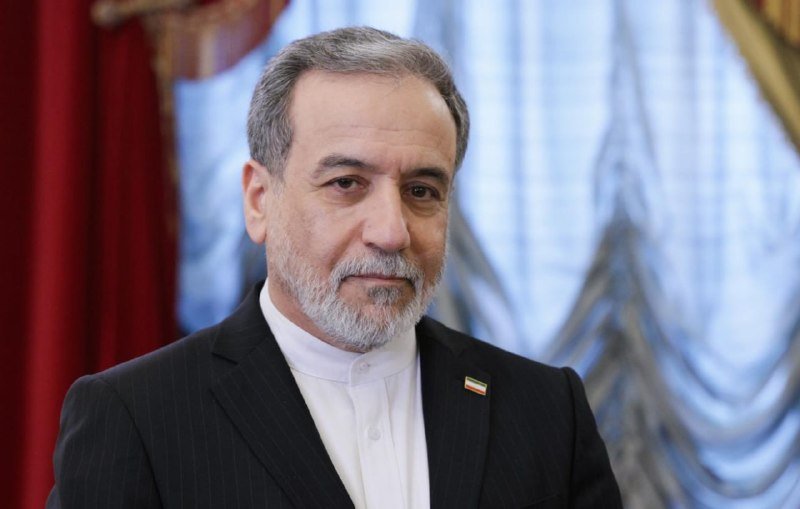
Israeli Finance Minister Bezalel Smotrich walked out of a marathon security cabinet meeting on the night of 20 July 2026 and told reporters that the State of Israel has no interest in joining the limited confrontation underway between Iran and the United States. The remark, carried by Open Source Intel on Telegram at 08:08 UTC on 21 July and echoed by ClashReport an hour earlier, is the most explicit public statement yet from a sitting Israeli cabinet minister that Jerusalem intends to stay on the sidelines of the latest Washington-Tehran exchange.
The framing matters. Smotrich is not a dove. He sits in the far-right Religious Zionism bloc, opposes virtually every territorial concession of the last decade, and has spent his tenure as finance minister reshaping settlement financing and West Bank infrastructure budgets. When a figure of that disposition publicly argues for restraint, the calculation is not dovish; it is strategic. Something in the current shape of the US-Iran confrontation has convinced Israel's most maximalist finance chief that joining the fight would cost more than it returns.
What Smotrich actually said
The quoted formulation, distributed by Open Source Intel and ClashReport in the early UTC hours of 21 July, is precise. Israel has "no interest in joining the limited confrontation between Iran and the United States," and, per the longer version carried by ClashReport at 07:41 UTC, "the current situation is the best possible for us." That second clause is the telling one. It reframes non-belligerence as active satisfaction: Israel is not abstaining out of caution, it is abstaining because the existing configuration of forces is already favourable. The minister is telling the public, and the Iranians, that Jerusalem reads the current US-Iran temperature as one in which Israel is getting the benefit without paying the bill.
That is a coherent position only if the underlying US action is doing work Israel would otherwise have to do itself. The most plausible reading is that Washington's posture, whatever its stated aim, is degrading Iranian capabilities or alliances in ways that align with Israeli interests, and that an Israeli strike would simply complicate the picture: it would hand Tehran a unification narrative, force Gulf partners to choose sides, and risk a multi-front opening at a moment when Israeli forces are already committed elsewhere.
The split the cabinet cannot hide
Smotrich's public line is itself a tell about what happened in the security cabinet. Ministers do not usually rush to cameras to explain why they are doing nothing unless a meaningful faction inside the government wanted to do something. The leak, or the deliberate on-record statement, signals that the discussion ran long because positions diverged. The argument inside the cabinet, by inference, is not whether Iran is a threat; it is whether this particular US-Iran cycle is the right moment for Israel to act, and whether the cost of entry has fallen since the last round.
The risk calculus has three variables. First, intelligence: what has actually changed in Iranian air defences, proxy missile stocks, or command-and-control since the last exchange. Second, coalition: how the Gulf states, Jordan, and Egypt would read an Israeli strike launched on the back of a US-Iran incident, particularly after the diplomatic work of the last year. Third, internal capacity: Israeli air and ground assets are committed in multiple theatres, and a third opening would stress force generation at a moment when reservist mobilisation carries a domestic political cost.
Reading the strategic bind
The deeper structure here is the one that defines Israel's position in 2026: it possesses the most capable strike force in the region but has lost the ability to use it without paying a price that previous governments found acceptable. A decade ago, a senior Israeli minister could describe a US-Iran confrontation as a useful event from which Israel should stand back; today, that same framing is being offered by a hardliner, which means the constituency that once demanded unilateral action has been persuaded, at least temporarily, that restraint is the better expression of Israeli power.
The pattern is not unique. Across the past year, governments with the technical capacity to escalate against Iran have repeatedly calculated that the political return on escalation is negative. Iran's own posture, oscillating between proxy activation and controlled de-escalation, has been designed precisely to make the cost of entry high. The arithmetic Smotrich is publicly endorsing is the result: a regional order in which Iran is degraded not by Israeli action but by the wider confrontation the United States is currently running, and in which Israel benefits as a free rider.
Free-rider positions are stable only as long as the principal power continues to do the work. That is the part of the analysis Smotrich's formulation does not address. If Washington's calculus changes, if the limited confrontation is resolved in a way that leaves Iranian capabilities intact, the Israeli cabinet that today counsels restraint will face the same decision under worse conditions. The strategic bind is not "whether to join"; it is the recognition that Israel has, in this cycle, no attractive option that does not involve either following Washington or paying the bill alone.
What we verified and what we could not
The quoted language from Smotrich is carried by two distinct Telegram channels operating in the open-source intelligence ecosystem; both posts are timestamped within a single hour on 21 July 2026, and both reproduce the same formulation, suggesting a single underlying source rather than independent reporting. No major wire (Reuters, AP, AFP, BBC, Times of Israel) has, as of the timestamps on these messages, published a confirmation on the cabinet's agenda. What we can verify is that Smotrich spoke publicly after a long security cabinet meeting on 20 July, and that the substance of the quote is consistent with his prior public positions on cost-benefit calculation in regional confrontation. What we cannot verify is the precise wording beyond the truncated version circulating on Telegram, the full list of ministers present, or the duration of the cabinet session. The framing should be read accordingly.
Desk note: Monexus frames this as a strategic abstention by a maximalist minister, not a dovish one; the same underlying facts have been read elsewhere as a sign of an Israeli-American rift, an interpretation the quoted language does not support.
Wire provenance
This editorial synthesis draws on the following public wire/social posts:
- https://t.me/osintlive
- https://t.me/ClashReport