Sirens across Jordan put Tehran's escalation calculus on the table
Air-raid sirens sounded across Jordan on the morning of 21 July 2026, putting Iran's regional posture back at the centre of a conversation Israel and the Gulf have tried to keep narrow.
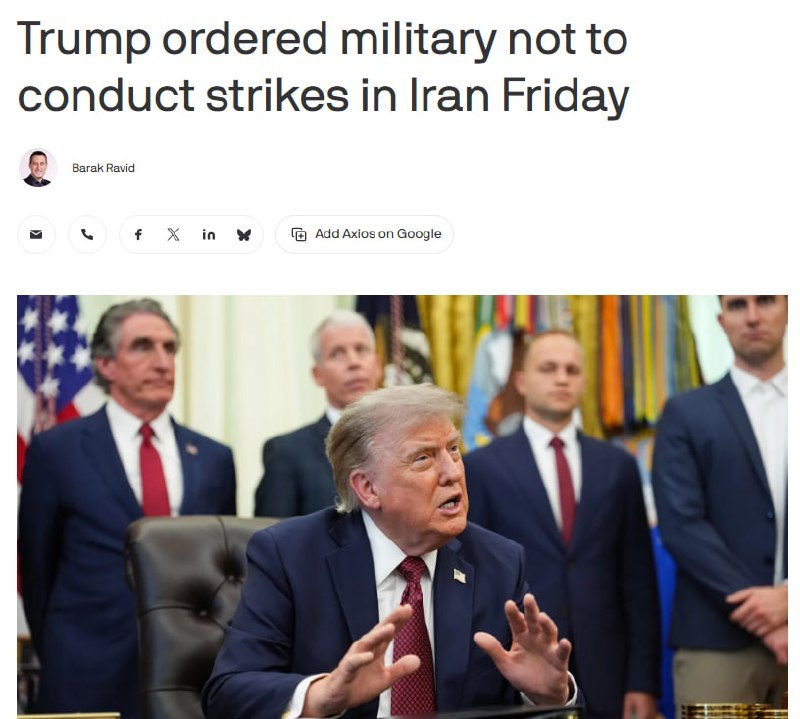
Air-raid sirens sounded across Jordan at approximately 08:34 UTC on 21 July 2026, according to three separate early-morning dispatches from regional outlets covering the country from the outside in. The Cradle-aligned channel @GeoPWatch posted at 08:34 UTC that sirens were active inside the kingdom; the Iranian state wire @TasnimNews_en confirmed the same report four minutes later; Al Alam Arabic, the Iranian broadcaster's Arabic channel, repeated the alert at 08:39 UTC. The three notifications arrived within a five-minute window, with no casualty count, origin point, or intercept record attached.
Jordan woke up inside someone else's escalation arc. That is the operative fact behind Tuesday's sirens: the kingdom is the loudest signal-receiver in a regional contest it does not control and has spent two decades trying to stay out of. The hard question is not what the sirens meant in the moment. It is what the calibration says about Iran's willingness to let airspace over a US-aligned, treaty-bound Arab neighbour become a warning channel.
What the wire actually said
The three dispatches are short on detail and long on posture. Tasnim, the English service of Iran's Islamic Propaganda Organisation, framed the sirens as a discrete event without naming a launch site, projectile type, or destination. Al Alam Arabic used the same phrasing, "sirens sounded across Jordan," in a copy-paste template that regional readers will recognise from prior incidents: a one-line alert carried across multiple Iranian state-aligned channels within minutes, the grammar of a press operation as much as a news bulletin. @GeoPWatch, an English-language account closely associated with the Axis of Resistance media ecosystem, was first to publish at 08:34 UTC and bundled the report with a 🇮🇷❌🇯🇴 pairing.
What is absent is as telling as what is present. None of the three posts identifies the triggering system, interceptor launch, inbound projectile, drone activity, or civil-defence drill, and none cites a Jordanian government source. The Royal Hashemite Court, the Jordan Armed Forces spokesperson, and the Public Security Directorate had not posted on the sirens in the window the three channels covered. That asymmetry matters. It means the public record, as of 08:39 UTC, is built entirely on Iranian-aligned reporting of an event inside a third country.
The framing contest behind the alerts
Tasnim and Al Alam do not run unsourced alerts by accident. Both outlets operate as extensions of Iran's information posture, and both have a track record of flagging events in third countries when the political message is "Iran's reach extends here." The implied audience is not the Jordanian public. It is the Israeli and US intelligence community reading the public feed, and the Gulf Arab states whose airspace Iran has been probing, by accusation and by demonstration, for the better part of a decade.
Jordan's strategic position makes the framing legible. The kingdom hosts US Central Command forward elements, signed a defence cooperation agreement with Washington in 2021 that was renewed in 2024, and has acted as the diplomatic intermediary between Israel and the Arab world since the 1994 Wadi Araba treaty. A siren event on Jordanian soil, even an unconfirmed one, lands in a context where Tehran has reason to signal reach and where Amman has reason to deny it. The handful of minutes between the first Iranian-language post and the last represents the window in which the framing got locked in before the receiving country could speak.
There is a counter-read worth keeping in view. Jordanian civil-defence sirens do sound, periodically, for incidents that have nothing to do with Iran: commercial-air emergencies, weather events, training cycles. Some observers on Western desks will lean on that as the default explanation for any unconfirmed alert, particularly in a hot season where defence forces are under heightened operational tempo. The structural problem is that a default-explanation read and a signalling-read cannot both be settled from the three Telegram posts alone. The evidentiary floor is too thin to choose between them.
Why a third country's airspace matters
Iran's escalation calculus runs through corridors, not capitals. The airspace over Iraq, Syria, Lebanon, and Jordan has been the operational theatre for the longest-running shadow contest between Tehran and Jerusalem since 2018. Drone routes that surface in Iraqi Kurdish reporting, cruise-missile trajectories reconstructed from Syrian crater analysis, and ballistic tests flagged by Western intelligence have all run through the same geography. Jordan sits at the hinge of that corridor: east of the Jordan Valley, south of the Syrian desert, and a short flight from both Israeli and Iraqi airspace.
A siren event inside that hinge, even one carried on Iranian-state wires first, does three things at once. It tests the response curve of a US-aligned air-defence architecture. It signals to Israeli planners that the airspace over the eastern front is not a buffer but a potential launch corridor. And it gives Tehran a measurable data point on how fast a major Arab capital's information environment can be steered by a few well-timed Telegram posts. The last is the underrated one. Control of the first sentence of a crisis is, in modern Middle Eastern information warfare, half the battle.
What remains unknown
The sources published in the 08:34 to 08:39 UTC window do not specify the origin of the alert, the location of the sirens within Jordan, whether Jordanian air-defence systems engaged any target, or whether the Royal Jordanian Air Force scrambled aircraft. No casualty count, no interception record, and no Jordanian government confirmation appears in the three posts. A Reuters or Associated Press wire on the incident had not, at the time of writing, appeared in the same feed window. The structural uncertainty is real: the public record on this event, as it stands, is built entirely on three Iranian-aligned Telegram channels with overlapping text and no named on-the-ground source.
That uncertainty is the story, as much as the sirens themselves. The next twenty-four hours will determine whether Amman confirms the event, issues a denial, or stays silent, and whether Israeli, US, or Saudi outlets corroborate the reporting with their own sourcing. Until then, what is verifiable is narrow: three alerts, three minutes apart, one country, no corroborating detail. The signal value of that narrow record is high precisely because it leaves so much room for interpretation. The reader should hold the event loosely and the framing more loosely still.
How Monexus framed this: a still-unverified alert carried first by Iranian-aligned channels is treated as a posture event, not a confirmed military incident. The Jordanian government's silence in the wire window is part of the story, not a footnote.
Wire provenance
This editorial synthesis draws on the following public wire/social posts:
- https://t.me/alalamarabic
- https://t.me/TasnimNews_en
- https://t.me/GeoPWatch
- https://en.wikipedia.org/wiki/Iran%E2%80%93Jordan_relations
- https://en.wikipedia.org/wiki/Jordan%E2%80%93United_States_relations