Seoul's tape, Tehran's rhetoric, and a stablecoin clock: three markets telling the same story
South Korea's KOSPI is bleeding 23% in a month, Trump is warning Tehran again, and US regulators just gave foreign stablecoin issuers a July 2028 deadline. The thread connecting them runs through the dollar.
On 20 July 2026 at 07:50 UTC, the Korea Composite Stock Price Index was down 4.46% on the session, extending its July slide to 23.13%. A full month had not yet passed, and Seoul had already given back nearly a quarter of its equity value. Twelve hours earlier, at 16:50 UTC on the same day, US President Donald Trump posted a written warning that Iran would "pay many times over" for every American soldier killed, the latest escalation in a standoff that has pulled Brent crude and defence names in opposite directions. Two days before that, on 19 July at 17:30 UTC, US regulators put foreign stablecoin issuers on a clock: non-compliant tokens cannot be offered to US users after July 2028, the full implementation of the GENIUS Act regime.
These are three stories on three desks. Read together they describe one mechanism. When the dollar's periphery gets nervous, when the Middle East threatens to close lanes of energy trade, and when Washington tightens the regulatory ring around dollar-denominated digital assets, the same beneficiary emerges: whoever can still print, clear, and enforce the unit of account. That is the structural thread the wires rarely pull on their own.
Seoul as the world's risk barometer
A Bloomberg analysis picked up by Cointelegraph on 19 July at 05:31 UTC described South Korea's market as "the global benchmark for investor risk appetite." The framing sounds like an upgrade for Seoul. It is closer to a warning. The KOSPI is unusually concentrated: a handful of semiconductor and battery names account for an outsized share of free-float weighting, and the index is also one of the most retail-driven large markets in Asia. That combination makes it sensitive in two directions at once. When global chip-cycle expectations turn, Samsung Electronics and SK Hynix move first. When retail margin financing unwinds, the index bleeds faster than Tokyo or Taipei. A 23% drawdown in twenty trading sessions is not just bad luck; it is the index doing what it is built to do.
The interpretive question is whether Seoul is a leading indicator or a lagging victim. The bullish read, embedded in the Bloomberg framing, is that Korean equities price in risk appetite faster than Wall Street does, which makes KOSPI a useful global thermometer. The bearish read is that Korean leverage has simply blown up faster than US or European leverage, and what looks like a forward signal is actually a domestic margin unwind in slow motion. The two readings are not mutually exclusive, and both are consistent with the data.
The structural point is larger. South Korea runs a current-account surplus, an export-led growth model, and a won that floats. In a tightening dollar cycle, the country should be a beneficiary. That it is leading global equity declines suggests the cycle is not behaving the way the textbook predicts, and that the marginal capital moving through Asian equities is shorter-term and more dollar-sensitive than the underlying economy warrants.
Tehran, the Strait, and the energy underlay
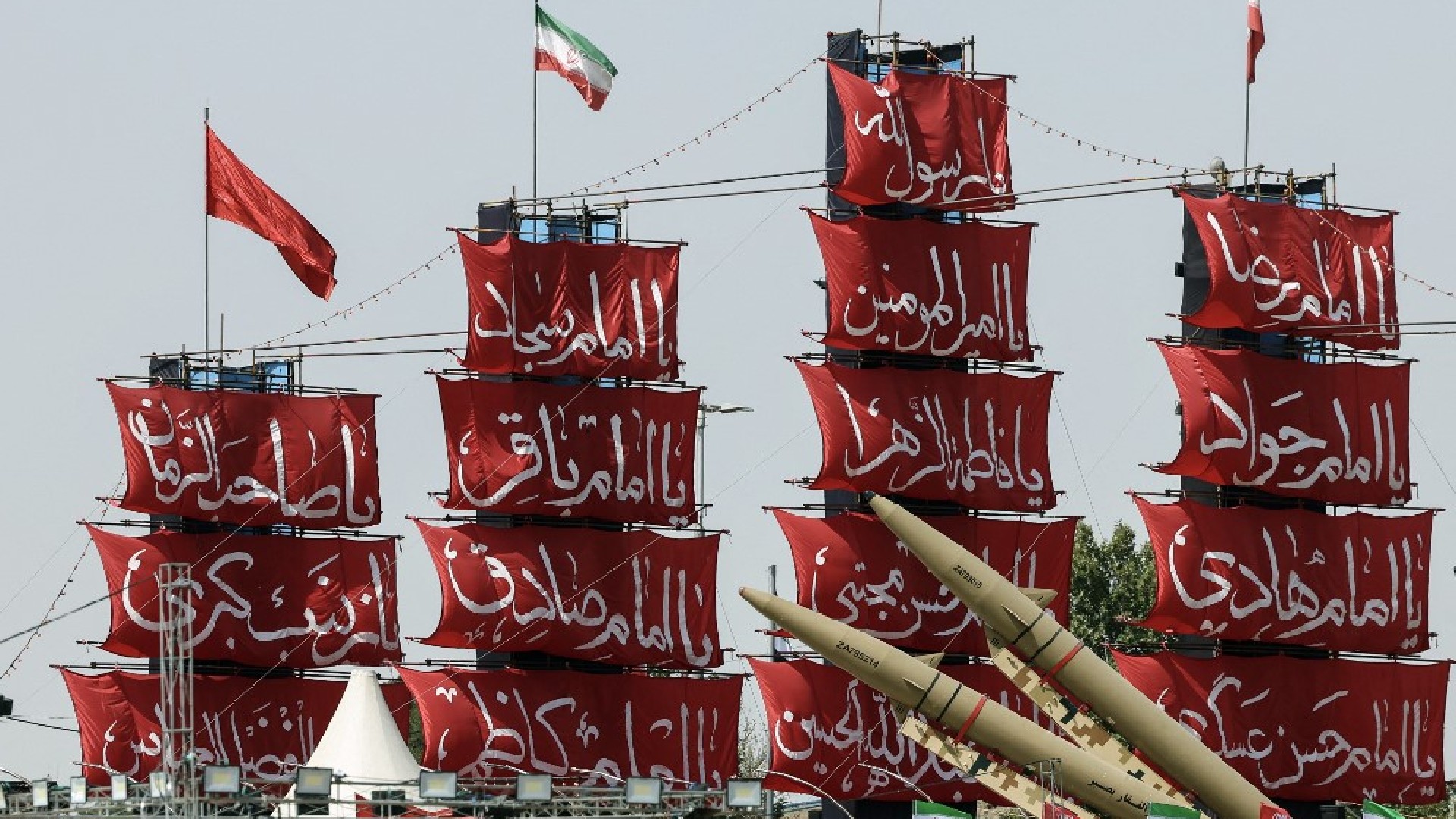
Trump's 20 July warning to Iran is the kind of statement that is priced in milliseconds and forgotten in hours, except when it is not. The Strait of Hormuz remains the chokepoint that anchors every oil-options market and every defence-stock multiple in the Gulf. Roughly a fifth of seaborne crude transits it. Iran's asymmetric toolkit, fast boats, anti-ship missiles, drone swarms, mine-layers, makes even a credible threat expensive to insure against. A single presidential warning does not close the Strait. What it does is push the insurance curve, and through it freight rates, refined-product spreads, and the equity prices of refiners and shippers on both sides of the conflict.
The counterpoint worth naming is that Trump's language is also a negotiating instrument. Sanctions relief, nuclear inspections, and the residual hostage file have all moved in the last eighteen months under a regime of publicly amplified threats. The same words that move Brent twenty minutes after they are posted can be walked back over the following week. The structural point is that the market has no way to distinguish a tail-risk warning from a bargaining posture, so it prices both, which is why oil-related volatility has stayed stubbornly elevated despite no actual closure of the waterway.
What this has to do with Korean equities is the channel. Higher realised and implied energy volatility punishes the import-heavy emerging-Asia complex asymmetrically. Korea imports the bulk of its crude and LNG. A widening risk premium on the Strait feeds directly into the won's effective exchange rate, which feeds into the dollar cost of importing semiconductors' upstream inputs, which feeds into the equity multiple on the names that dominate the KOSPI. The market is not irrational; it is correctly pricing the linkage.
The stablecoin clock and the dollar perimeter
On 19 July at 17:30 UTC, the headline that did the least visible damage to markets may end up mattering the most. US regulators have given non-compliant stablecoin issuers a hard two-year runway: after July 2028, tokens that do not meet the new regime cannot be offered to US persons. The GENIUS Act framework, fully implemented, draws a regulatory perimeter around dollar-pegged digital assets that mirrors the banking perimeter. Foreign issuers must comply, delist, or geofence the US market.
The immediate market reaction was muted. Equities and rates did not move on the news. That is the wrong read of the right signal. Dollar stablecoins are not a parallel financial system; they are an extension of the dollar payment system into venues the Federal Reserve does not directly supervise. The new regime does not change the unit of account. It changes who can mint claims on it. That is a sovereign decision, not a technical one.
The structural stakes are clearer in the rest of the world than in the United States. A compliant US-anchored stablecoin regime pushes foreign issuers into one of three postures: license under US rules and accept the supervisory cost, exit US distribution and rely on offshore pools, or build non-dollar-pegged alternatives and serve markets where dollar dominance is not the operative constraint. The third option is the one Beijing has been quietly building, the one Brussels has talked about, and the one several Gulf sovereigns have explored through tokenised deposit structures. None of these alternatives is large enough to dent the dollar's role today. The 2028 deadline is the start of a process, not its end.
What the three stories share
Read separately, a falling Korean index is a Korean story. A Trump warning to Tehran is a Middle East story. A stablecoin compliance deadline is a Treasury story. Read together, they describe the same phenomenon: the cost of operating at the edge of the dollar system is going up, and the visible expression of that rising cost is showing up in the markets that are most exposed to it.
The argument is not that Seoul, Tehran, and Washington are coordinating. They are not. The argument is that the dollar's dominance is a single global externality, and the marginal price of that externality is now being paid in three different venues at once. Korean retail leverage is the most visible because the index moves daily. Strait insurance premia are the most volatile because the tail is real and thin. Stablecoin compliance is the slowest but the most durable because it rewrites the rulebook under which the next generation of dollar-denominated digital liquidity will be issued.
What remains genuinely uncertain is whether the July 2028 stablecoin deadline will hold. Treasury rulemaking is vulnerable to court challenge, congressional revision, and administration turnover. The two-year runway is a policy preference, not a contractual commitment. The Strait can de-escalate as quickly as it escalated, and the KOSPI's drawdown can reverse on a single dovish Fed speech or a benign chip-cycle print. None of that changes the underlying claim: the markets most exposed to dollar-periphery risk are being repriced, and the wires are reporting each move in isolation when they belong to one ledger.
Monexus framed Seoul's drawdown as a structural read on dollar-periphery risk rather than a domestic-confidence story, and treated the GENIUS Act implementation as a sovereign monetary decision rather than a fintech housekeeping item.
Wire provenance
This editorial synthesis draws on the following public wire/social posts:
- https://t.me/cointelegraph/
- https://t.me/cointelegraph/
- https://t.me/cointelegraph/
- https://t.me/cointelegraph/