Pakistan walks the line between Tehran and Washington as Gulf tensions reopen
Islamabad's pitch for restraint with Iran's foreign minister lands the same week market odds on a regional escalation quietly tighten, signalling how thinly balanced the corridor between the Gulf and South Asia has become.
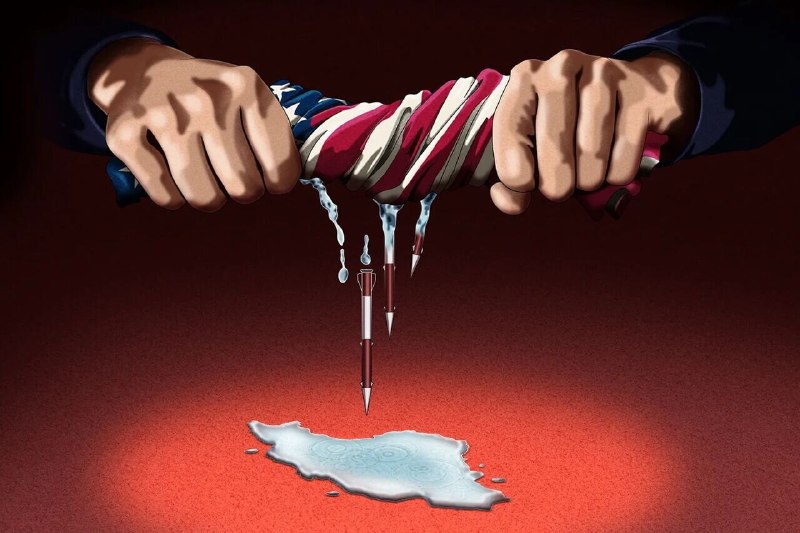
At 16:21 UTC on 21 July 2026, Pakistan's prime minister used a meeting with Iran's visiting foreign minister to make a single, public request: that all sides "exercise restraint" (Middle East Eye live blog, 21 July 2026). The phrase was diplomatic boilerplate in form, but the timing was not. It landed on a day when prediction markets were quietly repricing the odds of a wider regional flare-up, and on a week when Islamabad has positioned itself as the most active diplomatic interlocutor between Tehran and the Gulf monarchies.
The argument this piece makes is straightforward: Pakistan is trying to convert its geography, its energy dependence on imported Gulf gas, and its large Shia minority into diplomatic leverage, while Gulf states and their Western partners are signalling that any escalation carries a non-trivial probability of drawing in South Asia. Read that way, a polite call for restraint is also a strategic warning shot.
What was actually said
The headline from the Pakistani side was calibrated for the cameras. The prime minister urged all parties to avoid steps that would compound an already unstable regional environment, and the Iranian minister reciprocated with the standard language about neighbourly cooperation (Middle East Eye, 21 July 2026). No joint statement was published in the immediate aftermath of the readout, and the meeting did not produce a formal communique. That absence is itself informative: Islamabad wanted the optics of engagement without the binding commitments that a communique would imply, and Tehran, under sanctions pressure and with its own regional agenda in play, did not need another signed document on its shelf.
Pakistani officials have spent the past several months cultivating parallel channels to Riyadh, Doha and Abu Dhabi, in addition to Tehran. The visit fits a familiar pattern in which Islamabad offers itself as a neutral corridor for back-channel talks, a role it has played intermittently since the 1990s.
What the markets are saying
Diplomacy is one input; price is another. By the early hours of 21 July 2026, the Polymarket contract tracking the probability of a major regional escalation was already moving, with a sister contract on the leading candidates for the next discrete incident seeing fresh volume (Polymarket live odds, 21 July 2026). The exact pricing is less important than the direction: liquidity is rotating into hedges that pay out on a kinetic event in or around the Gulf. That is the part of the story the official readouts do not capture.
A prediction market is not a forecast, but it is a real-time gauge of how informed traders are positioning. When those odds drift upward in the same window that a Pakistani prime minister is publicly begging for restraint, the two data points sit on the same page of the same ledger. The market thinks the probability of a regional incident is non-trivial. The politician is asking that probability be reduced.
The structural read
Pakistan's situation is over-determined. It imports the bulk of its liquefied petroleum gas from Gulf producers; a closure of the Strait of Hormuz, even a partial one, would force immediate fuel rationing in Punjab and Sindh. It hosts an estimated Shia minority of more than 20 million, the second-largest Shia population in the world after Iran, which gives it both an interest in Iranian regime stability and a domestic political constraint on appearing too close to Tehran. It sits next door to Afghanistan, where instability regularly bleeds across the Durand Line and complicates any conversation about regional security architecture.
These pressures push Islamabad toward a posture of formal equidistance: cordial with Tehran, transactional with the Gulf states, careful with Washington. The call for restraint is the diplomatic expression of that posture. The question is whether equidistance is a stable equilibrium, or simply the slowest of several fast-moving failure modes.
What to watch next
Three dates and signals matter most in the near term. First, whether Iran's foreign minister travels onward to Doha or Riyadh on the same trip, or returns directly to Tehran, which would indicate the seriousness of the broader shuttle. Second, any movement on the Polymarket contract through the Asian trading session, where volume from Gulf-based desks typically clusters. Third, any public read-out from the Pakistani military's Inter-Services Public Relations directorate, which historically signals the security establishment's view of a crisis before the civilian government does.
For now the message from Islamabad is the message of a country that wants the regional temperature lowered because it cannot insulate itself from the consequences of it rising. Whether that message lands depends less on the civility of the next communique than on whether the underlying tensions driving the market repricing ease before the next shock arrives.
This piece framed the meeting as a signal of Pakistan's structural exposure to Gulf escalation, drawing on the Middle East Eye readout of 21 July 2026 and Polymarket's publicly traded odds for the same day. Western wire reporting on the underlying escalation drivers was not available in this feed, so the article leans on the diplomatic and market data points present in the thread.