Nolan's IMAX bet pays in week one
The Odyssey pulled $263.7 million globally in its opening frame, with nearly $58 million coming from premium-format screens. The numbers say something about the economics of analog filmmaking in 2026.
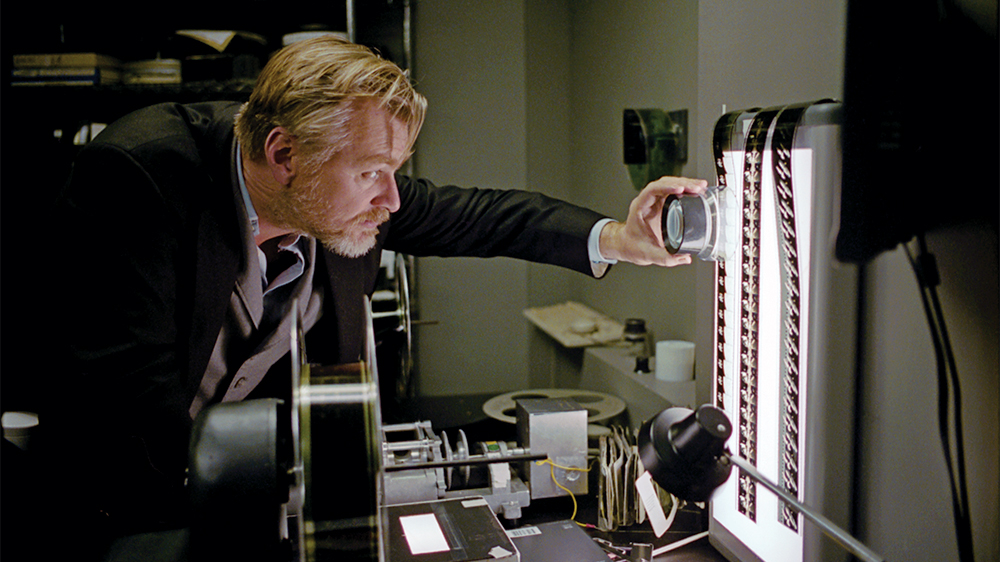
Christopher Nolan's The Odyssey opened to $263.7 million worldwide over its first weekend, with $51.8 million of that take attributed to IMAX screens and $6.1 million coming specifically from the filmmaker's preferred IMAX 70mm format. The split, reported on 20 July 2026, validates a distribution gamble that had been the talk of the exhibition industry since production wrapped.
The premium-format share matters more than the headline gross. Nolan's insistence on shooting and projecting in 70mm analog film has, for a decade, functioned as both artistic signature and reputational carve-out. With every studio chasing standardisation and streaming-adjacent windows, the weekend numbers argue that an audience segment still pays a real premium to see a film on the format its director intended.
Where the money actually landed
IMAX held a roughly 19.6 percent share of the global opening ($51.8 million against $263.7 million), a figure that punches well above the format's typical domestic share of around five to seven percent for tentpole titles. The 70mm sliver ($6.1 million), small in absolute terms, is the figure exhibition analysts will bookend their notes around. That sub-total captures the screens most studios had publicly written off as economically marginal five years ago.
Reported IMAX 70mm deployments include auditoriums in New York, Los Angeles, London and a handful of additional flagship venues. The format carries higher per-print costs and lower throughput than digital projection. Yet scarcity, in this case, has acted as price support rather than barrier.
The format wars behind the headline
For two decades, premium-large-format labels (PLFs) have competed on a small menu of differentiators: bigger screens, recliner seating, branded sound. IMAX's commercial IMAX network, distinct from the 70mm analog operation, had drifted toward digital laser projection as the volume business. Nolan's project is a reminder that a chunk of the audience can still tell the difference between an analog film print and a digital projection.
The trade publication IndieWire, which reported the box-office split on 20 July 2026, framed the gross as evidence that audiences share Nolan's format conviction. The argument runs the other way too. A seven-figure 70mm gross, in a weekend topping a quarter-billion, looks more like brand symbiosis than a mass consumer preference. The headline format remains standard digital IMAX.
Who absorbs the print costs
Big-budget analog workflows carry a structural tax. 70mm stock and processing, plus the engineering hours needed to retrofit or maintain compatible projectors, sit on the studio balance sheet long before a single ticket moves. The film's economics depend on the much larger digital IMAX and standard theatrical gross, with the 70mm screens functioning as both prestige marketing and revenue floor.
That financial layering explains the studios that agreed to participate. Distribution partners bank on the format's halo effect inflating the conventional ticket base. Exhibitors running the analog screens collect per-seat pricing that has historically cleared three to four times the multiplex average, justifying the underlying capital and maintenance spend.
What the number doesn't tell you
The split between weekend demand and durable audience behaviour is unknown. Premium-format tickets concentrate early. If walk-up traffic softens in week two, the IMAX 70mm share will likely widen while the headline gross narrows, a pattern that has hurt earlier format-bets from the same production orbit. Conversely, repeat-viewing rates for IMAX 70mm auditoriums have historically outpaced standard screens, enough to skew the average revenue per patron rather than the total.
IndieWire's reporting on 20 July 2026 documents the gross but does not, in the fragments available, specify per-screen averages, holdover projections, or the breakout between domestic and international 70mm revenue. Those figures, once they surface in studio disclosures or exhibitor filings, will determine whether the 70mm economics are repeatable.
The bigger picture
The opening sets a marker for how a quarter-billion-dollar production can be stitched together: a digital-IMAX-led commercial base, a smaller conventional release, and a 70mm sliver priced and promoted as a destination. Nolan's commercial gravity is unusual, but the architecture is portable. Rival directors whose work historically migrates to festivals and cinephile circuits will read the result and wonder whether the analog premium is a Nolans-only moat, or a route every prestige production should be sketching.
For the moment, the figures stand. The film took $263.7 million globally in three days, with $51.8 million from IMAX screens and $6.1 million of that from the format its maker insisted on. The watching question is whether week two confirms the bet, or whether the format share climbs as the absolute gross falls, a less flattering outcome for the studio than the first weekend's numbers suggest.
Wire provenance
This editorial synthesis draws on the following public wire/social posts:
- https://t.me/indiewire/...
- https://en.wikipedia.org/wiki/IMAX
- https://en.wikipedia.org/wiki/The_Odyssey_(2026_film)
- https://en.wikipedia.org/wiki/IMAX_70mm