The NFL's grass fight just hit a wall the players' union built
Raiders owner Mark Davis publicly sided with the NFLPA on natural grass. The league says the injury data it has don't justify the conversion. The fight exposes a league that has outsourced its playing surface to a chemical-heavy industry it does not want to antagonise.
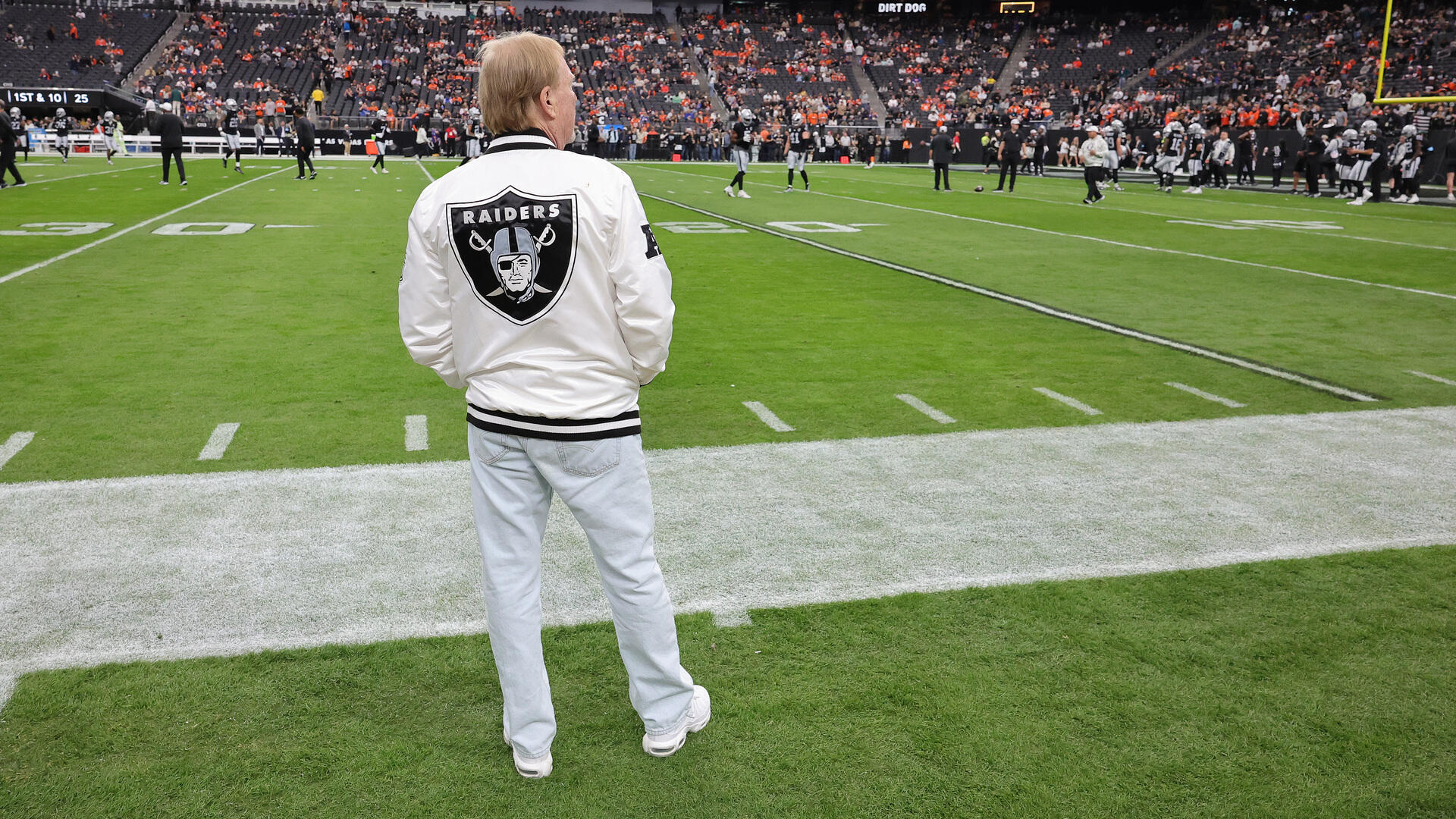
On 21 July 2026 the NFL Players' Association's push to convert every league stadium to natural grass ran into the same obstacle it has hit for years: the league office, armed with its own injury dataset, saying the case has not been made. Las Vegas Raiders owner Mark Davis broke ranks with his fellow owners and publicly agreed with the union that NFL stadiums can support natural grass, a rare owner-NFLPA alignment on a labour-side issue that the league, in a statement reported by CBS Sports, has rejected on evidentiary grounds.
The fight is not really about horticulture. It is about who pays, who decides, and whose injury count counts. The players' union treats the surface as a workplace-safety question; the league treats it as a capital-planning question about how many of its 30 stadium partners can be required to tear out field systems that cost millions and host roughly 20 other events a year. The two positions can both be true and still not produce a deal.
The data the league is hiding behind
The NFL's public position, as reported on 21 July, is that the injury data it tracks does not show grass outperforming synthetic turf in a way that justifies mandating a switch. That is a defensible scientific posture. It is also a selectively narrow one. The league's own injury surveillance database, run through a partnership with the IQVIA-formed Biologics analytics platform, has historically been used to defend the status quo on surfaces just as it has been used to support rule changes on kickoffs and hip-drop tackles. The same dataset, in other words, has been both a hammer and a shield, depending on the labour question in front of it.
Independent research is less ambiguous. A 2024 peer-reviewed study in the Journal of Athletic Training found significantly higher rates of non-contact lower extremity injuries on synthetic turf compared with natural grass in NFL game conditions, a finding consistent with earlier NFL combine and NCAA data. The league's rebuttal, typically, is that the studies do not control for weather, shoe type, or stadium drainage. That is a fair methodological objection. It is also one the league has never resolved to anyone's satisfaction, including its own.
Where the owners actually stand
Davis's intervention matters because it shifts the coalition map. NFL owners are not a monolith on this; they never have been. Cold-weather clubs in Green Bay, Chicago, Buffalo and Cleveland have long argued that grass is impractical for late-season games, and the introduction of heated fields has not fully solved that. Warm-weather and dome clubs that already play on FieldTurf or a similar product have a sunk-cost argument that the union's framing ignores. Davis, whose Raiders moved into a domed stadium in Las Vegas in 2020 and play on natural grass there, has effectively said the rest of the league is not even trying.
The NFLPA does not have a contractual right to dictate surface type. The collective bargaining agreement addresses player safety in general terms and routes enforcement through the joint medical and training committees. That gives the union a megaphone, not a vote. What the union does have is the slow accumulation of grievances: Achilles ruptures, low-ankle sprains, and turf-toe cases that have ended seasons for star players on the league's most-watched teams. Each new high-profile injury on a synthetic surface becomes a recruitment tool for the union's position and a public-relations cost for the clubs that play on it.
The structural problem nobody is naming
The grass-versus-turf fight exposes a quieter structural issue: the NFL's playing surface is, in effect, a single-vendor decision. FieldTurf, a subsidiary of Tarkett Sports, holds the dominant share of NFL synthetic installations; Shaw Sports Turf competes in the natural-grass-replacement and hybrid segment. The economic dependency runs both ways. A league mandate for grass would in some cases mean writing down multi-million-dollar capital investments, in others would mean buying from a vendor base that has, in places, struggled to deliver consistent quality. The league's reluctance to push hard on conversion is not just scientific caution. It is a procurement decision about which supply chain it wants to remain on good terms with.
There is a counter-narrative worth airing. The same synthetic-turf industry that the union blames for lower-extremity injuries has driven the explosion of year-round football availability at youth, high school and college levels across the United States. A grass-only NFL would be a marketing headache for the broader football ecosystem that depends on playable surfaces in climates where grass is a fantasy from November to March. The league is, whether it likes it or not, the flagship customer for that ecosystem.
What the next move looks like
The NFL's 21 July statement, as reported by CBS Sports, is a procedural response, not a closing argument. The league has invited further discussion through the joint surface committee. The union has indicated it intends to keep the issue in front of the public through the 2026 season, particularly at clubs that have already had marquee injuries on turf. Davis's public alignment gives the union a usable quote and a working coalition partner in a club owner. The likeliest 2026 outcome is incremental: one or two more clubs converting as part of planned stadium renovations, no league-wide mandate, and a quiet expansion of the injury-data set the league cites when it wants to say no.
The bigger question is whether the next collective bargaining negotiation, expected to open formal talks in early 2027, treats surface type as a negotiable term. If it does, grass stops being an engineering question and becomes a wage-and-condition question, which is the union's preferred terrain and the league's worst. Until then, the answer to whether NFL fields should be grass is the same as the answer to most NFL labour questions. It depends on who is paying, who is playing, and whose injury report is on the desk.
Desk note: Monexus framed this as a labour-and-procurement story rather than a turf-science story, because the public dispute on 21 July is not about agronomy but about whose dataset wins. Wire coverage led with Davis's quote; the structural piece is the vendor dependency the league will not name.