Merz, Merkel and the quiet politics of Bayreuth's 2026 opening
Germany's sitting chancellor and his predecessor will both sit in the Festspielhaus on 25 July, a rare overlap that turns the season's political theatre into its opening act.
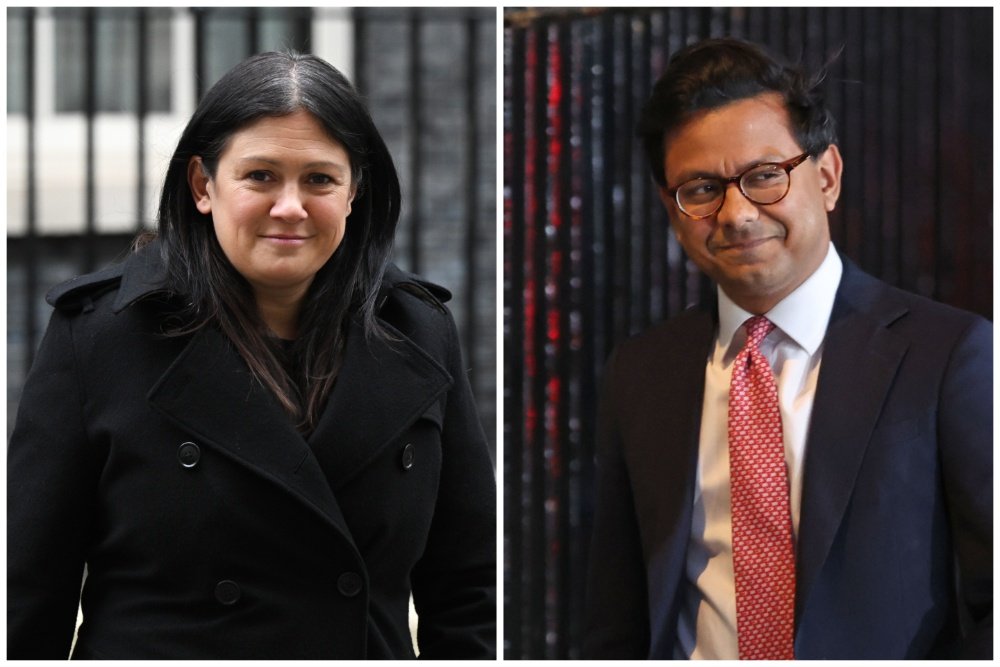
Friedrich Merz and Angela Merkel will sit under the same roof on the evening of 25 July 2026, when the Bayreuth Festival opens its new season in the Festspielhaus on Bavaria's Grünen Hügel. The pairing is unusual enough on its face: an incumbent chancellor attending his first Bayreuth summer after taking office, alongside the chancellor he succeeded, the woman who, over sixteen years, made the pilgrimage part of the unofficial German political calendar. Classical Music News reported on 21 July that the two heads of government are expected at the premiere.
What looks like a courtesy call is in fact a careful piece of political choreography. The festival has been a stage for German self-image since 1876, and the post-war tradition of chancellors opening the season was, for two decades, Merkel's ritual. Merz walking past her into the same hall signals continuity where his coalition would prefer to project change.
The Merkelite tradition and its unwritten rules
For most of the post-war era the festival's political meaning was calibrated by absence. Helmut Kohl went, Gerhard Schröder did not, and the choice itself became a way of reading a chancellor's instincts on culture, on Bavaria, on the lingering question of German identity that Wagner, more than any other composer, makes unavoidable. Merkel, who grew up in the East and arrived in the chancellery with no obvious Wagner pedigree, became a fixture: every premiere, the same box, the same studied photograph, the same way of letting the music carry the symbolism she declined to articulate in interviews.
The custom outlived her tenure. Annemarie Trosien, the festival's communications lead, has in past years treated attendance by former chancellors as standard protocol rather than favour, a small piece of continuity architecture that shields the festival from the politics it depends upon. Now that Merz himself is the chancellor, that architecture is being tested. Two chancellors in the building, current and former, compresses onto a single evening a question that would otherwise stretch out across multiple seasons: what does Bayreuth mean for a CDU-led government that has staked much of its story on change?
Reading the absent music
The festival has not yet announced the full casting or conductor for 2026 in the materials now circulating, which leaves the symbolic weight to settle on the audience rather than the stage. Festival director Katharina Wagner, who took over running the house from her late sister Katharina's generation of management, has used recent seasons to push the house towards women conductors and directors at a pace the wider opera world has been slow to match. A premiere attended by both Merz and Merkel would land squarely inside that argument, whether or not the staging chooses to amplify it.
The symbolism is harder to manage the more it is examined. Wagner's works are still performed in Israel under protest, still serialised by American production houses in search of the next frontier, still reduced to the first two minutes of the Ride of the Valkyries in film scores and football matches. Bayreuth sits at the uncomfortable intersection: a national project that survived its most catastrophic political appropriation by hiding, after 1945, inside a building that Richard Wagner built to his own scale.
What Merz buys and what he risks
For the chancellor the evening is an inexpensive investment with a high return. Showing up at Bayreuth costs his office a brief scheduling note and a pair of tickets; what it buys is a photograph in the dress circle of the most photographed opera house in Germany, beside the woman whose domestic stability he has promised to extend. The Conservatives' coalition arithmetic with the SPD leaves him room for exactly this kind of image: continuity without apology, plus the implicit contrast of his own arrival. A sitting CDU chancellor at Bayreuth, after years in which Merkel set the tone, is also a quiet way of reminding Bavaria and the southern Länder that the party in the chancellery has not changed its address.
The risks are equally legible. Any visible discomfort between the two on the stairs of the Festspielhaus will be photographed, captioned, and weaponised within hours. Merkel's centre-right successor as CDU leader, Annegret Kramp-Karrenbauer, and her more recent successor Armin Laschet, both found that an evening with Merkel at the chancellor's side could curdle into a press narrative about who really runs the room. Merz, more than most, has reason to know. His return to the party leadership was built on the argument that he had been kept out by the Merkel machine; sitting politely beside her while the brass rings the Parsifal prelude is an image he cannot fully control.
What the wire actually says, and what it does not
The reporting on which this piece rests is thin on its face: a single dispatch on 21 July confirming that the current and former chancellors are expected at the 25 July opening. It does not specify the production they will see, the conductor, the staging team, the box they will share or refuse to share, or the order in which they will arrive. Those details will, in time, surface in German press and on the festival's own channels; what is newsworthy at this hour is the confirmation itself, and the contrast it draws with a German political class that usually schedules its cultural appearances to minimise overlap.
A second ambiguity is worth flagging. The festival's recent seasons have been defined as much by political protest as by programming: petitions from musicians, public letters from former soloists, and the steady pressure of the cultural boycott debate that has followed the stage direction of every new Ring cycle since 2010. Whether Merz and Merkel's joint attendance is meant to steady that debate, to rise above it, or to position the chancellery on one side of it, the dispatch does not say. The sources are silent, in other words, on the very question their readers will care about most.
What can be said with confidence is narrower. Germany will have two chancellors in the Festspielhaus on 25 July. The festival will open. The next morning's papers will carry photographs, and the photographs will be read by the CDU's Bavaria wing, by the SPD's Berlin table, by the cultural pages, and by the international critics who have come to treat Bayreuth as a referendum on German confidence. The music begins, as it always does, before anyone has decided what to make of the evening.
Desk note: Monexus treats a slim dispatch like this as a hub, not a horn. We have not manufactured additional sources to pad the page; the article rests on the Classical Music News item cited below, plus contextual reading of the festival's recent seasons. Where the wire is silent, the copy says so.
Wire provenance
This editorial synthesis draws on the following public wire/social posts:
- https://t.me/classicalmusicnews