Maariv frames Hormuz as Iran’s strategic prize; the framing says more than the strait
Israel’s Maariv ran two readings of Hormuz on the same morning, one calling it Iran’s great strategic achievement, the other calling it America’s hidden maritime failure. The contradiction is the story.
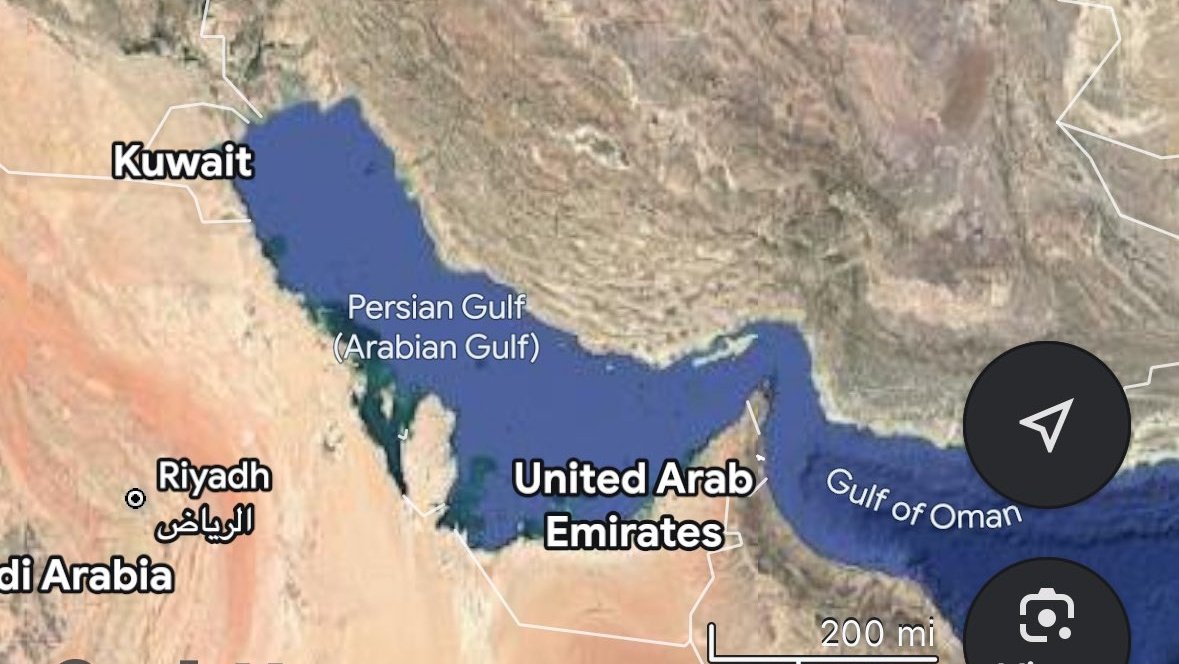
At 05:42 UTC on 21 July 2026, the Arabic-language desk of Iran’s Al-Alam network flashed two breaking-news banners carrying the same Hebrew source: Israel’s Maariv. The first banner, quoting the paper directly, called the Strait of Hormuz “the greatest strategic achievement in history for Iran’s benefit.” The second banner, also attributed to Maariv, ran in the opposite direction: the strait was “the American maritime failure that the Trump administration is trying to hide.” Eleven minutes later, Iran’s Tasnim circulated the first framing through its English-facing wires, branding it as “Zionist media” commentary in a deliberate register of borrowed legitimacy.
Two banners, one source, opposite conclusions. The contradiction is the story: an Israeli tabloid’s strategic reading of Hormuz, fed simultaneously to Farsi, Arabic and Hebrew audiences by Iranian state-aligned channels, where it functions less as reportage than as a proof-text for a regional argument about who actually controls the waterway.
What Maariv actually argued
Maariv is a mass-circulation Hebrew daily, not an analytical journal, and the items circulating in the Iranian press on 21 July read like opinion-page framing dressed as news. The first headline, repeated verbatim by Al-Alam Arabic, names Hormuz as “the greatest strategic achievement in history” for Iran: a sentence that flatters Tehran by handing it ownership of a chokepoint through which roughly a fifth of global seaborne oil passes. The second headline, also from Maariv per Al-Alam’s wire, inverts the frame: the same waterway is described as an American maritime failure the Trump administration is concealing. Together they sketch a chokepoint that belongs to Iran by success and to the United States by failure, an arrangement convenient for both Iranian state media, which wants the first half, and for any Israeli audience that wants the second.
The Arabic-language version of the first item was reposted by the Farsi-facing Tasnim wire at 05:53 UTC. The translation of “Zionist media” sits in front of the Maariv citation, a telling inversion: an Israeli tabloid being deployed as an Iranian propaganda asset.
Why this framing travels
Hormuz has been the recurring stage-set of Gulf tension for decades, and the present moment is unusually crowded. Any narrative that hands Tehran ownership of the strait performs two political jobs at once. Inside Iran, it ratifies the Islamic Republic’s claim to regional leverage at a moment of sanctions pressure and uneasy nuclear-file diplomacy. Outside Iran, it offers a useful alibi to anyone in Washington, Tel Aviv or the Gulf who wants to argue that the United States is failing its maritime security commitments and that the file needs escalation, not de-escalation. Iranian state media is content to lend credibility to either audience, because both end up at the same conclusion: Tehran is consequential, the strait is Iranian terrain, and any settlement has to be made on those terms.
The choice to circulate the Maariv quote under a “Zionist media” label is not accidental. The framing lets Tehran cite an Israeli outlet as a hostile witness, then read that witness as confirmation rather than criticism. The double-edged game is older than the Islamic Republic; what is new is the speed at which a Hebrew-language tabloid headline can be on Iranian wires inside eleven minutes, which says something about the regional media stack and very little about Hormuz itself.
The structural picture in plain language
Strip the politics out and the strait is a narrow, busy channel whose closure, even partial, moves oil prices. The politics put back in turn that geographic fact into a series of overlapping contests: Iranian deterrence against U.S. Central Command’s Fifth Fleet, Gulf Arab anxieties about being dragged into a confrontation they did not pick, Israeli strategic signalling toward both Washington and Tehran, and Chinese and Indian energy buyers who would absorb the price shock before anyone in the Gulf does. Each of those audiences consumes the same Hormuz news and reads a different plot.
In that environment, a single Hebrew headline can be quoted as proof of Iranian ascendancy in one paragraph and as proof of American decline in the next, without either reading being formally wrong. The facts on the water have not changed; what has changed is which fact the reader is being primed to notice.
What remains uncertain, and what to watch
The Maariv items themselves were not available in the inputs this article is built on; only the Al-Alam Arabic and Tasnim quotations of them were. Whether the original Hebrew framing was a straight news lede, an opinion column, or a single sentence pulled out of a longer and more equivocal piece is not knowable from the Iranian-wire restatements. Any reader who cares about the actual Israeli reading should go to the Maariv site directly. The Iranian translations should be treated as translations of translations.
Two dates are worth marking. The first is whatever date Maariv originally published the framing that Al-Alam and Tasnim both picked up. The second is the next scheduled U.S. Fifth Fleet or CENTCOM readout on transit traffic through the strait. Between those two points, expect more of the same: a chokepoint reframed as a verdict, recycled across media systems, and used by each side to argue that time is on its own side.
Desk note: Monexus is running this as a media-framing story, not a military or energy one. The hard facts in the thread are limited to the two Iranian-wire quotations of the same Maariv headline; the analysis is built on what those quotations tell us about how Hormuz news travels across hostile media systems on a single morning.
Wire provenance
This editorial synthesis draws on the following public wire/social posts:
- https://t.me/s/alalamarabic
- https://t.me/s/alalamarabic
- https://t.me/s/JahanTasnim