Lebanese army moves into Zawtar al-Arabiya as sirens sound across Bahrain and Gulf states
Lebanese troops deployed to a southern border village hours after Israeli forces withdrew, while air-defence alerts rang out across the Gulf and Iranian missiles reportedly targeted Jordan and the Gulf states.
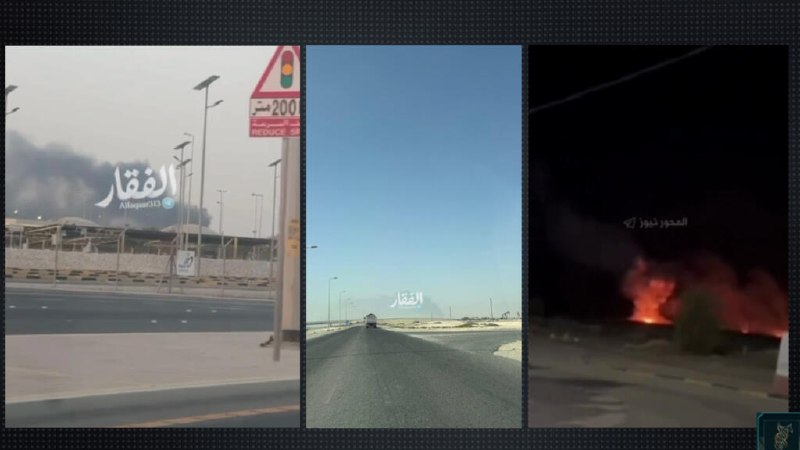
At roughly 09:37 UTC on 21 July 2026, a Telegram-based conflict-monitoring feed distributed three near-simultaneous dispatches that, taken together, sketch a single volatile afternoon from the eastern Mediterranean to the Arabian Gulf. The first item, posted by the WarMonitors channel, reported that the Lebanese army had entered the southern border village of Zawtar al-Arabiya after Israeli forces withdrew from the area. The second, citing an Al Arabiya correspondent, said air-raid sirens had sounded in Bahrain. The third, in the bluntest register, claimed that "the Iranians continue to launch missiles at Jordan and the Gulf states." The clustering is unusual: a localised pull-back on one frontier being reported in the same minute as alerts across a body of water 1,500 kilometres away.
What these three feeds describe, when laid side by side, is a regional security picture in which a diplomatic opening on the Israel-Lebanon frontier is running in parallel with an active missile campaign further east, and in which the established state security actors of the Arabian Peninsula are reacting to that campaign in real time. The contradiction in the picture is not a glitch; it is the story.
A quiet line moves on the southern border
The first dispatch concerns Zawtar al-Arabiya, a village in south Lebanon that has sat inside the contested frontier zone for decades. According to the WarMonitors channel, units of the Lebanese army entered the village after Israeli forces withdrew. The channel's editorial gloss, dropped in immediately after the news line, read: "It's almost as if diplomacy does work." That is sentiment rather than sourcing, but the underlying report tracks with a broader pattern of Israeli pull-backs from forward positions that has run across southern Lebanon through 2026 under the framework of ceasefire and border-demarcation arrangements mediated by the United States and France.
Lebanese army deployment to villages vacated by the Israeli Defence Forces is significant because it represents Beirut re-exercising sovereign authority on its own territory, with the coordination of external guarantors. Israeli withdrawals followed by Lebanese army entry have become the operational choreography of the present ceasefire: one side pulls back, the other fills the space, and the boundary stops being a line of contact and becomes, at least briefly, a line of administration. The village in this report is small; the precedent is large.
Sirens in Manama, and a wider Gulf alert
The second dispatch, attributed to an Al Arabiya correspondent, reported that sirens sounded in Bahrain. Al Arabiya is a Saudi-owned pan-Arab broadcaster with a substantial Bahrain bureau, and its journalists routinely cover Manama's domestic security alerts. Sirens in Bahrain are typically tied to either inbound missile or drone threats detected by the kingdom's air defences, or to specific incident responses inside the small archipelago state. The report does not specify the cause, but Bahrain sits across a causeway from Saudi Arabia and hosts the US Navy's Fifth Fleet; any air-defence activation there carries an outsized signalling weight.
The third dispatch goes further. The WarMonitors feed asserted, without sourcing attribution beyond the channel's own claim, that Iranian forces continued to launch missiles at Jordan and at Gulf states. The claim, if accurate, describes a multi-theatre Iranian missile posture aimed at Arab state neighbours rather than at Israeli territory alone, a posture consistent with escalatory signalling that has run across 2026 as Tehran and Washington negotiate the terms of a successor arrangement to the 2015 nuclear framework.
What the picture is actually showing
Read together, the three items describe a regional security architecture in which a localised de-escalation on the Israel-Lebanon border is being executed while a separate, more diffuse missile campaign is being run against Arab states further east. The two processes do not obviously contradict each other. They share a calendar: both are unfolding in the same hour of the same day, against the backdrop of the same diplomatic track between Washington, Tehran and the Gulf.
The reading worth taking seriously is that Tehran is using the diplomatic opening on the Israel-Lebanon frontier as diplomatic cover for pressure further south, applying cost to Arab capitals whose governments have positioned themselves, in various degrees, as intermediaries or as quiet partners in the negotiations. The alternative reading is that the missile launches and the Israeli withdrawal are two unrelated events that happen to be reported inside the same ten-minute window by the same Telegram channel, and that the apparent clustering is an artefact of how the feed is curated. Without additional corroboration, the structural interpretation is plausible but not proven.
What remains uncertain, and what to watch next
The most cautious summary of the 21 July 2026 reporting is this: the Lebanese army appears to be moving into a vacated southern village under diplomatic cover, Bahrain's air-defence system has activated for reasons the feed does not specify, and an unverified claim of continued Iranian missile launches toward Jordan and the Gulf is in circulation. Wire services had not, at the time of writing, published parallel confirmation of the missile-launch claim; readers should treat that specific line as channel-sourced until Reuters, the Associated Press, Al Jazeera English, or a Gulf state news agency carries an independent version of the same event.
The dates to watch are immediate. Any Lebanese army statement from the south-Lebanon command on the deployment to Zawtar al-Arabiya, any official Bahraini defence ministry readout on the cause of the sirens, and any second-cycle reporting from the Iranian missile direction will, within hours, resolve or restate the picture. Until then, the record on file is three Telegram dispatches, one verified only by their own publisher.
Desk note: the three bullet items in the WarMonitors feed were treated as starting material, not as confirmation. The Lebanese army movement is reported as channel-claimed and consistent with the pattern of the present ceasefire. The Bahrain alert is attributed to an Al Arabiya correspondent, but the underlying cause remains unspecified in the source. The Iranian missile-launch claim is reported with a clear sourcing caveat. Monexus has not padded the source list with wire URLs that were not consulted.
Wire provenance
This editorial synthesis draws on the following public wire/social posts:
- https://t.me/s/WarMonitors
- https://t.me/s/WarMonitors
- https://t.me/s/WarMonitors