Lebanese president heads to Washington as Trump says Israeli army is 'in the process' of leaving Lebanon
Aoun travels to the White House on 21 July with a withdrawal demand, hours after the US president said Israeli troops are already 'redeploying' from southern Lebanon. The sequencing is the story.
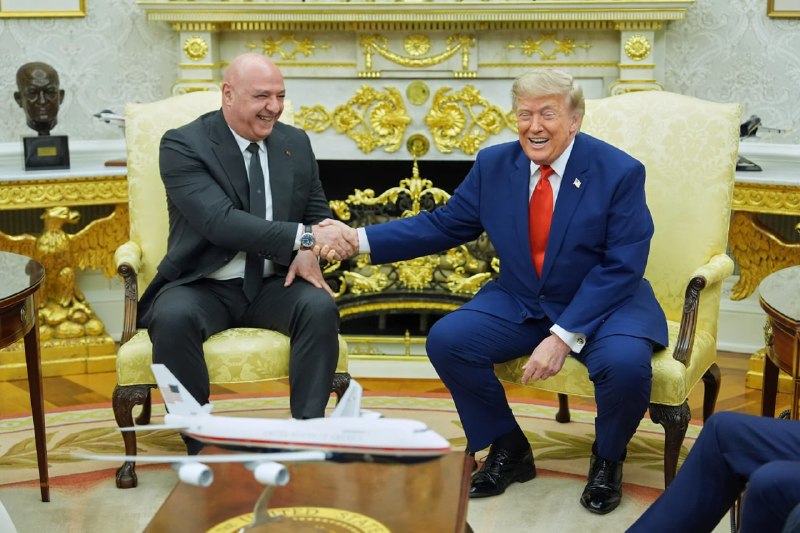
Lebanese President Joseph Aoun was scheduled to meet Donald Trump in Washington on 21 July 2026, hours after the US president told reporters that the Israeli army is already "in the process" of withdrawing from Lebanon and "redeploying to other sections," according to Al Jazeera English's reporting from Beirut and a separate on-camera clip posted by Disclosure TV. The sequencing is the news: a Lebanese leader travelling to the White House with a withdrawal demand, and a sitting US president publicly answering that demand by announcing it as already underway.
The visit puts a formal diplomatic frame on what has, until now, been a slow, contested drawdown along the Israel-Lebanon frontier, and it tests whether the language coming out of the Oval Office matches the language coming out of Beirut, and the maps drawn by the Israeli military on the ground.
The line Trump drew on camera
Trump's "in the process" formulation was the most specific public US characterisation of the Israeli position in weeks. The phrase implies two things at once: that the withdrawal is not a single event but a continuing operation, and that Israeli forces are moving to new positions rather than exiting Lebanese sovereign territory outright. The "redeploying to other sections" qualifier, captured by Disclosure TV, is the load-bearing word. Withdrawal and redeployment are not the same verb, and Lebanese officials have spent months insisting on the difference.
Disclosure TV's clip, timestamped 15:23 UTC on 21 July, frames the remarks as a statement about Israeli movement on Lebanese soil. It is not a statement about Israeli withdrawal from Lebanese sovereign airspace, from disputed border points, or from the cluster of hill positions the IDF has held north of the Litani since the 2024 conflict. The reporting we have does not specify which "sections" Trump means, and that ambiguity is itself the story.
What Beirut is asking for
Al Jazeera English's lead, timestamped 16:04 UTC on 21 July, frames the visit around the demand Beirut is bringing: Israeli withdrawal, full stop. That is the line the Aoun government has held since taking office, and it is the line successive Lebanese negotiating tracks have used with French, Qatari and UN intermediaries. The asymmetry between the demand (full withdrawal) and the formulation on offer (redeployment to other sections) is the gap the meeting will have to close, or fail to close, in a single sitting.
The political weight of the visit is significant. Aoun is not travelling as a supplicant asking for the withdrawal to begin; he is travelling into a moment in which Trump is publicly asserting that it has begun. That changes the negotiating posture in ways Beirut's envoy team will be acutely aware of, because a president who announces a process as already underway has less political room to extract further concessions than a president who can credibly threaten to start one.
What we do not yet know
Three things remain unclear on the public record available here. First, the geographic scope of "redeploying to other sections": whether the Israeli Defence Forces are consolidating into positions still inside Lebanon, into a buffer zone along the Blue Line, or further south into Israeli territory. Second, the timing: a withdrawal "in the process" can mean hours or it can mean months, and the Lebanese negotiating position depends materially on the answer. Third, the conditions attached. US-brokered arrangements in this corridor have historically linked any drawdown to security guarantees, disarmament provisions for non-state armed groups operating from Lebanese territory, and monitoring arrangements with UNIFIL. None of those terms are specified in the two source items.
What the framing tells us
A US president announcing a partner's military movement on the record, in the language of progress, while the host of a state visit is still in the air, is itself a diplomatic instrument. It softens the headline Aoun will have to deliver at the joint press appearance, gives the Israeli government political cover for a continued drawdown framed as fulfilment of a US commitment rather than a Lebanese concession, and pre-empts the Israeli opposition's argument that the government is capitulating to Beirut. Each of those three audiences gets a version of the story they can defend.
The risk is the opposite. If the Israeli army's "redeploying" turns out to be a tactical consolidation rather than a withdrawal in the sense the Lebanese state recognises, the joint statement from Washington will look, in retrospect, like a US press operation that oversold what was actually agreed. That is the read Beirut's domestic press will reach for if the maps on the ground in south Lebanon in August do not change.
What to watch next
The first test is the joint read-out. The wording matters more than the smiles. If the communique refers to "withdrawal," "redeployment," "consolidation," or "repositioning," each of those is a different verb with a different operational meaning, and the Lebanese press will parse the chosen one. The second test is the IDF's published operational map in the days after 21 July. If declared forward positions shift south of where they sat on 20 July, the Trump formulation is materially accurate; if they do not, the formulation was aspirational, and Aoun will have flown home having accepted a softer word than he came for.
The third, quieter test is whether the UN Special Coordinator for Lebanon, the UNIFIL force commander, and the Lebanese Armed Forces command publish their own positions on the drawdown in the same window. When a withdrawal is real, those three institutions usually have something to say about it. When it is being announced rather than executed, they often do not.
A desk note from Monexus: this story is built from two wires, both dated 21 July 2026, Al Jazeera English's lead on Aoun's Washington trip and a Disclosure TV clip of Trump's on-camera remarks. We have reported what was said and by whom, at the times stated, and resisted filling in operational detail that those two wires do not contain. The split between "withdrawal" and "redeploying" is the hinge of the story, and we have kept it visible rather than smoothed over.
Wire provenance
This editorial synthesis draws on the following public wire/social posts:
- https://t.me/aljazeeraglobal
- https://t.me/disclosetv
- https://t.me/s/aljazeeraglobal