Kuwait sirens as Iran widens aerial campaign on Gulf states
Air raid sirens sounded across Kuwait late on 21 July 2026 as Iranian missile and drone strikes extended an aerial campaign that has already unnerved Gulf monarchies sitting on critical energy infrastructure.
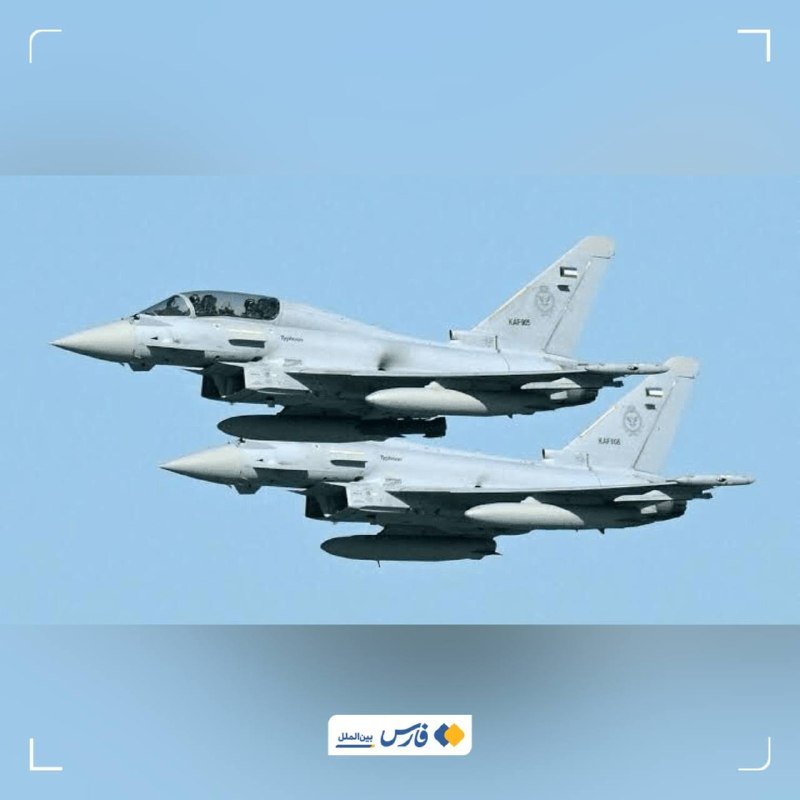
Air raid sirens wailed across Kuwait at 21:46 UTC on 21 July 2026, according to Telegram channel @BRICSNews, which reported the alert minutes before parallel accounts from independent war trackers @AMK_Mapping and @wfwitness confirmed the same warning (21:39 UTC). The three channels all frame the sirens as a response to an incoming Iranian missile and drone attack, though none has yet produced imagery of impact points or damage assessments.
The episode extends an aerial campaign that has targeted Gulf monarchies sitting on roughly a third of the world's proven oil reserves and the chokepoints through which a large share of it moves. Iranian-aligned outlets have framed the strikes as retaliation for Israeli and US operations further north; Gulf governments, wary of being dragged into a widening war, have until now calibrated their public posture for de-escalation. Kuwait's sirens break that calibration.
A country that spent two decades trying not to be in this story
Kuwait's exposure is unusually direct for a state that has historically preferred the quietest possible seat in Gulf security councils. The emirate hosts the US Central Command forward headquarters at Camp Arifjan and a smaller operating presence elsewhere, hosts no Israeli diplomatic mission, and has hosted periodic rounds of Iranian-Saudi mediation backed by Beijing. Public-facing Kuwaiti diplomacy has, since the 1991 liberation, leaned heavily on the line that Kuwait is a target-rich transit point for someone else's war. The siren network that sounded on 21 July is the same one maintained for Iraqi missile drills during the 1980s and reactivated for Iranian drone alerts during the 2024 regional escalation.
The current wave of Iranian strikes has so far concentrated on US positions in Iraq and Syria, on Israeli territory, and on shipping in the Strait of Hormuz and the Gulf of Oman. A Kuwaiti activation is, on the available reporting, an extension rather than a pivot. The independent mappers tracking Iranian launch signatures have not produced an authoritative count of projectiles fired at Kuwait in this episode, only the alert that one or more were en route.
What the conflicting channels actually agree on
Two of the three Telegram accounts (@BRICSNews and @wfwitness) carry an explicit "Iranian" attribution in their headlines; @AMK_Mapping uses the more hedged "threat of an Iranian missile/drone attack." None of them is an on-the-ground Kuwaiti newsroom. None of them cites the Kuwaiti Ministry of Interior, which normally issues alert bulletins through its own channels once sirens stop. Iranian state outlets have, in past episodes, claimed specific strikes by name and timing; this round, the available reporting from Tehran-aligned networks is silent on Kuwait as a target.
The result is a thin but coherent signal. Three independent tracking channels concur on time (within seven minutes), location (Kuwait), and broad cause (Iranian projectile threat). They do not concur on the precise number of projectiles, on impact locations, or on whether the event was aimed at Kuwait or simply overflew Kuwaiti airspace en route to another target. The framing favoured by analysts monitoring similar episodes in 2025 was that Iran sometimes vectors drones across a Gulf state's airspace to conserve fuel and avoid Iraqi air defence, triggering sirens without intending a strike on the overflown state. That reading remains plausible on the present evidence.
Structural read: a theatre the Gulf cannot stay out of
Gulf security architecture is built on a specific bet: that monarchies can manage the geography of escalation by hosting American bases and diplomacy while staying out of active targeting lists. The bet has held, with notable interruptions, since 1991. It rests on the assumption that the parties willing to fire missiles at US positions will not also fire on the states those US forces operate from. That assumption is being tested in real time.
The energy market prints will matter more than the sirens. If Iranian strikes continue to land in Kuwaiti territory or near Kuwaiti oil infrastructure, the marginal barrel in Brent and Dubai benchmarks will reprice the risk that the Strait of Hormuz is no longer a defensible chokepoint but an active battlefield. Coverage of Western-allied framing tends to treat such moments as regional security problems; the structural read is that they are pricing events for the global economy, with insurance, freight, and tanker-orderbook effects that compound quietly after the cameras move on.
What stays uncertain
The gap between sirens and confirmed strike locations is wide. The Telegram channels reporting this episode are useful precisely because they move fast, and the same speed means early attributions sometimes drift. The Kuwaiti government has not, on the available reporting, issued a public incident summary as of the time of writing, and Iranian state media has not confirmed or denied a Kuwaiti target. Whether Kuwait sustained any damage, whether projectiles landed or were intercepted, and whether the activation was a standalone strike or an overflight alerting an unrelated launch are the three open questions the next twelve hours will resolve. Until Kuwaiti authorities or wire services on the ground produce a visible record, the prudent read is that sirens sounded, an Iranian launch corridor crossed or threatened Kuwaiti airspace, and a Gulf state that has worked hard to stay out of the crossfire is now inside it.
This publication leads with the three independent tracking channels reporting the alert in real time. The wire posture, if and when Reuters or AFP confirms the specifics, will formalise the attribution; until then, the night's headline is the one the sirens already wrote.
Wire provenance
This editorial synthesis draws on the following public wire/social posts:
- https://t.me/BRICSNews
- https://t.me/AMK_Mapping
- https://t.me/wfwitness