Kenya's parliament moves on haemophilia and a land audit in the same week
Two parliamentary committees moved on the same day, one to widen Social Health Authority cover to haemophilia patients and another to audit state-held land, in a quiet signal of how Kenya's 13th Parliament is choosing to spend its bandwidth.
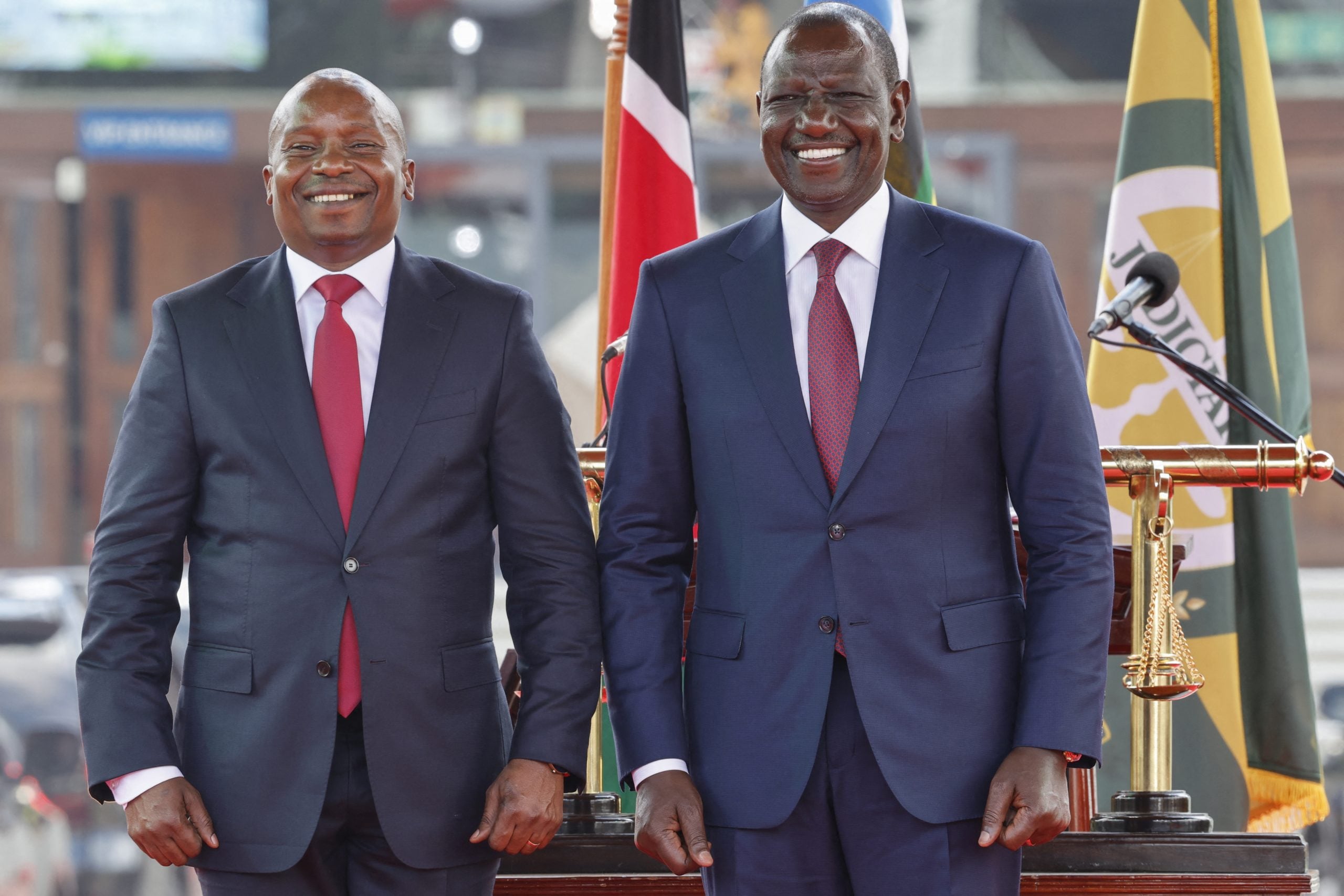
Kenya's National Assembly spent the morning of 21 July 2026 working two very different petitions, one of them a question of rare-disease medicine, the other a question of who owns state land. At roughly 04:45 UTC, the Daily Nation reported that the National Assembly's Health Committee had approved a petition seeking comprehensive cover for haemophilia patients under the Social Health Authority, the universal cover scheme that replaced the National Hospital Insurance Fund's dominant role in the country's health financing. Roughly an hour later, the same outlet reported that the Lands Committee had been tasked with a comprehensive inquiry into the ownership status of all parcels of land owned by ministries, departments and agencies. Read separately, these are small parliamentary items. Read together, they sketch a parliament trying to extend the welfare state on one front while auditing one of the oldest sources of patronage in the Kenyan state on another.
The two decisions are a useful prism for the kind of state Ruto's government is presiding over at the halfway mark of his first term: a state that wants to widen its social-insurance net to conditions that have historically been excluded by cost, and that wants, at the same time, to take inventory of the public land portfolio that has fuelled local scandals for decades. Both moves sit inside a longer story about how the Kenyan state distributes scarce resources, and how the legislature, when it bothers to convene, can act as a counterweight to executive discretion rather than as its rubber stamp.
A rare-disease petition with a financing question behind it
Haemophilia is one of the more striking examples of how Kenyan health financing has historically failed patients with rare and chronic conditions. Factor replacement therapy, the standard treatment, is expensive in global terms and has rarely been consistently available in public hospitals. The Health Committee's approval of a petition seeking comprehensive cover under the Social Health Authority does not, on its own, change that. The Authority, the universal cover vehicle rolled out to consolidate contributions and benefits across the country's health-financing ecosystem, is the vehicle through which any such coverage would have to flow. The committee's job at this stage is procedural: to receive the petition, weigh it, and decide whether it warrants further legislative action, which the approval suggests it does.
The structural question is whether the Social Health Authority can absorb the cost without crowding out the basic benefit package. That is a question the committee has not yet answered, and the sources do not specify the fiscal envelope the Authority would need to set aside for haemophilia patients specifically. What the approval does is put the question on the parliamentary record. That matters more than it sounds. In Kenya's committee system, a petition that has been approved moves into a process that can include stakeholder hearings, a committee report, and a possible amendment to the benefits framework. None of that guarantees factor concentrate on a Nairobi pharmacy shelf next quarter. It does guarantee that the question will be litigated in public rather than buried in a ministry's queue.
The land audit that has been promised before
The Lands Committee's instruction is, on paper, simpler: produce a comprehensive inquiry into the ownership status of all parcels of land owned by ministries, departments and agencies. In practice, this is one of the most politically loaded assignments a Kenyan committee can take on. State-owned land in Kenya has long been a discretionary resource: parastatals, line ministries, county governments and security agencies have all, at various points, held titles that overlap, conflict, or simply cannot be produced on demand. Several high-profile disputes in recent years, including over parcels allegedly held by the military and by parastatals in and around urban centres, have hinged on the gap between what the official land registry says and what ministries actually control. The committee's instruction, as reported by the Daily Nation, is to close that gap by inventorying the portfolio.
The phrase "comprehensive inquiry" is doing real work in this sentence. Past audits of state land have a record of starting with a flourish and ending in a report that no one reads. The relevant question is whether this committee has the time and the political cover to do the version of the audit that produces actual titles and actual accountability, rather than another sheaf of recommendations. The sources do not specify a timeline or a reporting deadline, which is itself a signal that the assignment is in its early phase. The committee has been tasked, not yet directed to produce a particular document by a particular date.
Two petitions, one Parliament
The convergence of the two committee decisions on the same morning is not coordinated, but it is suggestive. Kenya's 13th Parliament has spent a substantial share of its bandwidth on finance bills and on politically noisy confrontations with the executive. Health-financing petitions and land-audit mandates are the lower-volume work of a legislature that does not always get attention. They are also the work that, when it is done well, changes how the state actually spends money and how it actually holds property. The Health Committee's move suggests a Parliament willing to extend the social-insurance net to rare-disease patients on a sustained basis, not just at the level of emergency responses. The Lands Committee's move suggests a Parliament willing to spend political capital auditing state assets, a category of work that historically has more opponents than friends.
The honest read is that neither decision has, by itself, changed anything yet. A petition that has been approved is a petition in process. A committee that has been tasked is a committee that has been given a job. The measure of both will be what comes out of the committee rooms in the next several months, not what was reported on the morning of 21 July 2026. That said, both moves put the relevant questions on the public record in a way that is harder for the executive to ignore.
What this leaves open
The main uncertainties are not procedural but fiscal and political. The Social Health Authority's benefit package, the cost of factor replacement therapy, and the Authority's capacity to absorb a new pool of patients without destabilising the basic package are not addressed in the Daily Nation's reporting. The land audit, similarly, has not been paired with a published scope or a deadline, which leaves open whether it will be the kind of audit that produces titles on a public register or the kind that produces a report. Both committees will need to be pushed by civil society and by their own leadership if either is to move from procedural approval to substantive change. The sources do not specify who the petitioners are, what the haemophilia patients' representative body has asked for, or which ministry is most exposed by the land audit's terms of reference. Those are the questions to watch in the next reporting cycle.
Desk note: this publication framed the two committee decisions as a single political signal about how Kenya's 13th Parliament is allocating attention, rather than reporting them as discrete procedural items. Wire coverage treated them as separate legislative items; we read them together because they surfaced within an hour of each other and because they jointly illustrate the legislature's role as a counterweight to executive discretion.
Wire provenance
This editorial synthesis draws on the following public wire/social posts:
- https://t.me/DailyNation/
- https://t.me/DailyNation/
- https://en.wikipedia.org/wiki/Social_Health_Authority_(Kenya)
- https://en.wikipedia.org/wiki/Haemophilia