Kenya's Deputy President bets on a 'First World by 2063' line, and the unity chorus he keeps repeating
Kithure Kindiki wants Kenya talking about 2063 instead of 2030. The harder question is whether the line is a development plan, a political brand, or both.
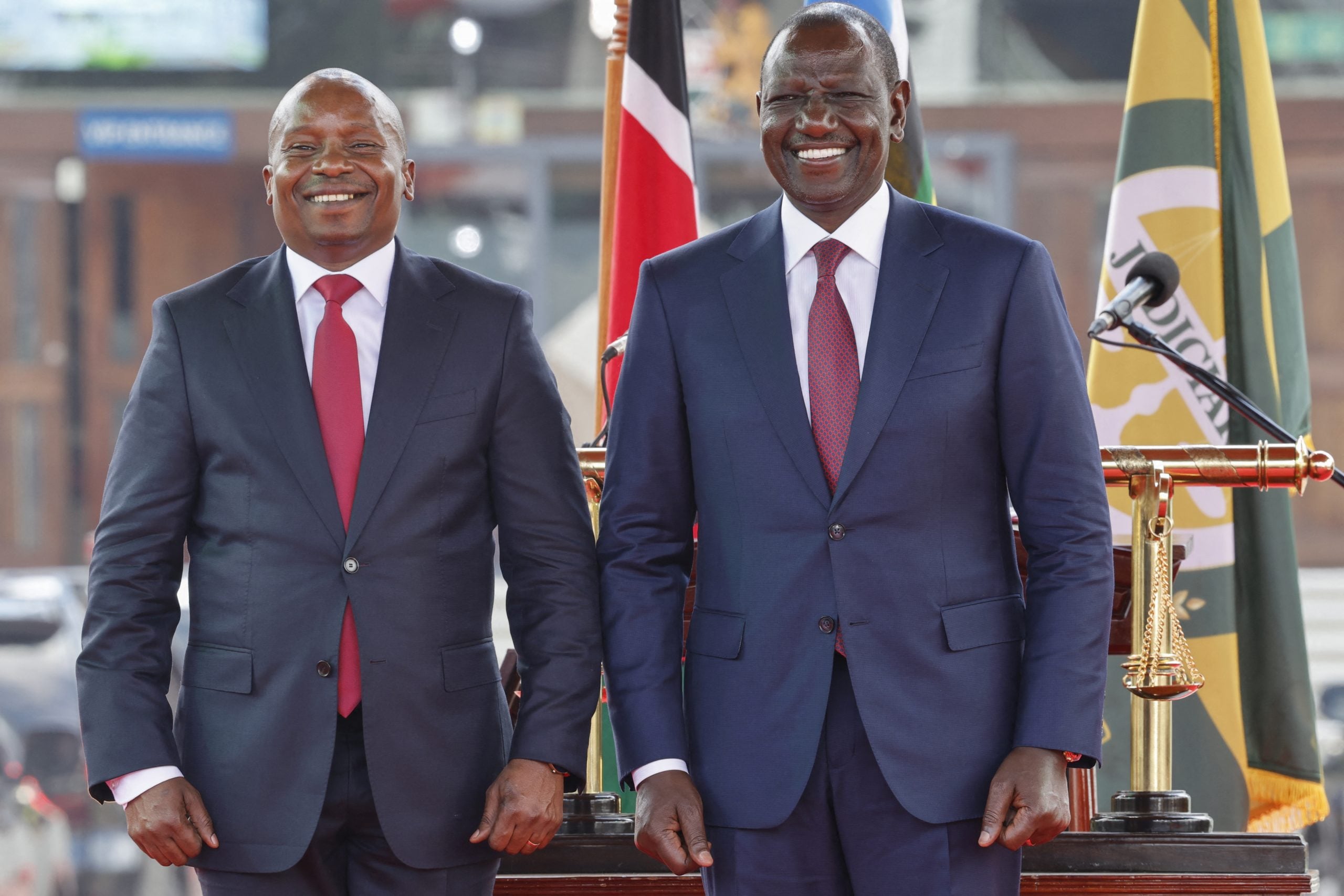
On 21 July 2026, Kenya's Deputy President Kithure Kindiki told the country to stop measuring itself against Vision 2030 and start measuring itself against 2063. The remark, carried by The Star Kenya, frames Kenya as a state that has already cleared one development horizon and is being asked to imagine the next. Read in isolation, it is the kind of long-arc optimism African governments increasingly reach for when short-arc results are politically inconvenient. Read against two statements Kindiki made two days earlier, on 19 July, the line looks less like planning and more like a brand: unity, the Mt Kenya vote, and a 37-year leap into a "First World" future, all welded into one message.
The structural argument here is mundane and therefore easy to miss. Kenya's political class is entering a phase in which the post-2010 constitutional settlement has matured, the infrastructure boom of the late 2010s is being audited in voters' minds, and the next election cycle will turn on who owns the national story. Kindiki's three statements in 72 hours map almost perfectly onto that cycle. The question worth asking is whether the message is doing the work of policy or the work of coalition maintenance.
The 2063 frame and what it displaces
Kenya's Vision 2030 was launched in 2007 as a single-author blueprint for turning the country into a "newly industrialising, middle-income country." By 2026 it is, in the words of successive Treasury documents, more or less delivered on its headline targets: a GDP per capita past the lower-middle-income threshold, a flagship infrastructure corridor in place, a devolved county system that has survived two political transitions. The Star Kenya's 21 July report on Kindiki's remarks records the Deputy President saying Kenya must begin "planning for life beyond Vision 2030" and expressing optimism that the country can attain "First World economic status by 2063."
That target lands inside Africa's own continental frame. The African Union's Agenda 2063, adopted in 2013 and revised in 2024, is the explicit reference point for Kindiki's 2063 horizon, and aligning a national campaign to it is a tidy way to import AU legitimacy without having to negotiate the AU's content. The political advantage is clear: a 37-year goal cannot be falsified by an electorate, a 37-year goal can be claimed by any successor, and a 37-year goal lets the current administration spend the rest of its mandate arguing about the route rather than the distance.
The counter-read is straightforward. Long-horizon optimism in African capitals has a mixed record. Vision 2030 itself was mocked in its early years for the gap between slides and tarmac. Kindiki's 2063 frame inherits the same risk: by the time it is falsifiable, several political generations will have passed and no current actor will be around to be held to it. That is precisely what makes it attractive as political currency.
The unity chorus, and the Mt Kenya audience underneath it
On 19 July, The Star Kenya carried two separate Kindiki statements within ninety minutes of each other. At 10:57 local time, the Deputy President said he would "unite the people of the Mt Kenya region and will not allow attempts to scuttle their unity," declaring the region "one community and one Kenya." At 12:02, a second item reported him urging Kenyans more broadly to "safeguard the country's unity," arguing that relationships "built over centuries" should not be damaged "over small differences."
The two statements are pitched at different audiences but engineered to land together. The Mt Kenya line speaks to a region that has been politically unsettled since the 2022 succession debate, in which the deputy presidency became a contested asset and the region lost its long-standing grip on the executive. The national-unity line speaks to a country that has been hearing the word "unity" from every direction for the better part of a decade, usually attached to whichever coalition is currently on the back foot. Both statements read as continuity rhetoric dressed up as a fresh commitment.
What is missing from the public record is any concrete mechanism. There is no named inter-community initiative, no scheduled forum, no partner institution. There is a vocabulary of unity and an assertion of intent. That pattern, in itself, is informative.
What the message is doing for the messenger
The Deputy President's office is, constitutionally, a powerful platform and a constrained one. The holder commands a national security portfolio, sits in the cabinet, and is the constitutional fallback for the presidency. The office is also the most exposed seat outside the top one: in Kenya's 2022 system, the Deputy President ran on a joint ticket and has since been drawn into the kind of intra-coalition arithmetic that defines Kenyan politics. A deputy president who can credibly speak to the Mt Kenya region, to the national unity project, and to a 37-year development horizon is a deputy president who is harder to sideline and easier to imagine as something else.
This publication reads the three statements together as a single operation. The 2063 frame supplies ideological scale. The Mt Kenya line supplies a regional anchor. The national-unity line supplies the bridge that turns the regional anchor into a national claim. None of those elements is novel on its own; what is notable is that they are now being stacked by the same office in the same week.
The structural picture underneath the politics
The deeper shift is less about Kindiki than about the genre of speech he is deploying. Across the continent, sitting governments and senior office-holders have spent the last several years rehearsing a specific kind of long-horizon language: Agenda 2063 in the AU system, national visions for 2050 and beyond in several capitals, continental free-trade benchmarks rolled out to 2034. The rhetoric of long arcs is now the default African-policy register, in part because it draws investment interest from non-Western partners who want stable planning horizons, and in part because it is rhetorically resilient against the audit culture of donor-driven development.
Kenya fits that pattern but with a twist. Its 2063 line is being deployed not by a head of state but by a deputy, which suggests the office of the deputy is being recalibrated as the natural home for nation-branding work. If that reading is right, the next phase of Kenyan political competition will be a contest over who gets to own the 2063 narrative, and that contest will start well before any vote on the actual policies needed to get there.
The remaining uncertainty is honest. The sources available here do not specify the policy content Kindiki associates with the 2063 target, do not name the partners or institutions he intends to involve, and do not record any reaction from the Presidency, the opposition, or the Mt Kenya political class. The unity chorus is on the record; the mechanism is not.
How Monexus framed this: the wire carried three statements; this article treats them as a single political object and asks what work they are doing, rather than reporting each in isolation.
Wire provenance
This editorial synthesis draws on the following public wire/social posts:
- https://t.me/TheStarKenya
- https://t.me/TheStarKenya
- https://t.me/TheStarKenya