The IRS wants a slice of Spain's World Cup cheque, and that should make Europeans argue about jurisdiction
US tax authorities are moving to take a cut of La Roja's $51m prize pot because the tournament was staged on American soil, and the row is now about more than football.
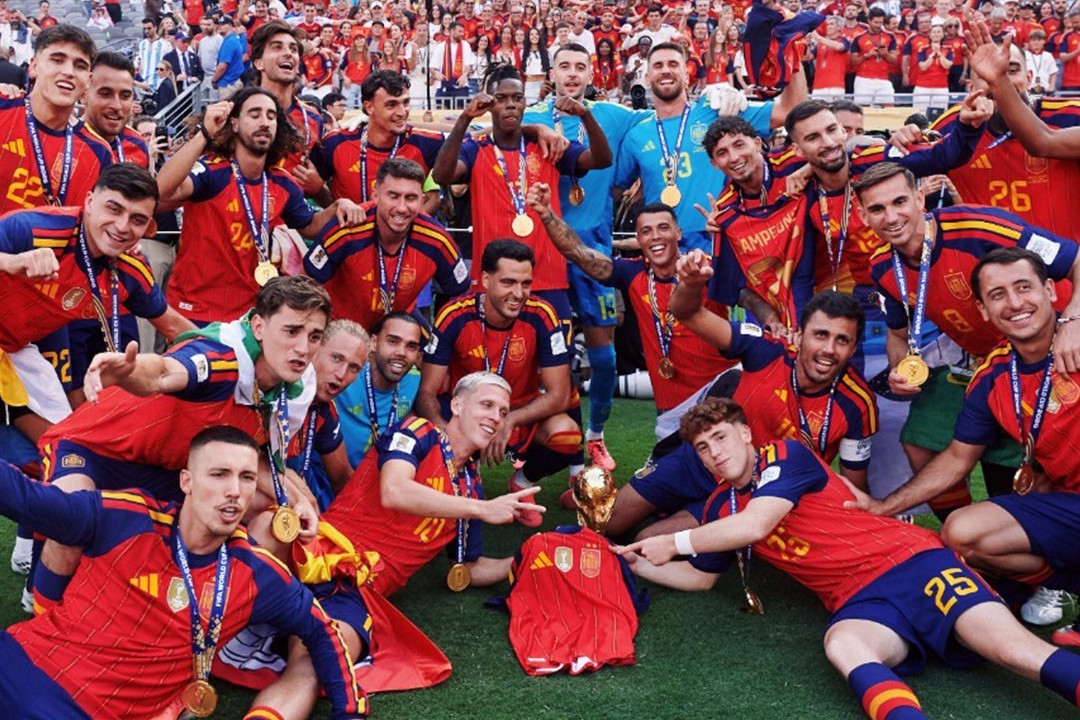
On 21 July 2026, word moved across the wire that the US Internal Revenue Service intends to withhold a portion of the roughly $51 million the Royal Spanish Football Federation stands to collect for winning the 2026 FIFA World Cup. The legal hook is straightforward, and unpleasant for anyone not steeped in American tax code: because every minute of tournament play, every bonus, every appearance fee was earned inside US borders, the income is taxable under US law, even when the recipient is a foreign federation and a foreign set of players.
That single administrative fact is now a political fact. A federation that walked off the field in Miami with the trophy is being asked to hand part of the cheque to the tax authority of the host country, and the question of whether that is fair, lawful, or simply extortion is going to be argued in three languages at once. The numbers are large enough, and the optics are ugly enough, that the dispute will outlast the confetti.
Who actually pays
Spanish reporting summarised by the Telegram channel DDGeopolitics on 21 July 2026 frames the demand in plain terms: prize money, performance bonuses and appearance fees earned on US soil during the tournament fall inside the IRS's remit. The $51 million figure refers to the prize component alone; the total pot the Spanish squad and federation will receive is higher once individual bonuses and federation payments are tallied. Under standard US practice for non-resident aliens, withholding is applied at source by the payer, here FIFA's local disbursement vehicle, before the funds are wired abroad. Spain's tax authority would then typically grant a foreign tax credit, so the federation does not get taxed twice, but the cash leaves the United States diminished.
That distinction matters, because the Spanish federation's public response is likely to be about double taxation treaties rather than about the principle of US taxing rights. Madrid will argue, correctly, that Spain has a bilateral income-tax agreement with Washington and that the gross withholding can be offset against the eventual Spanish tax bill. The IRS will argue, also correctly, that the income was sourced in the United States and that the treaty does not erase US jurisdiction, only softens the rate. Both positions are legally defensible, which is why this will end in negotiation rather than a lawsuit.
The bill FIFA itself is sending
The tax argument sits on top of a larger economic story that the Polymarket wire summarised on 20 July 2026: FIFA reportedly booked more than $9 billion in revenue from the 2026 tournament, the most lucrative sporting event in recorded history. The Spanish prize pot is a rounding error inside that number. The relevant question is therefore not whether the IRS is being unreasonable with La Roja, but whether the federation-to-player-to-tax-authority chain has been priced correctly from the start. It has not.
The 2026 cycle is the first World Cup staged across three host nations under an expanded 48-team format, and the financial engineering around it is built on the assumption that the host country is a neutral venue, not a tax collector. Prize-pool agreements, federation retainers and image-rights deals were all negotiated against a backdrop of US-hosted play, but apparently without serious contingency for the IRS treating tournament income the way it treats any other income earned by a foreign person on American soil. The Spanish federation is now the visible test case, and every other federation in the competition, England, France, the runners-up Argentina, the eliminated dozen, has the same exposure for their respective pools.
The jurisdiction argument nobody wanted
Here is where the row tips from bookkeeping into geopolitics. The United States has, for the better part of two decades, asked its allies to treat American financial infrastructure, dollar clearing, US-hosted platforms, US-jurisdiction contracts, as the backbone of the international order. That bargain is stable as long as the friction is invisible. The moment a Spanish federation, or a Saudi sovereign-wealth fund, or a Brazilian state oil company, sees a meaningful percentage of a routine transaction clipped by a US tax authority or a US sanctions office, the bargain becomes a complaint. This is the slow-burn argument Europeans have been having about dollar hegemony since the early 2010s, except now it has arrived at a football federation instead of a clearing bank.
The counter-reading is that the IRS is doing its job. Income earned inside the United States is supposed to be taxed inside the United States; the rule is not new, and applying it to a federation that just won the tournament on American pitches is no more extraordinary than applying it to a Spanish architect designing a building in New York. That view has force, and it is the view the US Treasury will take if pressed. The harder question is whether FIFA, in structuring the 2026 payouts, anticipated the rule and chose to absorb it, hoping no one would notice, or whether the federation's lawyers genuinely missed it. The first explanation is more flattering to FIFA; the second is more plausible.
What to watch
Three things will determine whether this is a one-week controversy or a structural headache. First, the formal Spanish federation response, expected within days, and whether Madrid files an expedited claim under the US-Spain double-tax treaty. Second, FIFA's own clarification, because the federation-to-player pipeline runs through FIFA-controlled vehicles, and the global body has an interest in pre-empting similar claims from the other 47 participating federations. Third, and most quietly, the position of the US Treasury and the White House, because a $51 million line item is small enough to be waived as a goodwill gesture and politically expensive enough that someone will eventually try to make it one. The kicker, for now, is that the trophy is in Madrid but a meaningful share of the prize is on its way to Washington, and the rest of Europe is watching to see whether that is a curiosity or a precedent.
Desk note: this piece is built entirely from the 20–21 July 2026 wire traffic on the IRS-Spain dispute and the broader FIFA revenue reporting; the underlying legal mechanics and the dollar-hegemony frame are derived from those inputs rather than from prior reporting.
Wire provenance
This editorial synthesis draws on the following public wire/social posts:
- https://t.me/s/DDGeopolitics