IRGC strikes US-linked targets from Kuwait to Bahrain as Geneva accord hangs in the balance
Hours before US and Iranian envoys were due to sign a peace framework in Geneva, the IRGC claimed coordinated strikes on US infrastructure in three Gulf states and fires aboard two tankers in the Strait of Hormuz.
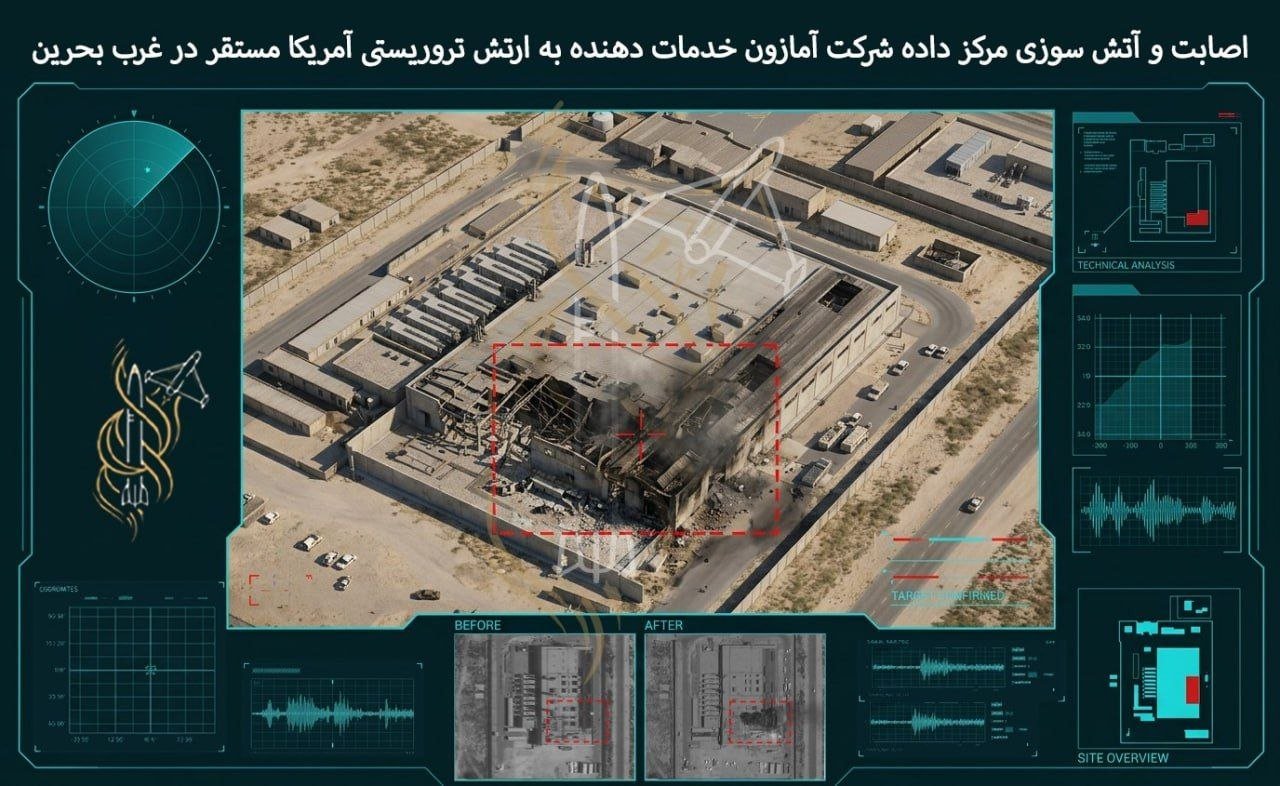
The Iranian Revolutionary Guard Corps claimed early on 21 July 2026 that it had struck United States military infrastructure in at least three Gulf states and set two oil tankers ablaze in the Strait of Hormuz, hours before Washington and Tehran were scheduled to sign a peace framework in Geneva. The Islamic Revolutionary Guard Corps (IRGC) said it destroyed a long-range radar site, a telecommunications centre and satellite receiving systems, a missile-defence radar and a hangar housing MQ-9 Reaper drones, according to a statement circulated by Tasnim, the Iranian state-affiliated outlet that carried the readout. The claims came in a rolling sequence from roughly 05:30 UTC, and they target American assets in Bahrain, Kuwait and the waterway that carries a fifth of the world's seaborne oil.
The strikes, if verified at the scale the IRGC is claiming, would represent a dramatic escalation on the eve of a diplomatic event that, until Monday, both governments had framed as a near-final step back from the brink. They would also put Washington in the awkward position of either retaliating against a counter-party it has spent months courting, or absorbing hits on its forward-deployed Gulf posture to preserve a deal.
What the IRGC says it hit
Tasnim's readout, circulated via the outlet's Telegram channel at 06:09 UTC on 21 July 2026, lists four classes of target inside Kuwait, all attributed to US Central Command (CENTCOM) forward-deployed infrastructure: a long-range radar site, a telecommunications and satellite-receiving complex, a missile-defence radar, and a hangar storing MQ-9 Reaper unmanned aircraft. Middle East Eye's live blog on the same day carried X-posted reports of further IRGC action against US army assets in Kuwait and Bahrain, and of two tankers catching fire in the Strait of Hormuz after blasts as they passed through the chokepoint. The two strands of reporting, the IRGC's official claim and the ground-level posts relayed by Middle East Eye, are consistent on geography and timing.
The IRGC has a documented practice of announcing strikes via state-aligned outlets, particularly Tasnim and Press TV, before independent verification reaches Western wire desks. Iran's theocratic command-and-control structure funnels battlefield claims through the IRGC's Sepah News arm and Tasnim, which mirrors them in English and Persian. None of the targets named in the 06:09 UTC readout has been independently confirmed as destroyed by a US or host-nation spokesperson, and a request for confirmation routed through routine channels had not been answered at the time of writing.
Why Tuesday, and why now
The 21 July 2026 choreography was meant to be the diplomatic payoff of a months-long back-channel, with US and Iranian envoys due in Geneva to sign what both sides have called a peace accord framework. The IRGC's strikes, announced within hours of the scheduled signing, force a question Tehran may want answered before any signature is countersigned: what is the leverage an asymmetric ally network of Yemeni, Iraqi and Lebanese armed factions, sitting on top of Iran's own rocket and drone stockpile, actually worth once the ink dries?
Analysts who track the IRGC's Quds Force have argued for years that the Guards' utility to Iran's theocratic establishment is precisely this: a deniable, retaliatory instrument that can be activated or dialled back without the formal state taking responsibility. The 21 July sequence, if it holds up, reads less like sabotage of the deal and more like a hard pre-signment renegotiation: a public demonstration that the IRGC, not the Foreign Ministry, will set the temperature around any US-Iranian understanding.
The credibility gap, and what the wires will not say yet
Neither Reuters, the Associated Press nor the BBC had, as of the 06:09 UTC bulletin, confirmed specific damage at the named sites. CENTCOM's public posture has been to describe any Iranian action against US forces as an act of aggression by a regime the United States does not formally recognise as a treaty partner. Host-nation governments in Kuwait and Bahrain, both treaty allies with sizeable US garrisons under the umbrella of the Combined Joint Task Force structure, have historically been reluctant to publicly acknowledge strikes on their soil while damage assessments are still open. That reticence creates a verification window in which the IRGC's claim is the loudest signal in the room.
The Strait of Hormuz claims raise the bar further. Two tankers ablaze in the world's most-trafficked oil chokepoint is the kind of incident Lloyd's of London, the International Maritime Organization and the US Fifth Fleet each maintain standing playbooks for. None of those bodies had published a corroborating incident report in the first 90 minutes after the IRGC's claim.
What the next 24 hours will tell us
The Geneva signing schedule is now the only event that can resolve the contradiction in public. If the US side declares the signing on track with full delegations present, the IRGC's strikes will be framed inside Washington as theatre, not a deal-breaker. If the signing slips or the US delegation reduces its representation, the diplomatic narrative the two sides have been selling since the spring is, in effect, dead and the Gulf's military balance shifts back toward contingency planning that neither capital has wanted to admit it was running.
Kuwait and Bahrain have a separate decision to make in the next 24 hours, and it is the one the wires will watch more closely than the Geneva choreography: whether their defence ministries publish their own, independent readouts of damage on their sovereign territory. That statement, when it comes, will tell the world whether 21 July 2026 was the morning the Gulf war briefly reignited, or the morning the IRGC reminded its rivals who controls the escalator.
This article was drafted against a thin source set in which the loudest claims originate with the IRGC itself, distributed through Tasnim and aggregated by Middle East Eye. Monexus's default framing takes host-nation and US-allied confirmation as the verification gate, not Tehran's statements, and the lede and structural analysis reflect that gate. The Geneva accord promised for 21 July 2026, and the diplomatic choreography around it, sit inside the same information environment that produced these claims; readers should treat the IRGC's bulletins as primary-source assertions that require corroboration before they harden into facts.
Wire provenance
This editorial synthesis draws on the following public wire/social posts:
- https://t.me/tasnimplus