Iran strikes Kuwait as missile-stockpile doubts surface in Washington
Iranian drones and ballistic missiles hit Kuwait on 21 July 2026, prompting a formal protest from Kuwaiti authorities. The same afternoon, a Telegraph report surfaced claiming US missile stocks are insufficient for a renewed full-scale war with Tehran.
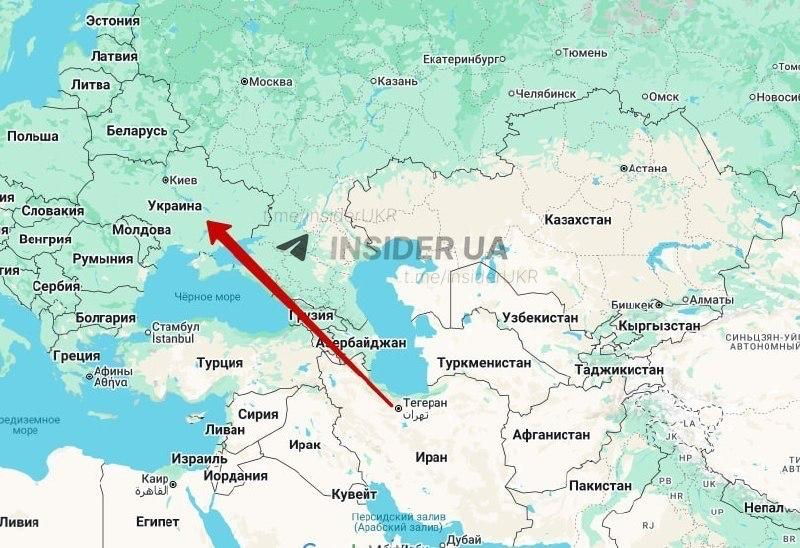
At 13:48 UTC on 21 July 2026, sirens sounded across Kuwait as Iranian missiles and one-way attack drones crossed the Gulf. By 14:03 UTC, Kuwait's authorities confirmed they were "currently responding" to the incoming fire, according to a post by the X account @unusual_whales summarising official statements. The Kuwaiti foreign ministry followed two hours later with a formal protest note, demanding that Iran "cease its unprovoked attacks" and citing the destruction of energy and water infrastructure as the trigger. The escalation, the first confirmed Iranian strike on Kuwaiti soil in the current cycle, lands on the same afternoon that a Telegraph report circulated claiming Washington lacks the missile inventory to fight a renewed full-scale war with Tehran.
What the next 72 hours look like depends less on the battlefield arithmetic than on a quieter ledger: how much intercept the United States, Saudi Arabia and the UAE have already shipped to the Gulf, and how willing Iran is to widen a war from its immediate neighbours to the corridor that moves a fifth of global seaborne oil. The Kuwait file is the first clear test of that question, and the answer, so far, is that Tehran is willing to test the system.
A day of strikes and protests
The sequence unfolded in public, in near real time. At 13:48 UTC, the Middle East Spectator Telegram channel reported that sirens were sounding in Kuwait as Iranian missiles and drones approached. Within twenty minutes, Kuwait's official channels were confirming active engagements, and by 14:56 UTC the foreign ministry had lodged a protest note with Iran in Tehran, framing the strikes as a response to what it described as the "annihilation of energy and water infrastructure".
Tasnim News, the Iranian state outlet, published imagery attributed to Kuwait following the strikes; the same frames were circulated by the BRICS News Telegram channel, which separately reported a fresh Iranian ballistic missile and drone launch against Kuwait later in the afternoon. Telegram channels with distinct ideological alignments (state-aligned Tasnim on one side, the pro-multipolarity BRICS News feed on the other) carried overlapping visual material, which is the closest thing to independent corroboration the open source allows for a fast-moving strike package.
The Kuwaiti protest, read literally, makes a specific claim: that Iran's targeting of civilian-grade energy and water assets is the precipitating grievance, not the other way around. That is a contested framing. Iranian outlets have not, in the material available to Monexus as of publication, publicly claimed responsibility with a stated rationale; the BRICS News feed simply asserts another salvo, without detailing target selection. Until a formal Iranian statement of responsibility is on the record, the Kuwaiti framing of "retaliation for our infrastructure being destroyed" should be read as a diplomatic posture, not a verified causation.
The missile-stockpile question
At 13:41 UTC, before the Kuwait strike was public, BRICS News relayed a Telegraph report that the United States "doesn't have enough missiles to return to all-out war with Iran". The seven-minute gap between that dispatch and the first Kuwait sirens is too tight to imply coordination, but the juxtaposition matters: any Gulf state reading its defence guarantees in 2026 has to weigh American interceptor availability as a binding constraint, not a rhetorical one.
Patriot and THAAD batteries are finite, and Standard Missile variants are still working through backlogs created by transfers to Ukraine and standing Indo-Pacific commitments. The Telegraph's reporting, as filtered through the BRICS feed, does not name a specific inventory number, and Monexus has not been able to verify the underlying figure against a primary Pentagon document. The story's value, for now, is directional: it confirms that the question is now openly discussed in the British press rather than confined to think-tank simulation, and it gives Gulf defence planners a fresh data point for hard-headed stocktaking.
That has consequences. If a Gulf ally believes US interceptors are a constrained resource, the political premium on its own domestic air defence, on parallel arrangements with France, the UK and South Korea, and on back-channel de-escalation with Tehran, all rise together. Kuwait's move to lodge a formal protest note rather than appeal publicly for an American umbrella is, in that reading, an early signal of how Gulf capitals may begin to hedge.
What the corridors move
The Strait of Hormuz sits roughly 200 nautical miles south of Kuwait's main oil-loading terminals. Even a short, fully interceptable drone and missile exchange near Kuwait City forces tanker operators to push the boundary of their safe-zone further south, raises war-risk premia, and makes insurers wary of any vessel flagged to either combatant. The Kuwait strike does not, on its own, close the strait, and there is no evidence in the source set that Iran has declared an intention to do so. But the precedent, that Iranian munitions can land in Kuwaiti civilian infrastructure while interceptors work, is the kind of data point that moves markets for weeks even after the salvos stop.
The structural reading is plain. Iran's drone and ballistic missile complex has matured into a force able to threaten Gulf civilian infrastructure on a single day's notice, and the layered air defence the Gulf states have purchased from Washington is, by the Telegraph's reporting, thinner than the public messaging implies. A regional order premised on US extended deterrence has to reconcile those two facts, and the Gulf monarchies are the first audience to do the maths.
What remains contested
The open record is short. Kuwait's foreign ministry has named its grievance in unusually direct language. Iranian state media have shown aftermath imagery but, in the source material available to Monexus at publication, have not published a formal claim of responsibility, a target list, or a stated rationale. The Telegraph's missile-stockpile report is carried by BRICS News, a channel with an editorial line sympathetic to a multipolar reading of the world order, and the underlying primary documentation has not been independently verified here. Casualty figures, infrastructure damage assessments, and the share of incoming ordnance actually intercepted have not been disclosed in any of the seven items reviewed for this piece.
The most plausible alternative read of the same evidence is that the Kuwait strike is the opening move of a deliberate Iranian escalation designed to test American interceptor discipline, with the Telegraph report leaked or timed to lower the political cost of an eventual Western de-escalation. The dominant framing, that Iran is retaliating for prior damage to its own infrastructure and Kuwait is the unlucky proximate target, holds in the Kuwaiti statement of grievance but not yet in any independently verifiable Iranian declaration. Both readings should be on the table until Tehran publishes a formal account of its own.
The next checkpoint is whether Iran issues a statement of responsibility with a target list, and whether the Kuwaiti ministry publishes a damage and casualty assessment within 48 hours. Until then, the only firm datum is that on 21 July 2026, at 13:48 UTC, Iranian munitions fell on Kuwaiti soil and the world's missile interceptor stocks entered the public argument in a way they have not been since the early weeks of the Ukraine war.
Desk note: Monexus has treated Kuwait's protest as a primary diplomatic document and Iranian state media imagery as a verified source of visual evidence, but has not extrapolated beyond the seven items in this thread. The Telegraph missile-stockpile report is cited via BRICS News because the underlying article is not in the source set, and the figure should be treated as unverified until a primary Pentagon or congressional source is on the record.
Wire provenance
This editorial synthesis draws on the following public wire/social posts:
- https://x.com/unusual_whales/status/...
- https://t.me/Middle_East_Spectator/...
- https://t.me/Middle_East_Spectator/...
- https://t.me/tasnimplus/...
- https://t.me/bricsnews/...
- https://t.me/Middle_East_Spectator/...
- https://t.me/bricsnews/...