Iran's missile pressure exposes a familiar US air-defence dilemma
Iran-aligned outlets say successive waves of drones and missiles are getting through US air-defence systems. The framing is Tehran's; the underlying question is one Western planners have wrestled with for years.
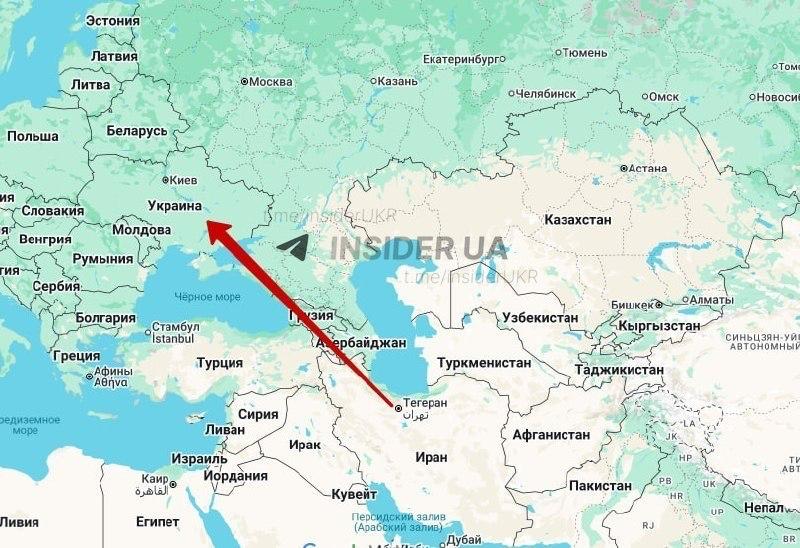
On 21 July 2026, two Iranian state-aligned Telegram channels served up a coordinated message: that successive waves of Iranian missiles and drones are now reaching their targets across the region, and that American air-defence systems are failing to intercept them. The framing, predictably, belongs to Tehran. The underlying question, however, is older than the messaging campaign and considerably harder to dismiss.
Jahan Tasnim, citing American cable outlet CBS, argued that Iran's air-war strategy amounts to a deliberate "de-basing" of the United States: saturating regional missile defences, forcing the redeployment of interceptors, and converting US forward presence from a deterrent into a liability. Tasnim News English carried the same CBS framing within hours, summarising the thesis that interception has grown measurably more difficult and that, when an Iranian missile does hit its target, it is because American systems either failed to engage or failed to kill the inbound round. Both channels timestamped their posts at roughly 18:00 to 19:20 UTC on 21 July.
What the Iranian framing claims
The argument assembled across the two channels is consistent. It rests on three pillars: that Iran can produce and launch missiles at a tempo the US and its partners cannot match magazine-for-magazine; that the cost ratio favours the attacker, with Iranian one-way attack drones and short-range ballistic missiles running a small fraction of the price of the interceptors used to stop them; and that the cumulative effect of repeated salvos is to deplete US Patriot and Aegis stockpiles that take months, not days, to rebuild. The political payoff, in this telling, is a regional security order in which Tehran sets the tempo and Washington is forced to react.
The framing is overtly political. Jahan Tasnim's framing of "de-basing" is borrowed from Cold-War-era debates about the survivability of US forward bases under missile saturation. Tasnim News English's repackaging of the CBS interview presents the same picture in operational language: American air defence, in Iran's telling, is being outshot, outspent and outcycled. Both channels are explicit that the point is strategic, not tactical. The Iranian argument is that the United States has built its regional posture around a handful of expensive, fixed installations, and that a patient missile campaign can render those installations economically and politically untenable.
Why the underlying question survives the spin
Strip the messaging apart and the question on the table is one Western defence planners have wrestled with for the better part of two decades: how many interceptors can a peer or near-peer adversary force a defender to spend, and at what cost to the defender's broader posture? The math has been unfavourable since at least the early 2010s, when the US Army publicly worried about Patriot interceptor inventory during earlier regional flare-ups. The Iranian framing on 21 July amounts to a public restatement of that same arithmetic, dressed in the language of strategic triumph.
This is not the same as saying the substantive claims are confirmed. The thread items are sourced entirely from Iranian-aligned outlets repackaging a single CBS interview; they do not provide independent intercept data, location lists, target lists, or unit-level kill rates. The dominant Western framing of Iranian missile performance has historically been sceptical of Tehran's own battle-damage assessments, and there is no reason to abandon that scepticism on the basis of two Telegram posts and a cable-news clip.
What remains genuinely uncertain
Three things are unsettled, and the available sources do not resolve them. First, the actual rate of successful Iranian strikes versus interceptions is not disclosed in the thread items; only the framing that "intercepting Iranian missiles has become more difficult" is asserted, with attribution to CBS. Second, the specific US systems at issue (Patriot, THAAD, Aegis, and any forward-deployed air-defence artillery) are not named in the thread material; the Iranian argument generalises across the US air-defence envelope, which is wider than any single system. Third, the political context, which interceptors were fired at which targets, on whose authority, and with what rules of engagement, is entirely absent. Two Telegram posts and one cable-news summary do not, on their own, build a verified operational picture.
The plausible alternative reading is also unflattering to the Iranian argument. Interception is a last-line function. Public messaging about missile penetration often obscures the layered nature of modern integrated air defence: satellites, AWACS, fighter CAPs, electronic warfare, and a chain of command-and-control nodes that can degrade an attack long before a Patriot battery ever sees an inbound round. A missile reaching its target can mean failure of a specific interceptor; it can also mean the attacker successfully routed around an intact defensive envelope, which is a different and arguably more uncomfortable problem for Tehran's adversaries to solve.
Stakes
If the Iranian framing is even partly right, the regional security architecture the United States has underwritten since the early 2000s becomes more expensive to maintain at the same level of confidence. Interceptor procurement timelines run in years; missile production in Iran runs in months. The price of every US base in the Gulf, every carrier patrol in the Arabian Sea, and every Patriot battery in the region quietly rises.
If the framing is wrong, or only partly right, the Iranian messaging campaign still does work for Tehran: it advertises a capability, unsettles partners, and forces Western publics to read their own press coverage of missile interception through a frame that originated in Iranian state media. That second-order effect does not require a single additional missile to launch.
Either way, the 21 July posts should be read less as news than as a press release. The reporting that would let a reader move past the framing is not in the thread. Until it is, the honest editorial position is to mark the claim, locate it in its source tradition, and let the underlying question sit unresolved where it has, in fact, sat for years.
This publication read the Iranian framing against the underlying air-defence arithmetic it claims to describe; we found the framing useful as a hypothesis and the underlying arithmetic still genuinely contested.
Wire provenance
This editorial synthesis draws on the following public wire/social posts:
- https://t.me/JahanTasnim
- https://t.me/tasnimnews_en
- https://t.me/JahanTasnim/17801