Iran's reach into the Gulf: what a reported drone attack on Kuwait tells us about Tehran's escalation calculus
Telegram channels aligned with Iranian resistance networks reported an Iranian drone attack inside Kuwait on 21 July 2026, with the Kuwaiti Army saying it is confronting the strike. The unverified claim lands at a moment when Gulf states are already on edge.
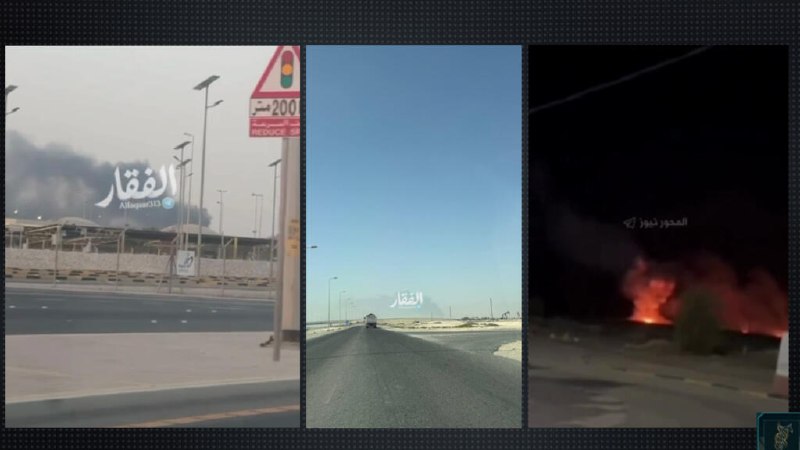
At 21:53 UTC on 21 July 2026, a Telegram channel identifying itself as @FotrosResistance, aligned with Iranian opposition networks outside the country, posted that Iran had launched drones at targets inside Kuwait and that the Kuwaiti Army was responding to the attack. The same wording appeared minutes earlier on the aggregator channel DDGeopolitics, which pointed back to @FotrosResistance as its source. As of the time of writing, no wire service has confirmed the incident and the Kuwaiti Ministry of Defence has not, in the sources available to us, issued a public statement.
The reports deserve to be read both at face value and against the long arc of Tehran's signalling toward its Gulf neighbours. Read at face value, a confirmed Iranian strike on Kuwaiti soil would mark a dramatic widening of Iran's tolerated target set, one that has historically stopped short of striking fellow Arab monarchies even at the height of regional crisis. Read against the arc, the reports sit inside a months-long pattern of Iranian intimidation operations aimed at the Gulf, drone incursions, maritime seizures, proxy mobilisations, calibrated to extract concessions at the negotiating table rather than to ignite a regional war. Both readings are uncomfortable. Both should be on the table.
What the unverified claim actually says
The text circulating on Telegram is short and consistent across both channels: Iranian drones are attacking targets inside Kuwait, the Kuwaiti Army is confronting the attack, and the source is @FotrosResistance. No targets are named. No casualty figures, launch sites, or military units are cited. There is no photograph, no video, no Kuwaiti government press release attached. The claim is, in short, a single-source allegation carried by opposition channels outside Iran and republished by a geopolitics aggregator that does not itself add independent reporting. That is the floor of what is verifiable, and it is a thin floor.
Western wires, Reuters, the Associated Press, the BBC, have not, in the thread inputs available to this publication, moved on the story. Iran International, a Persian-language outlet with deep sourcing inside the Islamic Republic, has not been sighted in the thread either. That silence does not prove the reports false. It does mean a reader should treat the claim as a live but unverified flash until at least one of those outlets or the Kuwaiti government itself puts a date, a place, and a unit number on it.
Tehran's running escalation ladder
Iran's posture toward the Gulf has been tightening for more than a year. The pattern is familiar enough to map by now: drone activity in the northern Gulf approaches to commercial tankers, sabotaged vessels, the occasional maritime seizure, and calibrated proxy attacks on US positions in Iraq and Syria. The escalator was built by Tehran explicitly to be climbed in either direction. Strikes that fall short of triggering a US or Saudi military response still reset the negotiating baseline. Threats that can be walked back let Iranian diplomats deny intent. The arithmetic works for Tehran in part because Gulf states have preferred quiet diplomacy and de-escalation to public confrontation.
A reported strike on Kuwait would, if confirmed, sit two rungs higher than that established pattern. Kuwait hosts a small US military presence and sits astride the maritime chokepoint approach to the Iraqi and Saudi coasts. Hitting it would convert Iran from a regional nuisance into a direct threat to a fellow Arab state's territory, with all the treaty obligations that follow under the Gulf Cooperation Council's mutual-defence language. The deterrence logic on the Iranian side is real: a wider target set raises the cost of US-Israeli strikes on Iranian assets if a hot phase opens. The escalation logic on the Gulf side is also real, and it does not favour Tehran.
Why this story should be carried carefully
The temptation, in headlines driven by Telegram-breaking content, is to lead with the most alarming phrasing available. The temptation should be resisted. The same channels that carried the Kuwait claim have, in past reporting cycles, also carried unverified cross-border strike narratives that did not survive wire confirmation. The opposing sentiment inside Iran also has reason to amplify: an Iranian strike on a Gulf neighbour is politically toxic in Tehran's own Arab street and would complicate the patient diplomacy Iran has run with Doha, Muscat and Riyadh across years of silent backchannels. That motivation alone is reason to hold the claim for corroboration rather than to print it as fact.
There is a second, more uncomfortable point. Even a hoax functions as a probe. A verified Iranian strike on Kuwait would force a coordinated Gulf response and reshape the European and Asian appetite for Iranian crude. An unverified strike report that goes viral first and is corrected later still shoves the conversation in that direction. The political economy of breaking-news Telegram in the Middle East rewards the most consequential claim, not the most accurate one. This publication finds that a useful corrective to keep in view while reading the rest of the evening.
What to watch before dawn UTC
The next twelve hours carry the corroboration load. The Kuwaiti Ministry of Defence, the US Central Command, and the wire desks in Dubai and Beirut will move first or not at all. A Kuwaiti denial or a wire-only confirmation shapes the rest of the day's coverage entirely. If nothing corroborates by morning, the suspicion has to migrate from the on-the-record event to the channel that broke it, and the question becomes what the operation's authors were trying to move. Iran's external operations have rarely been sole-purpose affairs. The signalling is the point.
Desk note
Monexus is carrying this item on the basis of single-source Telegram reports and is explicitly not asserting that an Iranian drone strike on Kuwait has occurred. Wire confirmation is the editing threshold; in the interim, the piece is published as a calibrated read on the pattern inside which such a strike would land, not as a confirmation that one has.
Wire provenance
This editorial synthesis draws on the following public wire/social posts:
- https://t.me/FotrosResistancee
- https://t.me/FotrosResistancee
- https://t.me/DDGeopolitics