Iran's Army Claims Strikes on US HIMARS and Helicopter Facilities Inside Kuwait
Tehran's regular army says it struck American HIMARS at Arjan and a helicopter stand at Al-Udayri inside Kuwait. The claims, carried by Iranian state-linked channels, have not been confirmed by US or Kuwaiti authorities.
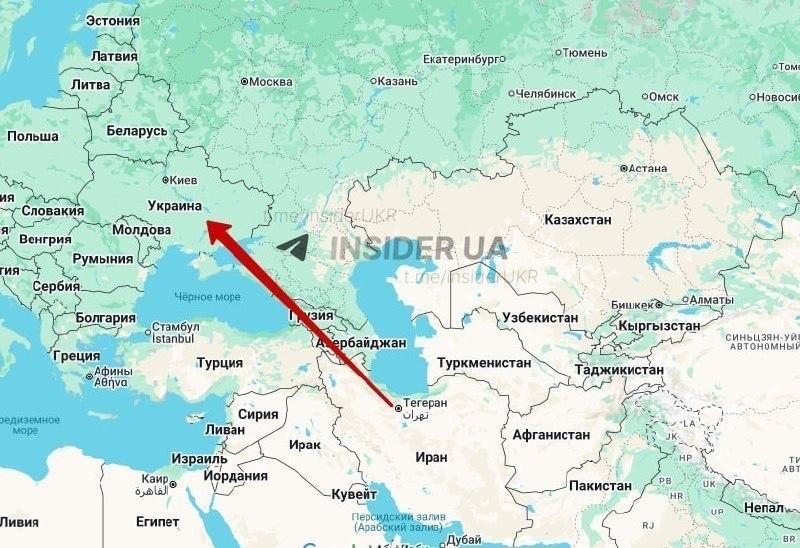
On 21 July 2026 at 02:50 UTC, the Iranian Army said its drones struck a helicopter stand at the "Al-Udayri" camp and a US forces' stationing building at the "Ahmed Al-Jaber" base inside Kuwait, according to a breaking alert posted by the Beirut-based, Iran-aligned outlet Al-Alam Arabic on Telegram. Thirty-five minutes later, at 03:25 UTC, the same army statement claimed ground forces had struck HIMARS systems belonging to the US Army stationed at Kuwait's Arjan base, a claim circulated on X by the account @SprinterPress. The dual announcements, issued within the span of an hour and referring to three separate Kuwaiti facilities hosting American troops, would, if independently verified, mark a dramatic escalation: a direct Iranian military strike on the territory of a Gulf Arab state that hosts the US Central Command's forward operating presence.
The claims matter less for what they prove today than for what they reveal about how the Iranian state now chooses to publicise force. Tehran's army, not the Islamic Revolutionary Guard Corps, is on the record. The messages travelled in English-friendly, headline-ready packaging through channels that regularly syndicate Iranian state positioning to a global wire audience. The framing is deliberate: regular armed forces, named US equipment, named Gulf bases, and a Kuwaiti geography that places the strikes inside the territory of a US treaty ally.
What was claimed, in what order
The sequence began at 02:50 UTC, when Al-Alam Arabic, the Arabic-language outlet of Iranian state broadcasting, posted an urgent banner citing the Iranian Army directly: drones had targeted a helicopter stand at Al-Udayri and a US stationing building at Ahmed Al-Jaber. Both are real installations. Al-Udayri, also rendered Al-Oudhairi or Camp Arifjan-area, is a Kuwaiti military camp that has hosted US troop rotations and pre-positioned equipment for years. Ahmed Al-Jaber Air Base, a Kuwaiti Air Force installation that also hosts American personnel, has been a routine stop for US Air Force and allied tanker traffic.
At 03:25 UTC, the account @SprinterPress posted what it described as the Iranian Army's statement that "ground forces of the Iranian Army have struck HIMARS systems belonging to the American army, located at the Arjan base in Kuwait." Arjan is a known Kuwaiti Armed Forces brigade area, identified in open Kuwaiti government and US military reporting as a site for American pre-positioned stocks, including artillery and rocket-launcher systems. The targeting of HIMARS specifically is a pointed choice: the high-mobility artillery rocket system has been the single most consequential Western-supplied weapon in the post-2023 Middle East conflict cycle, and naming it signals Tehran's awareness of what US and Gulf planners treat as priority assets.
Neither the US military, the Kuwaiti government, nor any Gulf state has confirmed damage, casualties, or even an incident at the named sites. No independent imagery or open-source verification has appeared in the hours since the statements. Reporting from wire services that cover the Gulf posture closely has, as of publication, not corroborated the claims.
Why the Iranian Army, not the IRGC
The most striking feature of the announcement is who is on the byline. Iran's regular army (Artesh) operates in parallel with the Islamic Revolutionary Guard Corps and, under Iran's constitution, answers to a separate chain of command. IRGC units have historically taken the public lead on cross-border strikes through proxy networks. An Artesh statement framing direct strikes inside Kuwait is a categorically different claim: it puts a conventional state armed force, not a clandestine arm, on the record as having hit sovereign Gulf infrastructure.
Read alongside Iran's intensifying public posture toward US bases in the region, the choice suggests Tehran is signalling that retaliation, if it comes, will wear a state uniform. That messaging is calibrated for two audiences. Domestically, it reassures an Iranian public that has watched proxy attrition that the regular military remains capable and willing. Abroad, it warns Gulf hosts of US facilities that the price of hosting those facilities is no longer abstract.
The framing problem in real time
What the public is receiving in the first hour after such a claim is not the event itself but a contest over its meaning. Iranian state-adjacent channels are publishing the army's statements as fact. Western wire desks are citing the claims with the explicit caveat that they are unverified. Gulf state outlets, where reporting exists at all, are running parallel coverage that does not corroborate the strikes.
The default reflex in English-language coverage is to treat state-media strike announcements from adversaries as a category of rumour until disproven, then to drop the story once disproven. That reflex is understandable. It is also asymmetric. The inverse situation, in which a US or Israeli military announcement of a strike is treated as presumptively true, is the standard practice of the same newsrooms. Coverage routinely defers to the language of official spokespeople, but the question of which officials count is itself a political choice. When the official in question is the Iranian Army, the deferral tends to vanish.
This is not a counsel of credulity. It is a counsel of symmetry: an Iranian Army statement naming US HIMARS at a named Kuwaiti base deserves the same parsing, the same source-tagged framing, and the same demand for evidence as a Pentagon statement naming an Iranian facility. Until that evidence arrives, the honest line is: claimed, not confirmed.
What is not yet known
The sources available at publication do not specify what was actually struck, what munition was used, or what damage, if any, occurred. There are no named Kuwaiti officials on the record, no US Central Command statement, no imagery of impact sites, and no independent satellite or open-source confirmation. The claims themselves name three different facilities across two separate announcements issued thirty-five minutes apart, a tempo that is consistent with a deliberate messaging operation but does not, on its own, establish a kinetic event.
Kuwait's strategic position makes silence expensive. The country hosts between roughly 13,000 and 15,000 US military personnel across multiple bases, hosts the forward headquarters of US Army Central, and depends on the US security umbrella while carefully avoiding public entanglement in regional confrontations. If the Iranian claims are accurate, Kuwait faces an immediate sovereignty question and a treaty-allied obligation. If they are fabricated or exaggerated, Kuwait still faces the diplomatic task of stating so on the record in a way that does not undercut either Tehran or Washington. Either way, the next 24 to 48 hours will tell. Watch for CENTCOM situational reports, Kuwaiti Ministry of Defence statements, and any change in US force posture notices out of the Gulf.
Desk note: Monexus is treating the Iranian Army's announcements as primary-source claims, not as confirmed kinetic events, and is naming the Iranian state-adjacent channels that carried them rather than paraphrasing the claim as ambient fact. Western wire reporting on these claims has not yet appeared in the thread sources; this article will be updated as independent confirmation or refutation surfaces.
Wire provenance
This editorial synthesis draws on the following public wire/social posts:
- https://x.com/sprinterpress/status/2079407311697629184
- https://t.me/alalamarabic