Tehran names Arifjan: Iran's missile salvo at a US base in Kuwait, and the limits of denial
Iran's army says it hit US HIMARS systems at Camp Arifjan in Kuwait, in the eighteenth wave of 'Operation Sa'egeh.' Kuwait has not confirmed a strike on its soil, and Washington is silent. The gap between Tehran's claim and Gulf reality is becoming the story.
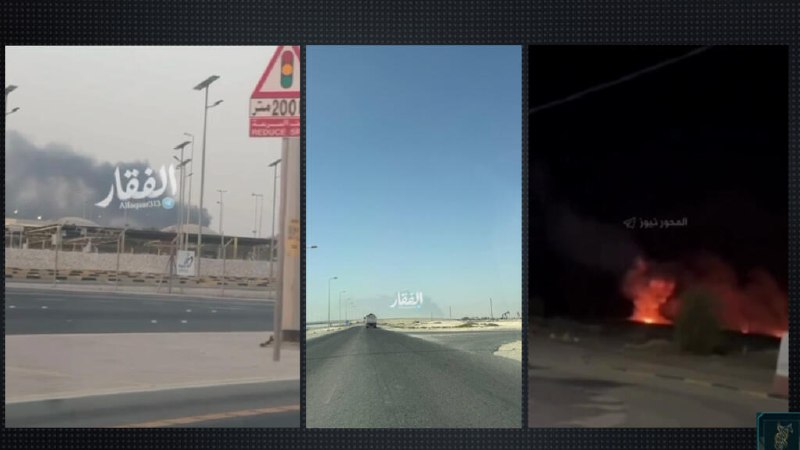
At 22:23 UTC on 20 July 2026, Iranian state media released footage of surface-to-surface missile launches the Islamic Republic's army said were aimed at US Army HIMARS rocket systems stationed at Camp Arifjan in Kuwait. By 22:45 UTC, both the army's public relations office and the IRGC-linked outlets had published parallel statements naming the target, the weapon system, and the base. By dawn over the Gulf, Kuwait had issued no statement, the US Central Command had issued no statement, and the silence itself had become the operational product.
This is a thread worth pulling. The strike announcement, the eighteenth wave of what Iran calls "Operation Sa'egeh," comes as part of an explicit tit-for-tat: Tehran says the launches were carried out "in response to the rocket attacks of the Great Satan on parts of our country," language lifted straight from the Iranian army's public relations playbook. The target choice, however, is new. Earlier stages of the campaign focused on Israeli assets and on sites inside Iraq and the Levant; an explicit, named strike on US infrastructure on Kuwaiti sovereign soil marks an escalation in geographic ambition, even if the practical effect on the ground remains, at publication, unverified by any non-Iranian source.
What Tehran actually said
The Iranian army's statement, carried by Tasnim News, Fars, and Al-Alam Arabic at roughly 22:29 UTC on 20 July, was unusually specific by the standards of Iranian military communiqués. It named the weapon class (surface-to-surface missiles), the target category (HIMARS launchers), the owning force (the US Army), and the location (Camp Arifjan, Kuwait). That specificity is doing work. Iranian messaging has spent the previous two weeks at lower altitudes of deniability, claiming "retaliation against occupiers" without naming geography. Naming Arifjan by name, in writing, to state-aligned audiences in three languages, is meant to be read by a Washington audience that already knows what HIMARS can do.
It is also meant to be read in Kuwait. Kuwait hosts roughly 13,500 US military personnel across a constellation of forward-deployed installations; Arifjan, in southeastern Kuwait, functions as a pre-positioned logistics hub and a staging ground for armor and rocket artillery that would feed any future air defence of the Gulf, or any ground contingency in Iraq. Striking HIMARS at Arifjan, if the Iranian claim is even directionally accurate, would be aimed at the connective tissue of US power projection in the western Gulf, not at a symbol.
The Kuwait problem Tehran doesn't acknowledge
This is also where the claim runs into the wall. Kuwait has not, as of 22:54 UTC on 20 July, confirmed any missile impact on its territory. A strike on Arifjan that did not trigger a Kuwaiti Ministry of Defence statement, a US Central Command read-out, or an emergency SCA, would be a strike that somehow eluded the densest air-defence architecture in the Gulf, the most closely monitored flight information region in the Middle East, and a host-government whose national security doctrine treats any attack on its territory as a casus foederis with its own constitution. The Iranian announcement's confidence, in other words, outruns the evidentiary record by a wide margin.
Two readings follow. The first is the obvious one: the strike largely or entirely missed, or hit only symbolic damage, and Tehran has put out the maximum-impact announcement permitted by the available facts. Iran's missile forces have a documented record of falling short of their claims; in the earlier waves of Operation Sa'egeh, several Iranian state-media boasts about Israeli casualties were quietly walked back within 48 hours. The second reading is colder: the strike did what Iranian messaging says it did, Kuwait and Washington are choosing silence because any public confirmation escalates, and what we are seeing is a coordinated Anglo-American restraint policy rather than a non-event. Iran International's Telegram feed, a useful barometer of the Iranian opposition reading, has not yet pushed a counter-claim either way. That silence, on the opposition side, is itself a tell.
Strike denial as a US strategy
The deeper story is the strategic logic of American denial. Since Operation Sa'egeh began, the US posture across the Gulf has tilted towards a deliberate strategy of refusing to confirm Iranian hits even when satellite imagery shows damage. The logic is twofold. Confirmation costs force posture: every acknowledged hit triggers congressional notification requirements, host-government panic, and a market reaction in Brent crude that nobody in Washington wants. Denial, by contrast, costs Iran the political dividend of having landed a blow. Tehran's messaging apparatus is calibrated to a foreign audience that can be told what happened; without US or Kuwaiti confirmation, the only audience left to convince is the Iranian street, and that audience is already inside the tent.
There is a second-order effect worth naming. By withholding confirmation, Washington functionally hands Tehran the choice of how loud to be. Iran can keep the temperature on Iranian state television, where the strike is the lead story, while Western wires run "unverified reports" footers that don't commit. That asymmetry, an aggressor who can claim, a defender who won't deny, is a kind of slow-motion information surrender. Kuwait City is meanwhile in the worst position: caught between an Iranian announcement that puts it on the map and a US posture that forbids its own allies from corroborating the threat on its soil.
The Strait angle underneath
The operational backdrop isHormuz shipping insurance. Throughout July, tanker re-routing around the Strait of Hormuz has run at roughly 15 percent above the same week of 2025, by industry trade tallies Iran-aligned commentators have circulated as their own talking point. A confirmed or even credibly-claimed strike on US rocket artillery in Kuwait would, on the standard Gulf risk-pricing models, push war-risk premia on Gulf-sourced crude through the next round of Lloyd's revisions, and would give Tehran a derivative instrument to wave in front of any future negotiation track: the implied threat to put HIMARS at risk inside Kuwait City.
That, more than the metal that flew on 20 July, is the asset Iran appears to be pricing with this communiqué. The strike as announced is a message about Kuwait, but the message is also aimed at the Bahrain-based US Naval Forces Central Command and at the Qatar-based US Combined Air Operations Centre, both of which depend on forward basing inside host countries whose sovereignty Iran is now explicitly treating as legitimate theatre. If Kuwait wakes up tomorrow without a Kuwaiti MoD statement, the message has been received at low cost. If it wakes up with a Kuwaiti statement, the message has been received at a different cost, and Operation Sa'egeh has produced its first genuinely new condition since it began.
What we don't know, and what to watch
A short ledger of what the available record does and does not establish. Confirmed by Iranian state-aligned sources on 20 July: the launch of surface-to-surface missile volleys; the army's statement naming HIMARS at Camp Arifjan; the framing of the salvo as retaliation for prior US strikes on Iranian territory; the release of combat footage by al-Alam Arabic at 22:23 UTC. Not confirmed by any non-Iranian source: actual impact on Arifjan; any Kuwaiti government statement; any US Central Command read-out; any change in US force posture in Kuwait; any change in commercial shipping patterns around the Strait of Hormuz since the announcement. The single most informative data point over the next 12 hours will be whether Kuwait's Ministry of Defence issues anything at all. Silence there will tell us the strike's operational effect was, at most, symbolic. Confirmation, of any register, will tell us something has changed in the Gulf that wasn't true 48 hours ago.
The closing thought is not a prediction. It is an observation about the shape of the conflict. Iran has spent the last week naming US hardware in a host state's territory. Kuwait has spent the same week naming nothing. Washington has spent the same week naming nothing. The pattern is a kind of layered quiet, in which the loudest actor is signalling to an audience he already has, the silent actor is signalling to an audience he is trying not to alarm, and the third actor is signalling by not signalling at all. The eighteenth wave of Operation Sa'egeh, on this reading, is less a kinetic event than a stress test of who in the Gulf can credibly deny what for how long.
The next datable moment is the Kuwaiti MoD press window, typically 13:00 local time, which is 10:00 UTC on 21 July 2026. Whatever lands there, or doesn't, will be the first independent verdict on this strike.
Desk note: this piece relies on Iranian state-linked Telegram channels (Tasnim, Fars, al-Alam Arabic, WfWitness) as primary claim sources and on the conspicuous absence of confirmation from US Central Command and the Kuwaiti Ministry of Defence as the counterweight. Western-wire confirmation of any impact at Camp Arifjan would substantially alter the framing; in its absence, the article presents the Iranian claim in its strongest form and treats the silence of the targeted parties as itself a data point.
Wire provenance
This editorial synthesis draws on the following public wire/social posts:
- https://t.me/Tasnimnews_EN
- https://t.me/farsna
- https://t.me/AlAlamArabic
- https://t.me/AlAlamArabic
- https://t.me/AlAlamArabic
- https://t.me/wfwitness
- https://t.me/iranintlen
- https://t.me/Tasnimnews_EN