Houthis declare maritime embargo on Saudi ports as Red Sea war-risk insurance more than doubles
Within hours of the Houthi announcement on 20 July 2026, insurers more than doubled Red Sea war-risk premiums, turning the Bab el-Mandeb into the next live test of whether commercial shipping can absorb sustained disruption in one of the world's tightest maritime chokepoints.
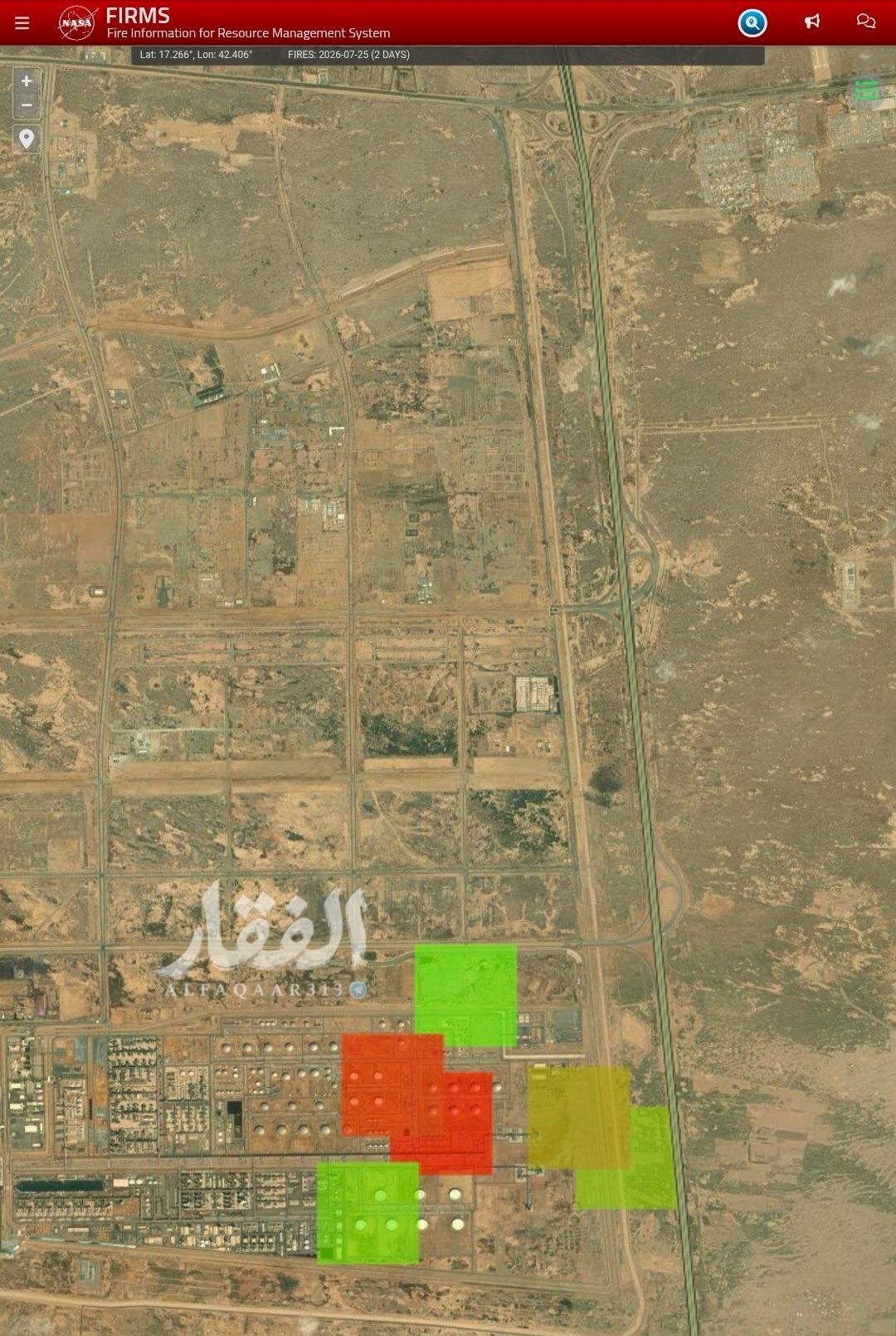
Just after 18:00 UTC on 20 July 2026, Bloomberg reported that Yemen's Ansar Allah (Houthi) movement had declared a "maritime embargo" against Saudi Arabia, effective immediately. Within three hours of that wire, Reuters confirmed that war-risk insurance rates for vessels traversing the southern Red Sea and the Bab el-Mandeb strait had more than doubled in a single trading session. By 21:42 UTC the same day, Al Jazeera English was running an alert that the Houthis had announced a maritime blockade in Saudi Arabia itself, framing the action as retaliation rather than theatre. The three dispatches, stacked inside one evening, sketch the geometry of a new front in a war that now reaches directly across the Arabian Peninsula's western flank.
What the sources describe is not a rhetorical escalation alone. It is a financial event with a price attached, and the price is the clearest measure of how seriously the maritime industry is taking the threat. Shipping insurance markets price probability by the hour; when premiums double inside a session, underwriters are not signalling outrage, they are signalling risk. That puts the Houthi declaration on a footing with the campaign that began in late 2023, when the group began targeting commercial tonnage in the same corridor in solidarity with Palestinians in Gaza. This time, the target set is bilateral rather than ideational, and the proximate cause is the Saudi-led blockade of Yemen's own ports and airports, which the Houthis have cited as the trigger.
From blockade to embargo
The sequencing matters. Saudi Arabia and its coalition partners have blockaded Houthi-held and contested ports in northern Yemen for most of the decade-long war. The Ansar Allah announcement pivots that logic: rather than blockading the kingdom by land, the movement is now asserting a maritime envelope that, if enforced, would threaten Saudi Gulf-adjacent shipping lanes and any traffic through the Bab el-Mandeb heading north into the Red Sea and the Suez canal system. BBC's reporting on the announcement, citing the Houthis directly, frames the embargo as a direct, named response to the Saudi-led closure of Yemeni ports and airports, and says the measure takes effect immediately.
Al Jazeera English's headline framing, "Houthis announce maritime blockade in Saudi Arabia," widens the aperture. Where the wire reports used the word "embargo," the Arabic-language announcement, broadcast on Houthi-aligned outlets and aggregated across the regional press, speaks in terms of a blockade. The distinction is more than lexical; under international law an embargo is a prohibition on trade, while a blockade is an assertion of control at sea. The choice of word inside Houthi communiqués signals the legal posture the movement intends to claim. For shipowners and insurers, the practical question is identical either way: which vessels, on which routes, are now considered targetable.
The market reads it in real time
The Reuters-derived note carried by Polymarket's markets desk, published at 21:33 UTC, is unambiguous: war-risk insurance for Red Sea transits more than doubled on the news. War-risk premia for hull and cargo in the region had spiked in late 2023 and early 2024 during the height of the original Houthi campaign against shipping linked to Israel; several major container lines rerouted around the Cape of Good Hope, adding roughly 10-14 days to Europe-Asia runs. When the major carriers began transiting again in 2024 and 2025, they did so on the strength of an informal arrangement that has never been publicly confirmed by either side. A doubling of premia inside hours suggests that arrangement is not, in itself, considered sufficient cover for the new posture Ansar Allah has adopted against Saudi-flagged and Saudi-bound tonnage in particular.
There is no public dollar amount inside the sources for the new rate level; only the multiplier. That is itself meaningful. Premia for transits of the Bab el-Mandeb had compressed substantially during 2025, and a market that has rerated that fast on a bilateral declaration between Yemen and Saudi Arabia is a market that believes the threat specifically against Saudi shipping, rather than the threat to international commerce in general, is the binding constraint. Insurance pricing is granular in this way; it differentiates by flag, ownership, and cargo. The doubling is an indictment of confidence in the Saudi-flagged segment above all.
Counter-narrative: where the dominant framing does not hold
The dominant Western wire framing of Ansar Allah's actions since 2023 has read them as either a function of the Gaza war, an Iranian proxy operation, or a manifestation of Houthi ideological maximalism. None of those lenses is wrong, but each is partial, and the 20 July announcement puts pressure on all three. If this were primarily about Gaza, the target set would still be vessels linked to Israel and its Western allies, not Saudi Arabia specifically. If it were primarily about Iranian direction, Tehran's incentive to escalate against Riyadh inside the same week that Saudi-Iranian rapprochement has been held up as the region's quiet diplomatic achievement would be self-defeating. If it were ideological maximalism pure and simple, the careful framing of the embargo as a counter-blockade, a retaliation against a named closure of Yemeni ports and airports, would not carry the same force.
The strongest remaining read of the facts is that Ansar Allah is exercising a degree of independent strategic agency inside a regional order that has been reorganising around de-escalation between Iran and the Gulf monarchies, and against a backdrop of an unresolved civil war in Yemen itself. Saudi Arabia entered the Yemen war in 2015 as the leader of a coalition; it has since been seeking an off-ramp, and in April 2026 the kingdom signalled it was preparing to withdraw unilateral air operations. The Houthi embargo reframes that timetable: it raises the cost of any quiet disengagement by tying it to a still-active maritime threat, and it tests whether the coalition's de-escalation with Iran can survive an Ansar Allah choice to draw a line at Saudi ports.
Structural frame: chokepoint pricing as the new geometry of the war
A container ship rerouted around Africa is no longer a news item. It is the system adjusting. The southern Red Sea and Bab el-Mandeb is the second-most-strategic maritime chokepoint on earth after the Strait of Hormuz; roughly twelve percent of global seaborne trade transits it under normal conditions. When insurance more than doubles inside an evening, the cost lands first in charter rates, then in freight indices, then in the shelf price of goods in Europe and the Mediterranean, and finally in inflation prints two to three quarters downstream. This is not a contest of armies; it is a contest of corridor capacity priced in basis points. The question for markets is whether Ansar Allah can sustain an interdiction long enough to break the underwriting calculus, and the question for Riyadh is whether its de-escalation with Tehran leaves it exposed on a flank it had begun to believe was quiet.
Stakes for the next two weeks
Three near-term markers are worth watching, and none of them requires speculation outside what the source material already supports. First, whether any Saudi-flagged or Saudi-chartered vessel is reported struck, stopped, or turned back inside the first seventy-two hours of the embargo; a confirmed interdiction is the threshold at which the insurance multiplier moves from a doubled premium to an effective freeze on Saudi tonnage. Second, whether Saudi Arabia's maritime coalition partners, including the United Arab Emirates and Bahrain, adjust their own routing in solidarity or quietly maintain transits under cover of bilateral arrangements, since the broader Gulf-flagged shipping base will determine whether the embargo translates into a regional chokepoint closure or a Saudi-specific disruption. Third, whether the Saudi-led coalition's air posture inside Yemen responds, since any expansion of strikes into Houthi-held port infrastructure would convert a maritime embargo into a wider war economy within days. The Ansar Allah announcement is the opening move; the price of insurance doubled on the news.
, Desk note: Monexus has kept the Houthi communiqués and the Saudi-coalition framing in the same analytic weight, distinguishing them by sourcing caveat where appropriate and refusing to treat Reuters's pricing signal and the Houthi-side rationale as a single frame. The structural point, that corridor pricing has become the conflict's lead indicator, is the editorial centre of this piece rather than commentary on either party's war aims.