Houthi Red Sea blockade turns back Saudi crude as war-risk insurance more than doubles
Two Saudi crude tankers bound for China and India reversed course in the Red Sea on 21 July 2026 as Houthi threats intensified, and Reuters reported war-risk insurance costs through the corridor more than doubled.
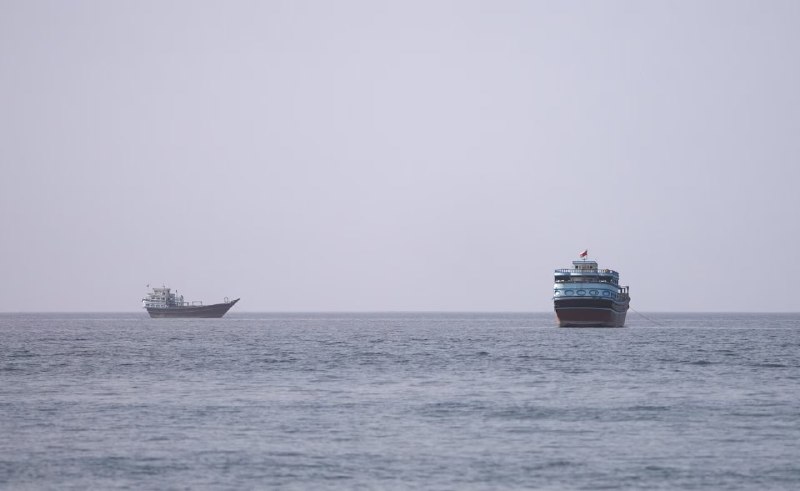
Two crude tankers carrying Saudi oil to China and India made U-turns in the Red Sea on 21 July 2026 after warnings from Yemen's Houthi movement, according to shipping intelligence circulated on X and Telegram and attributed to a Reuters wire. The reversals, reported in the early afternoon UTC, are the most concrete operational signal yet that the Houthis' declared naval blockade of Saudi Arabia is being taken seriously by commercial crews, even before any confirmed strike on a vessel.
The news matters well beyond the two ships. War-risk insurance premiums for Red Sea transits have more than doubled since the blockade announcement, Reuters reported on 20 July 2026. Saudi crude exports have already fallen for a third consecutive month, touching a reported record low of 3.43 million barrels per day in May. The combination turns a political declaration into a measurable financial event: hulls are diverting, premiums are repricing, and Saudi barrels are not arriving at their usual customers on the usual schedule.
What the wire actually shows
The cleanest data point is the movement of two named tankers, one carrying crude to China and one to India, that reversed course in the Red Sea after Houthi threats intensified. Polymarket-flagged posts timestamped 14:34 and 14:35 UTC on 21 July 2026, and a Telegram channel citing Reuters at 14:12 UTC, all carry the same core claim. Yemen's Houthi-aligned SABA news agency separately claimed, per a Telegram post at 14:58 UTC from the Englishabuali channel, that six ships in the Red Sea turned back after Houthi warnings as part of the declared siege of Saudi shipping. The Polymarket and Intelslava formulations are narrower: two tankers, named Saudi crude, named destinations. The SABA-aligned number is wider. The pattern is consistent: commercial traffic is being warned off, and at least some of it is complying.
There is no report, in any of the sources circulated on 21 July 2026, of a tanker being hit, boarded, or set ablaze. The blockade is, at this point, a campaign of threats that is succeeding in altering commercial behaviour without firing across a single bow. That is its own kind of escalation: a blockade that works because underwriters, charterers, and crews believe the threats.
Insurance, rerouting, and the price of doubt
Reuters reported on 20 July 2026 at 18:33 UTC that Red Sea war-risk insurance costs have more than doubled since the Houthis announced the naval blockade of Saudi Arabia. Premiums on this corridor are quoted as a percentage of hull value for each transit, so a doubling of that percentage translates into a multi-million-dollar increase per voyage on a VLCC and is a hard number for any charterer to absorb. The market response is not symbolic. It is a real repricing of probability.
Insurance sits upstream of routing. Once the per-transit cost of the Bab el-Mandeb exceeds what shipowners and their cargo customers are willing to pay, the corridor effectively closes for the marginal tonne, even if the Suez Canal and the SUMED pipeline remain physically open. The Houthis do not need to hit every ship. They need to make enough ships afraid, and to keep the insurance market afraid alongside them, for the corridor to do most of the work on their behalf.
A Saudi export squeeze that was already building
The tanker U-turns landed on top of a Saudi export profile that was already weakening. Per Telegram-channel reporting on 21 July 2026 at 14:36 UTC, citing data attributed to the JODI-aligned industry trackers, Saudi Arabia's crude oil exports fell for a third consecutive month in May to a record low of 3.43 million barrels per day, with the slide attributed mainly to disruptions from the U.S.–Iran conflict and higher domestic oil consumption in the kingdom during the summer. The blockade is therefore not creating a Saudi export crisis from a standing start. It is accelerating an export trajectory that was already pointing down for reasons of its own.
The structural read is straightforward. A kingdom that burns more of its own crude at home in air-conditioned summer, ships less to Asia, and now faces a hostile naval campaign in its principal export lane is doing what producers do in that situation: it is making promises it can no longer keep. Customers in China and India, both of whom have alternatives, Russian Urals at a discount, Brazilian and West African grades, expanded domestic Indian production, Chinese strategic petroleum reserve drawdowns, are paying attention to the U-turns in a way they would not have paid attention to a routine maintenance outage.
The Houthi leverage, in plain terms
The Houthis have, over the past two and a half years, built a reputation for attacks on shipping that has outlived several rounds of Western naval coalition operations. What the 21 July 2026 reporting illustrates is the next stage of that capability: not a strike, but a declaration that they intend to treat Saudi crude as a legitimate target, and an underwriter response that effectively ratifies the declaration. The structural shift is from episodic harassment to sustained corridor pricing. The Houthis are, in effect, taxing every barrel of Saudi crude that crosses the southern Red Sea, by forcing the insurance market to do the collection.
This is also why the Chinese and Indian destinations of the two named tankers matter. Beijing and New Delhi are the two largest buyers of seaborne Saudi crude and the two governments whose diplomatic posture toward the Yemen war has historically been most carefully non-aligned. If Houthi action reliably interrupts flows to those two buyers, the political cost in Riyadh is larger than the same interruption to European customers, who already pay a Russian discount and can substitute. The pressure points the Houthis have chosen are the ones that hurt most.
What remains uncertain
The reporting circulating on 21 July 2026 is consistent in shape but narrow in detail. None of the sources circulated name the two tankers, their owners, or their flag registries. The Reuters-attributed insurance figure is described as "more than double" without a baseline number or a per-vessel dollar figure; the SABA-aligned claim of six ships turning back cannot be cross-checked against independent ship-tracking data in the materials available. The JODI-style export figure of 3.43 million barrels per day for May is attributed via Telegram and not directly to the official JODI database. Monexus treats all three numbers as indicative of the direction of travel, not as audited figures, and will update if the underlying primary documents surface.
The forward watch is short and concrete. The first test is whether the war-risk insurance premium move holds into the next underwriting cycle, or whether a coalition escort operation re-prices it back down. The second is whether the two reversed tankers complete their voyages via the Cape of Good Hope, adding roughly two weeks of voyage time and visibly trimming July Saudi loading programs. The third is whether Beijing or New Delhi break public silence on the diversions. The market is not waiting for the diplomacy. It is pricing around it now.
Wire provenance
This editorial synthesis draws on the following public wire/social posts:
- https://x.com/polymarket/status/2026-07-21T14:35
- https://x.com/polymarket/status/2026-07-21T14:34
- https://x.com/polymarket/status/2026-07-20T18:33
- https://t.me/englishabuali
- https://t.me/ClashReport
- https://t.me/intelslava