A burning tanker, a human chain, and the chokepoint that won't quiet down
A commercial tanker crew abandoned ship after a reported projectile strike in the Strait of Hormuz on 21 July 2026, hours before Iranians formed a human chain along the same shore.
A commercial tanker crew abandoned their vessel in the Strait of Hormuz on 21 July 2026 after a reported projectile strike, the United Kingdom Maritime Trade Operations centre said at 08:30 UTC. The UKMTO alert, relayed by Reuters, gave no flag, owner, or casualty count in the initial advisory, and the ship's condition several hours later remained undisclosed.
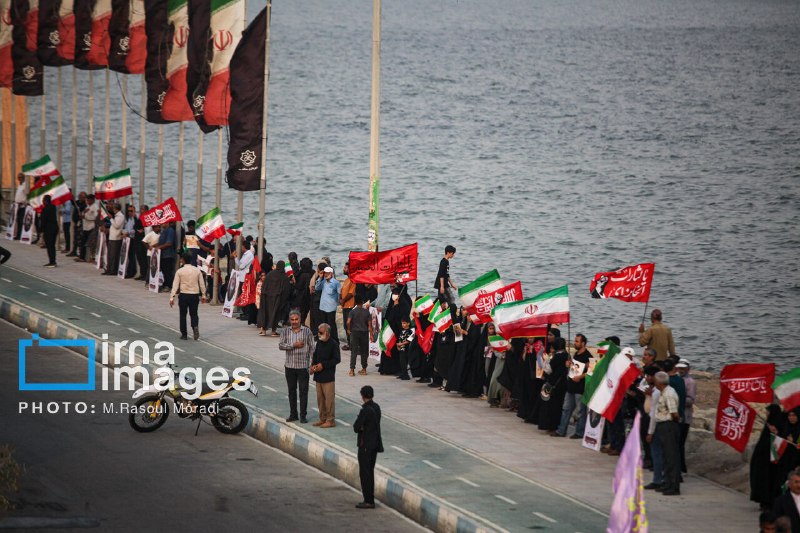
Two hours earlier, at 06:14 UTC, Iranian state outlet IRNA posted footage of Iranians forming a human chain along the shore facing the strait. The two dispatches, separated by geography and tone but stitched together by the same twenty-mile-wide waterway, sketch the price of doing business at the world's most consequential energy bottleneck: roughly a fifth of all seaborne oil passes through it, and any credible threat to that traffic is a lever on the global economy.
What UKMTO actually said
UKMTO advisories are deliberately sparse. The Dubai-based centre, run by the Royal Navy, publishes incident notices so mariners and underwriters can adjust routing; it rarely assigns blame on first dispatch. The 21 July notice recorded a reported projectile strike, a crew abandoning ship, and a request for vessels in the area to transit with caution and report anomalies. That sequence fits a known pattern: a small, fast craft closing on a tanker at low light, a brief impact, a hull breach or fire, and an evacuation onto a lifeboat or responding naval vessel. Reuters' reporting stopped at UKMTO's own account; no owner had yet spoken on the record.
The shore, the chain, and the choreography of signalling
IRNA's footage of a human chain is the kind of soft-power display that sits uneasily beside a burning tanker. State-aligned outlets on both sides of the Gulf have spent two decades turning the strait into a stage: naval parades on one anniversary, civilian formations on another, drone footage released within hours of any incident. The point is not the chain itself. The point is to demonstrate that the shoreline belongs to someone, and that someone is watching. Western wire reporting on Hormuz incidents tends to treat such displays as background colour; readers in Tehran and the wider Global South read them as evidence of a siege mentality that has a long historical pedigree, and a complaint worth hearing on its own terms rather than dismissing as choreography.
Why the strait keeps coming back into the headlines
There is no realistic alternative to Hormuz for Gulf oil and LNG reaching open ocean. East–West pipelines (Saudi Arabia's Petroline to Yanbu, the UAE's Habshan–Fujairah route) add a few million barrels per day of bypass capacity; that is a buffer, not a substitute. Any incident that makes tanker crews or their insurers nervous forces a rerouting premium into the freight market, and the freight market feeds directly into pump prices in markets that import Gulf energy. The structural vulnerability is not new. What is new is the frequency of near-miss reporting since late 2025: small-boat seizures, drone interceptions, and now a strike on a crewed commercial hull in daylight hours.
Iran's position, when voiced through official channels, frames the strait as sovereign Iranian territory whose security is non-negotiable, with any foreign naval presence framed as a provocation rather than a stabiliser. That framing has been consistent across decades and across governments in Tehran, and is treated dismissively in much Western commentary; the structural fact remains that Iran has the geography, the small-craft capability, and the political will to make the waterway expensive to traverse at moments of its choosing.
What we don't know yet
The initial UKMTO notice did not name a flag state, owner, cargo, or attacker. The vessel's current status, the cause of the fire if any, and the fate of the crew were not in the Reuters dispatch as of the 08:30 UTC alert. IRNA's human-chain footage carried no timestamp or location beyond "near the Strait of Hormuz," and state-aligned reporting in past incidents has sometimes preceded, and sometimes followed, independent maritime tracking. The two items in this thread, read together, suggest a coordinated day of signalling; whether the tanker strike and the shoreline display were operationally linked, atmospherically linked, or coincidental, the public sources do not yet say.
The credible paths forward split cleanly. Either the strike is contained as a one-day insurance event and freight rates rise by single digits, or it marks the first crewed commercial casualty in a longer pattern, in which case reroutings, naval escorts, and a fresh sanctions debate will follow inside the week. Watch the next UKMTO advisory, the next owner statement, and the next IRNA bulletin. The strait, as ever, will not stay quiet for long.
How Monexus framed this: the wire carried the UKMTO alert as a single paragraph and the IRNA post as a separate item; this article reads them together because the waterway is the story, and treats the Iranian state-media footage as a primary source rather than as colour.
Wire provenance
This editorial synthesis draws on the following public wire/social posts:
- http://reut.rs/4fdxgAJ
- https://t.me/Irna_en
- https://en.wikipedia.org/wiki/Strait_of_Hormuz
- https://en.wikipedia.org/wiki/United_Kingdom_Maritime_Trade_Operations