'We didn't start this war': Hegseth's Iran pitch and the rhetoric of unfinished escalation
On 21 July 2026, the US Secretary of War sketched a doctrine of calibrated, deniable escalation against Tehran, framing strikes on nuclear sites as the start of a longer campaign rather than the end of one.
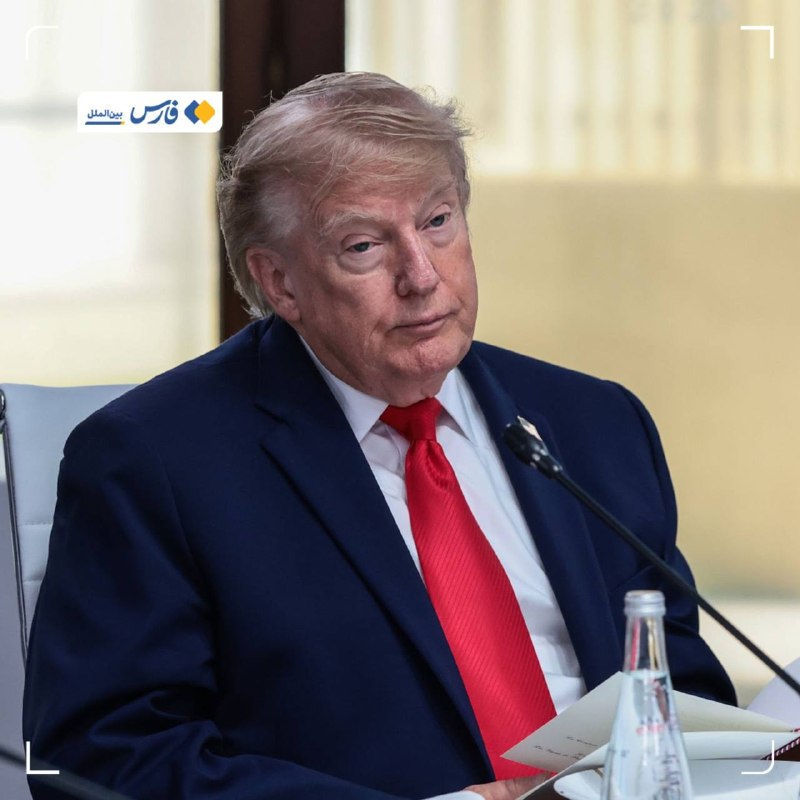
At 20:18 UTC on 21 July 2026, US Secretary of War Pete Hegseth told reporters that Iran was "at the weakest point militarily it has ever been," then immediately conceded the obvious corollary: "I acknowledge that they still have capabilities, no doubt." The pairing, captured by the open-source channel Osint Live, captured the strategic shape of the moment more cleanly than any Pentagon readout. The June strikes on Iranian nuclear infrastructure had not ended a programme; they had reset one.
Within the next ninety minutes, a series of comments attributed to Hegseth spread across Telegram monitoring channels, from the war-tracking feed Clash Report to Press TV's English service. Taken together, they sketch a doctrine of unfinished escalation: nuclear sites "obliterated" in the past tense, but Iran "foolishly continuing to pursue capabilities," the request framed not as "unlimited bombs" but as "the right bombs at the right time," the rhetoric calibrated to warn Beijing and Moscow while leaving Tehran room either to retreat or to miscalculate. The administration, in other words, is signalling that the June operation was an opening move, not a closing one.
The central claim on offer is narrow but consequential. The Hegseth remarks stake out three positions at once: that the military damage inflicted on Iran's nuclear and missile complex is severe and historically so; that Iran retains enough residual capacity, and enough patron support from Russia and China, to keep fighting the long war; and that any further US action will be limited, discriminate, and aimed at capability targets rather than regime change. None of those claims is self-evidently true. Each invites a different adversary response, and each carries an assumption about how Tehran, Moscow, and Beijing read the American mood that the sources do not let us test.
The doctrine of 'right bombs, right time'
The most concrete policy content in Hegseth's remarks is the request. "I am not asking for unlimited bombs," he said, according to the 21:27 UTC post by Clash Report. "I am asking for the right bombs at the right time." Read against his separate characterisation of the strikes as having "put them in the worst place they have ever been," the line is doing two jobs at once. Inside Washington, it answers a domestic audience that has grown wary of open-ended Middle Eastern campaigns. Outside Washington, it advertises selective, intelligence-led follow-on strikes, the kind of campaign that can be paused, scaled, or resumed depending on what Tehran does next.
The framing depends on a specific reading of Iranian intent. Hegseth's claim that the Iranians "foolishly continued to attempt to pursue nuclear capabilities" after the strikes is the load-bearing piece. If true, it converts a punitive operation into a preventive one in real time: every subsequent strike is then a defensive response to an ongoing weapons programme, not an escalation. If false, or if the Iranian residual capacity is more symbolic than material, the same rhetoric risks looking like pretext.
The sources do not settle that question. What they show is that the administration is publicly committing to the first reading while privately, per Hegseth's own words to Osint Live, conceding the second: capabilities remain, the damage is severe but not total, and the campaign's endpoint is a function of decisions yet to be made.
The 47-year frame
Two of the circulated lines, posted at 21:05 and 21:08 UTC by Clash Report and Press TV respectively, do almost no operational work but enormous political work. "We didn't start this war," Hegseth said. "Iran started this war 47 years ago. We didn't start it. They did!"
The 1979 benchmark, the seizure of the US embassy in Tehran and the hostage crisis that followed, is doing two things. It pushes the war's start date back to a moment that predates every current Iranian decision-maker in office, which lets the speaker treat the conflict as a permanent condition rather than a discrete event. It also subordinates the June strikes, and any follow-on action, to a long-running contest of legitimacy, in which the United States is the long-suffering responder and Iran is the eternal aggressor.
The framing has real political utility at home. It immunises the current administration against the charge of starting a new war: whatever happens next, the war was already under way. It also, however, narrows the diplomatic off-ramp. A war that began in 1979 has no natural endpoint short of a transformation of the Iranian state. The Hegseth remarks pair this long frame with a short, capability-focused operational frame, and the two are in tension. The administration wants Iran weakened and deterred, not remade, which is why Hegseth added, per the 20:56 UTC Clash Report post, "We are not fighting stupid wars again. We haven't been trying to remake Iranian society."
Read together, the line is a careful fence-sitting: the conflict is permanent, but American ambitions are limited. Whether that combination can survive contact with the next Iranian move, whether a covert enrichment restart, a proxy strike, or a move on the Strait of Hormuz, is the strategic question the remarks do not answer.
Russia and China as the silent variable
At 20:49 UTC, in the same Osint Live thread, Hegseth was asked directly whether Russia and China were helping Iran target US forces. His answer, captured verbatim by the channel, deserves to be quoted in full: "The depth and extent of it ought to remain classified. But there are ways in which both of those countries are, at different levels, enabling some of the things Iran is doing. Yes."
The phrasing is diplomatic but the content is not. The administration is publicly attributing, in carefully deniable language, a measure of responsibility for Iranian capabilities to Moscow and Beijing. In a different strategic context that attribution would be prelude to secondary sanctions, third-party arms-control diplomacy, or a discrete demarche. In this context, mid-campaign, with US forces deployed and Israeli coordination presumed, it functions as warning shot. Russia and China are now named in the American war narrative as enablers of the very behaviour the strikes are designed to punish.
The strategic risk is symmetric. If Beijing and Moscow read the remarks as a US administration trying to widen the coalition of the sanctioned, they may retaliate in kind: more permissive export controls on dual-use components, more political cover at the UN Security Council, more rhetorical solidarity with Tehran. If they read the remarks as bluff, and test the line, the administration will face a choice between escalation and humiliation that the public comments do not preview.
There is a second, less remarked effect. By publicly elevating the Russian and Chinese role, the Hegseth remarks convert a bilateral US-Iran confrontation into a three-cornered one. That suits a White House interested in framing the wider contest with Beijing and Moscow as a single struggle across theatres. It does not suit a Pentagon trying to keep the air campaign narrow.
Tehran's reply, in the same hour
At 20:57 UTC, Press TV's English service posted a warning attributed to Iranian officials: "Iran warns all interests of US allies will be attacked if Iran nuclear sites hit." The line was published before the Hegseth remarks finished circulating, and it is the only Iranian-government voice captured in the source thread.
The press statement is a maximalist deterrent threat: not retaliation against US bases, but a deliberate widening of the target set to include the assets of any state aligned with Washington. Read literally, it places every embassy, every energy facility, every shipping route used by a US treaty ally inside the Iranian threat envelope.
The credibility of that threat is what matters. Iran has, in recent memory, struck at US partner assets through proxies, drone and missile packages, and the occasional direct strike. It has not, in the same period, mounted a campaign against the full range of allied interests the Press TV line implies. The statement is best read as a bargaining move, an opening position in a negotiation that has not yet started, calibrated to extract a price for any further escalation rather than to commit to a course of action the statement does not yet require.
The Hegseth remarks and the Iranian warning, posted within minutes of each other, define the negotiating space both sides now occupy. The American position is: severe damage, residual capabilities, a long historical frame, calibrated follow-on action. The Iranian position is: any further strike triggers an allied-wide retaliation whose scope is itself a form of leverage. The space between those positions is where the next decision sits.
What remains uncertain
The sources are unusually rich in direct quotation and unusually thin in corroborating detail. They do not specify which nuclear sites were struck, the date of the strikes relative to the 21 July remarks, the casualty figures, or the intelligence basis for the "worst place they have ever been" claim. They do not name the Iranian officials issuing the retaliatory warning, or specify whether the warning was a written statement, a Foreign Ministry briefing, or a leaked draft. They do not let us verify the attribution of Russian or Chinese enabling, which Hegseth himself described as classified.
What the sources do permit is a careful read of the political language an administration is willing to use in the open, in real time, about a campaign that the same officials are simultaneously describing as restrained. That language is the story. The strategic facts on the ground, programme damage, Iranian residual capacity, the precise role of outside enablers, will take weeks of additional reporting to verify.
For now, the record is one of calibrated signalling on both sides, and a strategic clock that the remarks themselves cannot stop.
This piece is built from open-source monitoring feeds: the war-tracking channel Clash Report, the Iranian state broadcaster Press TV's English service, and the open-source intelligence account Osint Live. Where attribution is contested or unverified, that uncertainty is preserved in the text. Monexus has not independently corroborated casualty figures, strike locations, or the classified matters Hegseth referenced.
Wire provenance
This editorial synthesis draws on the following public wire/social posts:
- https://t.me/ClashReport
- https://t.me/ClashReport
- https://t.me/ClashReport
- https://t.me/ClashReport
- https://t.me/ClashReport
- https://t.me/PressTV
- https://t.me/PressTV
- https://t.me/osintlive
- https://t.me/osintlive
- https://t.me/osintlive