Hegseth puts the price tag at $37.5 billion and tells a press conference that Iran is in the worst position it has ever been in
A Pentagon press conference on 21 July 2026 turned a damage assessment into a fiscal disclosure: the war on Iran has cost US taxpayers $37.5 billion so far, and the Secretary of War argues it has left Tehran weaker than at any point in its history.
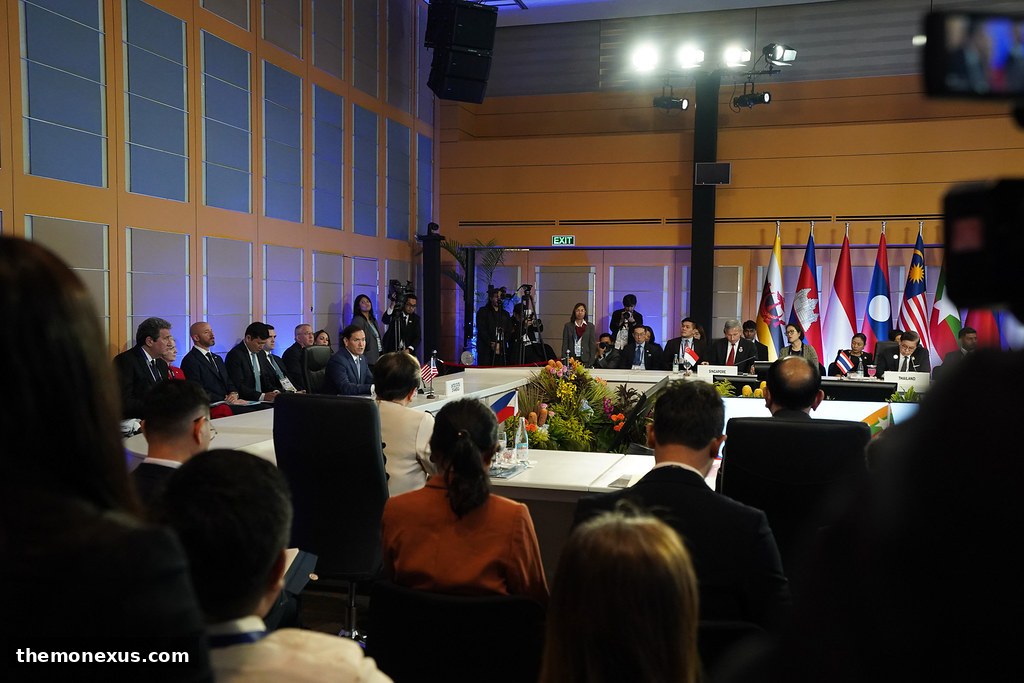
At 20:49 UTC on 21 July 2026, an unusual number landed in the middle of a press conference at the Pentagon. Secretary of War Pete Hegseth, taking questions on the US military campaign against Iran, said: "The estimate we have as of today is $37.5 billion." The figure was the running cost of the war to US taxpayers, delivered as a parenthetical inside an answer about battlefield damage, and it did the work of three separate press releases at once: a budget disclosure, a victory claim, and a request for patience.
Hegseth used the same briefing to argue that the damage inflicted on Iran had left the Islamic Republic in the worst strategic position it has ever occupied. "I acknowledge that they still have capabilities, no doubt," he said, "but the amount of damage we have done to them has put them in the worst place they have ever been." The claim is striking because it comes from the war's senior political overseer rather than from a uniformed commander, and because it was offered on the same day the dollar price tag was put on the record.
What the $37.5 billion actually covers
The Secretary did not break the figure down. The number, as reported by the Open Source Intel feed on Telegram, was offered as a single total "as of today," with no line items for munitions, fuel, naval deployment, or replacement of interceptors. In previous US campaigns of this scale, comparable running totals have been published quarterly by the Cost of War project and have typically lagged the fighting by months. The Pentagon's decision to volunteer a current figure, on camera, to a question that did not obviously call for one, suggests the building wants the public to associate the campaign with a concrete, finite cost rather than an open-ended commitment.
That is a political choice as much as a fiscal one. Hegseth is a political appointee answering to a President who has spent the year arguing, in other theatres, that the United States cannot afford open-ended deployments. A figure that ends in a clean half-billion increment is also a figure designed to be defended in a hearing room.
The capability claim, and what it concedes
The Secretary's accompanying statement on Iranian capabilities is more revealing than the headline number. Hegseth did not say Iran had been disarmed. He said the opposite: "I acknowledge that they still have capabilities, no doubt." The phrase is the polite bureaucratic form of a sentence that, in an unclassified setting, would otherwise be the lede. Iran retains ballistic missiles, it retains some air defence, it retains a missile and drone supply relationship with partners in the region, and it retains the ability to influence non-state actors along its periphery.
What Hegseth is claiming, on the public record, is degradation rather than disarmament: the campaign has reduced Iranian capacity below any prior baseline, but it has not eliminated it. That distinction matters because it sets the political ceiling on any future negotiation. A state that has been disarmed can be offered a settlement; a state that has been damaged but not disarmed can be offered only a pause.
The China and Russia question
Asked directly whether Russia and China were helping Iran, and how, Hegseth was explicit that assistance was flowing, but careful about its scale. "There are ways in which both of those countries are, at different levels, enabling some of the things Iran is doing," he said. On the narrower question of whether Beijing and Moscow were helping Iran target US forces, the Secretary was tighter still. "The depth and extent of it ought to remain classified," he said. "But there are ways in which they are helping."
That formulation does three things. It confirms that the question is real, which closes off the option of dismissing reporting on Chinese and Russian material support to Iran as fantasy. It preserves US intelligence equities by declining to specify what those ways are. And it leaves open a future public case for action against third-country enablers, in the event the administration chooses to make one. The phrase "at different levels" is also doing work: it signals that Beijing and Moscow are not in the same category, which matches the wider public posture of treating Russia as the more active supplier of concern and China as the more cautious.
The structural read is that the administration is reserving the China card. The United States is fighting Iran, but it is framing the fight as part of a broader contest in which Beijing's choices matter. The cost figure of $37.5 billion is, in that framing, the price of degrading Iran's capacity before any third party can rebuild it.
What stays classified, and what that hides
The Secretary's invocation of classification is not a refusal to answer; it is a different kind of answer. By stating that the depth and extent of third-country assistance ought to remain classified, the administration is signalling that the answer is larger than the public might assume. Officials who want to keep the figure small do not need to invoke classification. Officials who want to manage expectations do.
The same logic applies to the $37.5 billion figure itself. A number that high, offered without breakdown, is harder to defend than it looks. If it includes replacement of munitions drawn from US stockpiles in other theatres, the political debate about whether the campaign is being paid for out of hide or out of treasury is wide open. If it excludes those costs, the figure understates the real bill. Either way, the public number is a starting point for a fight that will be had in appropriations committees later this year.
The contested ground
The most plausible counter-read is also the simplest: the Secretary's framing is the one the briefing room was set up to deliver. A Pentagon camera, a senior political appointee, and a single dollar figure at 20:49 UTC is the architecture of a message. Independent verification of either the cost estimate or the damage assessment will arrive, if at all, from outside the building: from the Cost of War project's later tallies, from congressional budget analysts, and from open-source battle damage assessment, which has so far offered a more mixed picture than Hegseth's "worst place they have ever been" formulation.
The Iranian state's own communications have, in parallel, insisted that its missile and drone production lines continue to operate. None of those claims have been independently verified inside this reporting window, and they are noted here only as the contested other half of the picture.
What to watch next
Three dates are worth holding. First, the next quarterly Cost of War update, where the $37.5 billion figure will be either confirmed, refined, or quietly revised downward. Second, any unclassified release from the Office of the Director of National Intelligence on third-country assistance to Iran, which would convert Hegseth's "ought to remain classified" into something with page numbers. Third, the next round of supplemental appropriations, where the administration will be asked, in public, what the $37.5 billion actually bought.
Desk note: This article treats the Hegseth briefing as the primary input, the Open Source Intel feed on Telegram as the wire, and the contested Iranian capability claim as the necessary counterweight. Where the public record offers only the Secretary's framing, Monexus flags it.
Wire provenance
This editorial synthesis draws on the following public wire/social posts:
- https://twitter.com/Osint613/status/2079669986528817339/video/1
- https://twitter.com/Osint613/status/2079669986528817339/video/1
- https://twitter.com/Osint613/status/2079669986528817339/video/1
- https://twitter.com/Osint613/status/2079669986528817339/video/1