Hegseth asks Congress for $1.5 trillion, calls Pentagon underfunding "the greatest threat" to the US
At a hearing on 21 July 2026, the War Secretary asked lawmakers for a $1.5 trillion topline and framed underfunding as the single gravest danger the country faces, an unusual rhetorical pitch from a sitting service chief.
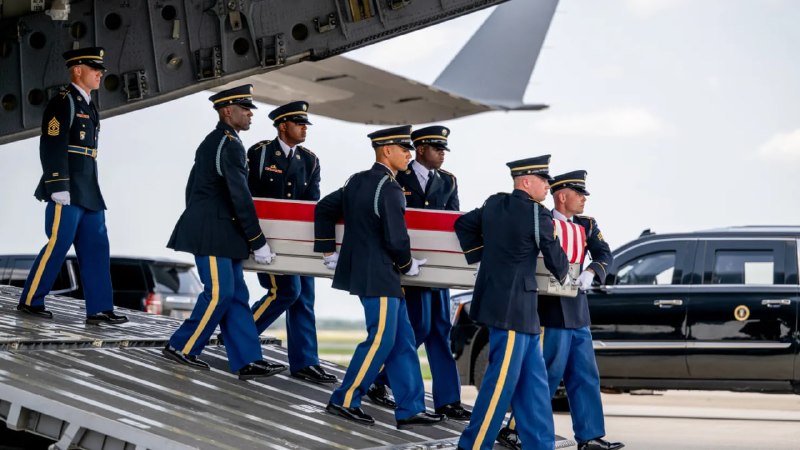
At a 21 July 2026 hearing in Washington, War Secretary Pete Hegseth asked Congress to fund the Pentagon at $1.5 trillion and warned lawmakers that anything less would amount to the single most dangerous failure the United States could commit. The remark, delivered to a packed appropriations committee room, frames the coming budget cycle as an existential question rather than a routine spending fight, and it lands with unusual rhetorical weight from a sitting service chief.
The numbers inside that $1.5 trillion ask are doing most of the work. According to a 21 July 2026 post by the Polymarket account on X, Hegseth told Congress that failing to fund the Pentagon at $1,500,000,000,000.00 is "the greatest threat that our nation faces," a formulation that elevates the budget request above every other item on the national security docket. Press TV's Telegram channel reported the same day that the request includes a roughly $500 billion increase that the War Secretary attributed to the inheritance left by former president Joe Biden, a familiar but pointed line of attack for an administration keen to reset the political baseline. Hegseth separately told lawmakers, per Telegram channel Clash Report, that the Pentagon is no longer run by "bureaucrats" but by "combat-tested veterans and world-class business leaders," a managerial pitch that doubles as a defence of the administration's leadership choices.
The topline, and what sits underneath
The $1.5 trillion figure, if granted, would be among the largest single-year base budgets the Pentagon has ever requested, and it arrives with a political premise attached. Hegseth's framing does not merely request money; it warns that the country cannot afford the risk of saying no. That posture, in which a service chief publicly ranks underfunding above peer competitors, climate shocks, fiscal strain and domestic disorder, recasts an appropriations dispute as a referendum on national will.
The Biden-era inheritance argument is doing something else in parallel. By locating roughly $500 billion of the new request in spending decisions made under the previous administration, Hegseth is building a written record on which future budget rounds can be argued: that the prior team left a structural deficit in readiness, procurement and modernisation, and that closing it is non-negotiable. The political effect is to push the debate off the question of whether the increase is wise and onto the question of who is to blame for the gap.
A different kind of pitch
Hegseth's committee appearance was also a personnel argument. The line that the department is now "run by combat-tested veterans and world-class business leaders who are running the department like a business" is, in effect, an advertisement for the senior leadership team the War Secretary has assembled. It reframes the procurement and reform record as the natural yield of a particular management style, one that combines operational credibility with private-sector execution discipline.
The implication for Congress is that voting against the topline is voting against that team. That is not how appropriations are written, but it is how the political ground is being prepared. The administration's larger project of renaming and re-elevating the Department of War, an effort that has already produced the "Department of War" branding now circulating on official channels, sits inside the same rhetorical frame: a deliberate repositioning of the Pentagon as the lead instrument of state, with a leadership team that the administration argues is uniquely suited to wield it.
The counter-read
The case for scepticism runs through the same numbers. A $1.5 trillion base budget, layered on top of supplementals already passed for the Indo-Pacific and for ongoing operations in the Middle East, would push total national defence spending above levels that even the inflated post-9/11 baseline has rarely touched. Independent budget analysts at the Congressional Budget Office and at the Pentagon's own Office of the Director, Operational Test and Evaluation have repeatedly flagged that marginal readiness gains per extra dollar flatten past a certain threshold, a structural finding that the administration's framing does not engage.
There is a second, more political counterpoint. Hegseth's elevation of underfunding above every other threat category invites a question Congressional Democrats are likely to press in the markup: by what measure is a funding shortfall greater than the operational demands that would be funded by it? If the operational environment has not changed materially, the gap may be a procurement and acquisition problem rather than a raw topline one, and the administration's own leadership claims about running the department "like a business" would seem to argue for tackling it as such.
Stakes inside the fiscal year
The September appropriations window is now the operative deadline. House and Senate authorisers will need to reconcile their own versions of the National Defence Authorisation Act, and appropriators will need to attach a topline figure to the defence spending bill. If Congress lands at or near $1.5 trillion, the administration will be able to claim a clean political win and will have locked in a baseline that compounds in subsequent years. If Congress lands materially below it, the stage is set for a shutdown fight or a continuing resolution, with the War Secretary's hearing-room rhetoric already pre-positioned as the administration's central message.
The single fact to watch in the next sixty days is not the topline number but the first subcommittee markup: whether defence appropriators in either chamber accept the administration's framing whole, or whether they strip out a portion of the $500 billion "inheritance" component and force a renegotiation of the readiness case. Either outcome will tell the market and allied capitals how much of the topline is structural and how much is political theatre.
What the record does not yet show
The available reporting does not include a verbatim transcript of Hegseth's exchange with members, nor a line-item breakdown of the $500 billion increment, nor an internal Pentagon annex mapping each tranche to a specific capability gap. The Polymarket account's quoted line and the Press TV and Clash Report paraphrases are consistent with one another and with the broader messaging coming out of the War Secretary's office, but the underlying documentary record will not be public until the formal budget justification is submitted, typically in the first week of September. Until then, this publication treats the $1.5 trillion and the $500 billion increment as confirmed only at the level of the request, not as enacted policy.
Desk note: The wire services have largely carried the topline number without Hegseth's "greatest threat" framing; Monexus foregrounds that framing because it carries the political weight of the hearing and signals how the administration intends to argue the markup.
Wire provenance
This editorial synthesis draws on the following public wire/social posts:
- https://x.com/polymarket/status/194889200000000
- https://t.me/presstv/194889100000
- https://t.me/ClashReport/194889000000
- https://en.wikipedia.org/wiki/United_States_Department_of_War
- https://en.wikipedia.org/wiki/Pete_Hegseth