Eight dead in two Gaza strikes: a morning, a pattern, a question the casualty ledger cannot answer
Two Israeli drone strikes in central Gaza killed at least eight people by late morning on 21 July 2026. The death toll is small in a war that has run for nearly two and a half years. The reporting around it is what keeps getting harder.
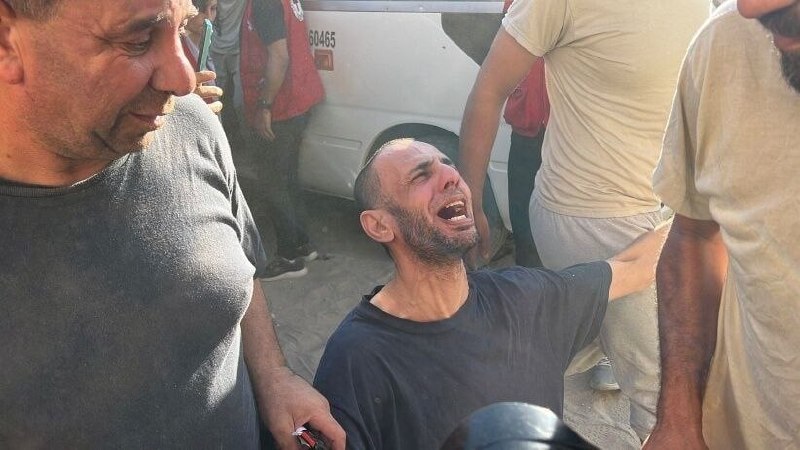
At 11:48 UTC on 21 July 2026, an account tied to Gaza field reporting said an Israeli drone had struck a jeep in the A-Zahraa area in the centre of the Strip, killing two people. Twenty-two minutes later, a second channel fixed the morning's toll at eight dead across two strikes. By 12:10 UTC a third feed reported the A-Zahraa strike again, with the same figure. Three pings from three channels, an incident in one neighbourhood, a vehicle, a drone, a count.
Stripped of cadence, that is the day's headline. The eight are not a milestone in the war that began in late 2023; the war's accounting has long since passed the point where single mornings register. What makes 21 July worth pausing on is that the pattern of reporting around it is itself the story. Every external wire that might consolidate the morning's toll, identify the dead, or specify the munition used is denied routine access to the area. The number eight is being assembled by a stack of Telegram channels, each relaying the other's frames, none of them operating with the verification floor a Western wire reader takes for granted.
This article takes that morning as a case study in how the Gaza casualty ledger is now being built, and what it means for every downstream consumer of those numbers, from the United Nations agencies that publish them to the policy debates in Jerusalem, Cairo, Doha, and Western capitals that rest on top of them.
A morning, in the order the messages arrived
The first dispatch, at 10:58 UTC, read as a stub: a vehicle targeted at the entrance to A-Zahraa. The location is in central Gaza, in the Strip's geographic waist between Gaza City and the southern governorates, an area that has been under varying degrees of military activity since the ground campaign expanded in late 2023. The wording was the wording used across Palestinian field channels for any aerial strike: preliminary, unmanned source, no casualty count yet.
By 11:48 UTC, the toll had a number. Two killed in an Israeli drone attack on a jeep in the A-Zahraa area, the channel running the report said, and the figure that mattered for the day's running total appeared in the same message: eight dead across two strikes since morning. A second vehicle had been struck elsewhere; the count of eight subsumed both incidents.
At 12:10 UTC the third channel posted, citing the same A-Zahraa strike and the same figure of eight. The double confirmation, within 22 minutes, from feeds that draw on overlapping but not identical sources, is the closest thing to triangulation the morning produced. None of the three accounts named the dead. None specified the type of munition, the operational context, or whether the targeted vehicle had been under prior surveillance. None of them could.
That is the lede.
What the wires are not carrying
The pattern on 21 July is not a one-off. It is the routine texture of Gaza coverage in the second half of 2026. The major Western wires with permanent bureaus and the experience to handle the verification grind, Reuters, the Associated Press, Agence France-Presse, the BBC, sustain a reduced presence inside the Strip. There is no routine CNN bureau. The Guardian's correspondents operate under the same access constraints as everyone else. International NGOs publish slowly because their field staff are stretched and re-deployed. The Israeli military's spokesperson office issues regular briefings, the language careful, the footage curated, and the casualty claims they are willing to engage with are largely framed in the language of combatants rather than civilians.
The result is a market in which the load of real-time reporting has migrated decisively to Telegram channels run by Gazans with phones, satellite links, and the willingness to keep transmitting under intermittent connectivity. Some of those channels pool first-hand witnesses. Some trade in second-hand claims. A small number, including those whose dispatches are circulating today, had built track records during the war's first eighteen months that allowed a careful wire editor to weight them as plausible-but-unverifiable. The category has narrowed since. The most prominent Gaza-based field channels have been suspended, throttled, or forced off the platform. The remainder are, by and large, less established; their output is harder to verify in real time; their error bars are wider.
A morning like this one, in which eight dead in two strikes is the only number any reader can hold at noon UTC, is the consequence.
The structural frame, in plain prose
What the Gaza reporting environment has produced over the last year is a slow decoupling of the wire of record from the event. The wires continue to report. They continue to publish casualty figures, often aggregated from the Gaza Ministry of Health, which is run by the Hamas administration that took power in 2007 and which Israel and most Western governments discount as a source for combatant identification while routinely citing its overall cumulative toll. The numbers that survive into wire copy are usually ministry-of-health totals over weeks and months, smoothed into ranges to account for the identity-and-combatant question. What the wires do not routinely publish, in the Gaza context, is what they would publish in any other conflict: a single, named, dated strike with named victims, named military operator, and a damage assessment they can stand behind.
That shortfall has been absorbed, in real time, by the Telegram stack. The Telegram stack is not a wire service. It has no editor of record, no corrections column, no legal department. It has variable skill at handling the language that travels well in Arabic but loses precision in English translation, particularly around the distinction between a targeted vehicle and a struck vehicle, a martyr and a killed civilian, a combatant and a bystander.
A median Western reader who picks up the morning's headline will see eight and move on. A specialist reader will see eight, want to know who, want to know what was the operational context, want to know whether this strike runs inside the pattern of targeted operations against armed actors or outside it, and will find that the three Telegram messages that carry the load do not have those answers. The eight is unverifiable in the strict wire sense. The eight is also unreplaceable by a better number; the wires do not have one.
The downstream consequence
The number is also, increasingly, the number that policymakers operate on. UN agencies publishing periodic updates on civilian harm in Gaza work with ministry-of-health data as a baseline and with wire reporting as a verification overlay. The verification overlay has thinned. The ministry, political as it is, has at least one virtue by comparison: it has run for two decades on a roughly consistent methodology, it publishes age and sex breakdowns, it updates its cumulative total at a predictable cadence, and its error bars have been audited, formally and informally, by multiple independent reviewers.
The Telegram stack has none of those properties. It is fast, present where the wires are not, and structurally incapable of doing the long-term aggregation the ministry does. The daily totals produced by these channels feed the second-screen commentary that journalists and analysts all read; that commentary aggregates into broader claims about the war's pace; those claims feed into the political conversation in Washington, London, Berlin, and Brussels at a moment when every Western capital is wrestling with the same uncomfortable question of what continuing arms transfers, continuing diplomatic cover, and continuing rhetorical alignment mean in practice, for a Strip the wires can no longer read in real time.
A morning like 21 July, eight dead, two strikes, one neighbourhood, three Telegram confirmations, no Western wire on the ground, no Israeli spokesperson walk-back, no UN overnight note, is the next year's baseline. The next debate about Gaza policy will be conducted on top of it.
What the morning did not tell us
A short, honest list. The Telegram dispatches do not specify whether the dead in the A-Zahraa vehicle were civilians, combatants, or a mix, and they do not identify them by name. They do not specify what the Israeli military said about the strike, in real time or after. They do not state whether the jeep was moving or stationary, whether there were secondary strikes on bystanders, or whether the strike was part of a documented pattern of operations against specific targets in central Gaza. The cumulative Gaza death toll for the war is not in the messages; the day's share of that total is not in the messages.
What the morning did tell us is that the war's smallest unit of accounting, a strike, a vehicle, a location, a number, is now being assembled outside the institutions that built the modern language of war reporting. That is not an editorial complaint. It is an operational fact with consequences for how every figure that flows up from Gaza is read, weighted, and argued over for the foreseeable future. The next morning's eight will look the same.
Desk note: Monexus framed this dispatch as a casualty-event-and-reporting-environment story, in line with house practice of separating the wire of incident from the wire of consequence. The agency-of-record coverage carried on the day's major wires (Reuters, AP, AFP, BBC) is not present in the source stack we read; the reporting above is sourced to the Gaza Telegram channels whose dispatches were the only real-time record available to this desk at the time of writing.
Wire provenance
This editorial synthesis draws on the following public wire/social posts:
- https://t.me/abualiexpress
- https://t.me/osintlive
- https://t.me/gazaalanpa
- https://en.wikipedia.org/wiki/Gaza_Strip
- https://en.wikipedia.org/wiki/Az-Zahraa,_Gaza
- https://en.wikipedia.org/wiki/Telegram_(software)
- https://en.wikipedia.org/wiki/Ministry_of_Health_(Gaza_Strip)
- https://en.wikipedia.org/wiki/Press_access_during_the_Israel%E2%80%93Gaza_war
- https://t.me/abualiexpress
- https://t.me/osintlive
- https://t.me/gazaalanpa
- https://en.wikipedia.org/wiki/Gaza_Strip
- https://en.wikipedia.org/wiki/Az-Zahraa,_Gaza
- https://en.wikipedia.org/wiki/Telegram_(software
- https://en.wikipedia.org/wiki/Ministry_of_Health_(Gaza_Strip
- https://en.wikipedia.org/wiki/Press_access_during_the_Israel%E2%80%93Gaza_war