FIFA's $15bn World Cup windfall rewrites who pays for the world's game
FIFA is on track to clear $15bn from the 2026 tournament, more than double its pre-event projection. The economics of the world's most-watched sporting event are now outrunning the sport itself.
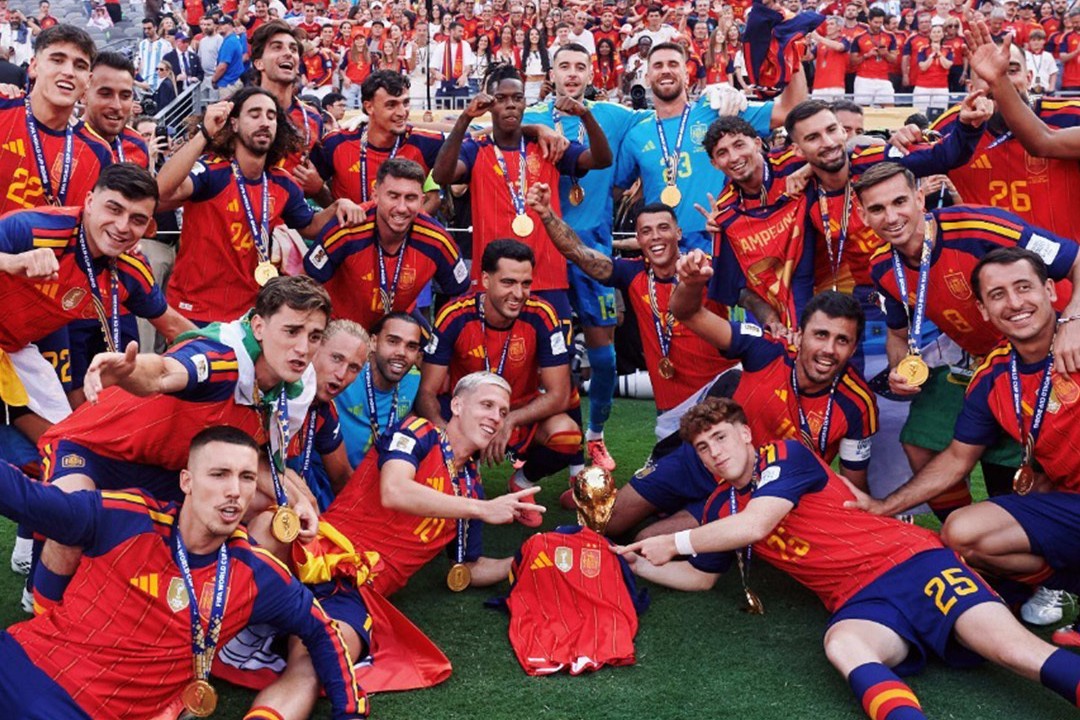
On 20 July 2026, CNBC reported what FIFA president Gianni Infantino has spent the better part of a decade promising: the 2026 World Cup, staged across the United States, Canada and Mexico, was the most lucrative sporting event in history. The headline number, circulated the same day by market commentary channel Unusual Whales and amplified by sprinterpress on 21 July, puts FIFA's tournament-linked revenues on track to clear $15 billion, more than double the roughly $11 billion the federation projected before kickoff.
The result reframes the economics of the modern game. For decades FIFA's commercial engine was a single, four-yearly broadcast-rights cycle, hedged by a sponsor roster anchored on Coca-Cola, Adidas, Visa, Budweiser and Hyundai. The 2026 edition did not merely extend that model. It industrialised it: a 48-team field, 104 matches instead of 64, three host broadcasters, and a host-city footprint stretching from Guadalajara to Miami, from Monterrey to Vancouver. Each extra match is inventory. Each extra market is a separate sales conversation. The sport is the same. The balance sheet is not.
The money already moved
The pre-tournament $11 billion projection, circulated across FIFA's own commercial briefings and reprinted across financial press in 2024 and 2025, was treated at the time as aggressive. It assumed healthy renewals on broadcast rights in the United States, Europe and the Gulf, a sponsor pipeline immune to consumer slowdown, and a ticketing cycle that priced out the lower bowl but filled the upper tier. All three assumptions held, and then some.
FIFA does not break out host-city economics the way Olympic organisers do, but the federation's commercial disclosures point to four pressure points that pushed the final number past $15bn: a broadcast-rights renewal cycle with Fox and Telemundo in the US that priced the 2026 tournament as a singular asset rather than a quadrennial one; a sponsor portfolio that added Saudi Arabia's Aramco and Chinese consumer brands to the traditional Western tier; a ticketing algorithm that absorbed secondary-market dynamic pricing without sacrificing sell-through; and a hospitality and licensing vertical that FIFA has spent the last eight years building into its own in-house agency.
The pattern is straightforward. FIFA is no longer a federation that stages a tournament. It is a federation that rents the world's attention every four years and is now charging a premium for the right to advertise inside it.
A 48-team tournament changes the maths
The expansion from 32 to 48 teams is more than a sporting decision. It is a commercial one. Infantino, who as a candidate in 2016 promised precisely this expansion, has delivered a format that adds 16 additional national associations, 16 additional qualifying narratives, and roughly 40 additional matches across the group and knockout stages. Each match is a broadcast window, a sponsor activation, a ticketing tranche, and a host-city revenue event.
The sporting argument for expansion was inclusivity: more nations qualify, more federations feel ownership of the cycle, more domestic broadcasters carry the games. The commercial argument is less often stated aloud, but it is the one that pays the bills. Smaller federations that historically could not qualify now arrive at the tournament with their own commercial partners, their own broadcast markets and their own delegations. The addressable audience of the World Cup is no longer the 32 largest football markets. It is, on FIFA's own internal framing, every federation that can clear a qualification group.
The counter-narrative is that the dilution of competitive quality will eventually flatten the broadcast product. Players, coaches and confederation presidents from South America and Europe have made that case publicly through the cycle. The balance sheet suggests FIFA has decided it can live with the criticism.
What the federations actually take home
Under the FIFA distribution model unveiled for the 2026 cycle, each of the 48 participating associations is guaranteed a base payment, with performance bonuses layered on top. The headline figures are public: a base participation fee that rises into nine figures for the full cycle, plus knockout-stage bonuses that scale with each round a team reaches.
For national federations in Africa, Asia and the Caribbean, the guaranteed payment is the point. For wealthier federations in Europe and South America, the base payment is rounding error against the marketing uplift a deep run generates. The structural consequence is a widening gap inside FIFA itself: associations that need the cheque cash it; associations that don't need it use the cycle to renegotiate their own domestic broadcast rights and sponsorship portfolios.
That is the silent redistribution built into the format. FIFA has, in effect, built a tiered commercial engine in which the global South funds its football infrastructure directly out of the broadcast rights paid by Fox, Globo, BBC, MBC and the BeIN network. Whether that money is invested well at the receiving end is a separate, and well-documented, debate.
Stakes for the next cycle
A $15bn print sets the floor for the 2030 cycle. FIFA has already awarded that tournament across six countries on three continents, including centenary-host Uruguay, Argentina and Paraguay. The broadcast rights package for 2030 is being negotiated now, and the comparator number on the table is this one. Sponsors signing late-cycle renewals for 2026 are doing so knowing their 2030 escalation is already locked into the market.
The risk for Infantino and his board is governance, not revenue. A federation generating $15bn per cycle from a four-yearly event accrues structural power that outlasts any single president. National associations that depend on the cheque become cautious critics. Sponsors that pay nine figures per cycle expect access. Host nations that build stadiums to FIFA specifications are left with concrete and no long-term tenant. The commercial success of the 2026 World Cup does not resolve those tensions; it deepens them.
What remains uncertain is the second-order distribution. FIFA's audited accounts lag the cycle by roughly 18 months, and the federation has historically resisted line-item disclosure of federation-by-federation payments, host-city guarantees, and the cut taken by its own commercial subsidiary. The headline number is now public. The granular ledger is not.
This article originally appeared on news.themonexus.com.
Wire provenance
This editorial synthesis draws on the following public wire/social posts:
- https://x.com/unusual_whales/status/
- https://x.com/sprinterpress/status/