Erbil wakes up to a strike it didn't see coming
A drone and missile attack hits the US consulate compound and Erbil airport on the night of 21 July 2026, closing the airport and forcing an emergency response in the Kurdish capital.
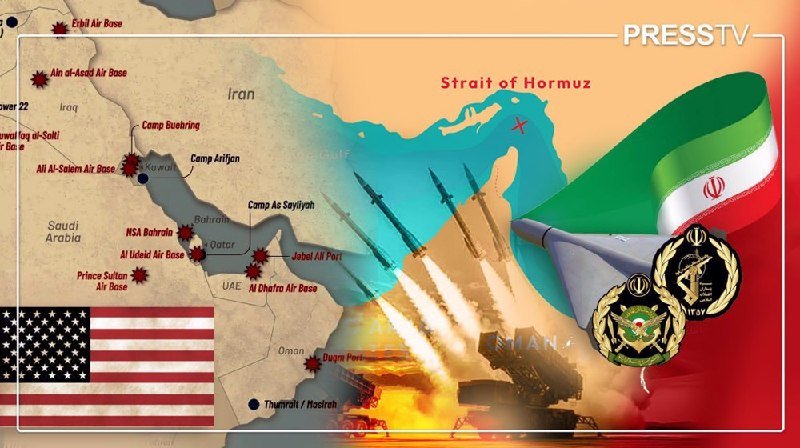
Ambulances and rescue vehicles converged on the US consulate compound and Erbil International Airport in the early hours of 21 July 2026 (UTC) after a wave of drone and missile strikes, according to Iraqi sources cited by Sprinter Press and Al-Alam Arabic. The airport was closed as a precaution, the Iraqi outlet reported in an urgent bulletin hours after the first impact reports.
The attack lands at a moment when the US military footprint in Iraqi Kurdistan has already become a campaign issue in Baghdad and a daily irritant in Tehran. It also lands while Erbil's airport serves as the principal civilian gateway to the Kurdistan Region and a hub for US-led coalition logistics, making its overnight closure a measurable disruption well beyond the headlines.
What is actually being reported
Two Iraqi-source channels, Sprinter Press on X and Al-Alam Arabic on Telegram, independently described the same sequence: drones and missiles hitting sites in and around Erbil, emergency services dispatching to both the consulate and the airport, and the airport closing within hours of impact. Neither post specifies casualties, the origin of the projectiles, or which facilities inside the consulate compound or airfield were struck. That gap matters, because the volume of claims on Iraqi Telegram channels in the first hours after an incident of this kind is reliably high and the verification lag is reliably long.
In other words, the event itself is not in serious doubt. The frame around it, who fired, why, and what it changes, is.
The frame the wires will reach for
The first read in most Western newsrooms will be the obvious one: an Iranian-backed militia, probably Kata'ib Hezbollah or an Asa'ib Ahl al-Haq offshoot, retaliating for an Israeli or US action in the region and using the Kurdistan Region's foreign presence as the soft target. That pattern is real. US and coalition positions in Iraq and Syria have been struck repeatedly since October 2023, and Iraqi Shia militias have publicly claimed many of those attacks.
The counter-frame, which Iraqi Shia political leaders and Iran's regional partners will push within hours, is that the Kurdistan Region's autonomy has allowed the US and Israel to operate from Iraqi sovereign territory without Baghdad's consent, and that strikes against those sites are therefore a legitimate Iraqi national-security response rather than an Iranian proxy operation. That framing also has a real constituency: the Coordination Framework bloc in Baghdad has argued for months that coalition forces should leave Iraq on a timetable, and the Iraqi government has referred the question to parliament more than once.
The structural line under both stories
Strip away the daily intrigue and the picture is a contest over who controls Iraqi airspace and who has standing to use it. Erbil's airport is dual-use. The US consulate is a sovereign-leased compound. Both sit inside the Kurdistan Region, whose ruling Barzani and Talabani parties have spent two decades building a US relationship that frequently runs ahead of Baghdad's preferences. Strikes of this kind convert that asymmetry into a security problem: Baghdad cannot guarantee the safety of installations it did not authorise and does not fully control.
The longer game, if the structural line holds, is a slow renegotiation of the US presence in Iraq from a Kurdistan-anchored arrangement to a Baghdad-anchored one, with the Iraqi federal government acquiring a veto it did not previously exercise. The strike, in that reading, is not the point. The strike is the message that the old arrangement no longer holds.
What to watch next
Three filings will tell us which frame is right. First, a US military or State Department attribution within 24 to 48 hours, naming the militia or disclaiming Iranian direction. Second, a Kurdistan Regional Government statement on damage and civilian disruption, which will signal whether Erbil is treating this as a sovereign attack on the Region or as a federal matter. Third, a Baghdad statement from Prime Minister Mohammed Shia' al-Sudani's office or the foreign ministry, which will indicate whether Iraq is moving toward expelling coalition forces, lodging a protest with Tehran, or both.
The honest note: the source material available at publication is narrow. We have two Iraqi-source bulletins, no casualty count, no perpetrator claim, and no official attribution from Washington, Baghdad, Erbil, or Tehran. Any confident reading of who fired and why, in either direction, is reading more than the wires currently support.
This piece was written by Monexus editorial; the underlying reports came from Iraqi-source channels on X and Telegram and were not independently verified at the time of publication.
Wire provenance
This editorial synthesis draws on the following public wire/social posts:
- https://x.com/sprinterpress/status/2026-07-21-erbil-strikes
- https://t.me/alalamarabic/2026-07-21-erbil-airport-closed