China fields its AI build-out in three registers at once: teenagers, a thought-controlled robot, and a 1-gigawatt domestic-chip data centre
Three Chinese moves on a single morning, recruiting fifteen-year-olds into elite AI pipelines, demonstrating a brain-controlled robot, and powering up a 1-gigawatt data centre on home-grown chips, frame a coordinated sprint in compute, talent and hardware independence.
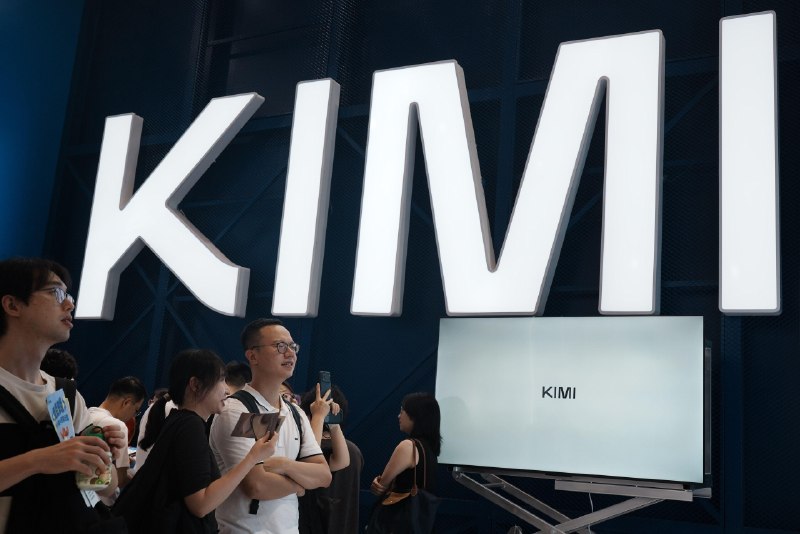
On 21 July 2026, between roughly 01:15 UTC and 10:00 UTC, three separate Chinese-origin signals landed in the same news window. A Hangzhou neurotechnology company, BrainCo, demonstrated a system in which a user wearing an EEG headset steers a robot with their thoughts. A Beijing-listed AI lab, Z.AI, switched on a 1-gigawatt data centre built entirely with domestic chips. And the country’s largest technology recruiters, from internet platforms to chip designers, opened their intake pipeline to secondary-school students still in uniform. Read independently they are three datapoints. Read together they describe a state-coordinated sprint across the three inputs that decide who wins the next decade of artificial intelligence: talent, hardware and compute.
The argument is not that China has already overtaken the United States in frontier AI. The argument is narrower and more useful: Beijing is treating the AI stack as an industrial-policy problem rather than a market problem, and on 21 July the friction between those two operating logics became unusually legible.
The talent pipeline starts in Year 10
The most durable of the three signals is the one aimed at fifteen-year-olds. According to Rest of World’s reporting on 21 July 2026, Chinese AI employers, facing a structural shortage of senior researchers, have begun recruiting directly through high-school summer camps, university-affiliated research programmes and guaranteed undergraduate job offers. The pitch is simple: spend two summers in a lab, get a conditional letter of conversion at eighteen, skip the master’s degree that used to be the default on-ramp. The firms named in the report are not niche; they sit inside the country’s largest internet and chip-design companies.
This matters because the Western talent model is calibrated to a different labour market. In the United States, frontier-lab hiring still flows through a small number of PhD programmes at Stanford, MIT and Carnegie Mellon, with lateral moves between Meta, Anthropic, OpenAI and Google DeepMind. That pipeline is narrow by design and tight at the top. China’s bet, on this evidence, is that the bottleneck to frontier AI is no longer the magic of a few thousand researchers, it is throughput. If the public system can graduate and certify 30,000 competent AI engineers a year, the country has bought itself optionality it does not currently possess.
The counterweight is real. American firms still pay more, still issue more equity, and still attract the world’s best. The Rest of World piece itself notes that elite Chinese researchers continue to be poached by Western labs. What has changed is the floor, not the ceiling.
Thought-controlled robots are a demonstration, not a product
The BrainCo demonstration is the most photogenic of the three signals and the one most prone to over-reading. According to AI-Post’s research channel, the Hangzhou-based neurotechnology firm showed a system that uses an EEG headset to detect brain signals and translate them into robot motion. The company is real, BrainCo has shipped consumer EEG headbands for several years and has previously worked with Chinese state media on prosthetics demonstrations. That history is the right context in which to place the latest video: brain-computer-interface research is a global field, with Synchron, Neuralink and academic groups in the United States, Europe and Japan publishing comparable work.
What BrainCo’s 20 July showcase does show is that Chinese consumer-electronics firms can ship EEG hardware at a price point that keeps it out of the press release cycle of the bigger Western players. The technology is no longer confined to clinical labs. Whether that translates into a commercially useful product, a domestic helper robot that a tetraplegic patient can steer without speaking, is a question the demonstration does not answer. Brain-computer interfaces live and die on signal quality, latency, and the unglamorous work of training decoders on individual users. A press demo proves none of that.
A 1-gigawatt data centre, on domestic chips
The clearest signal of the three is operational. According to a Polymarket research feed post on 21 July 2026, Z.AI has begun running a 1-gigawatt AI data centre built entirely with Chinese-designed chips, sufficient power draw, the post notes, to supply roughly 750,000 homes. A gigawatt is a serious number. It is roughly twice the capacity of the largest single-site US hyperscale campuses announced to date, and it implies a chip fleet large enough to be visible in semiconductor-industry yield reporting.
Two qualifications matter. First, the post is a feed item and Z.AI has not, in the source material provided, issued an English-language press release confirming the claim; treat the wattage as plausible but pending independent verification. Second, a gigawatt of nameplate capacity is not the same as a gigawatt of useful inference throughput. Domestic AI accelerators remain behind the leading-edge nodes available to Western buyers, and per-watt performance is the metric that decides whose model trains for the dollar. A facility powered by Chinese chips can still trail on the underlying silicon. The point of the announcement is not that the chips are better. The point is that the chips exist at the scale required to train frontier-sized models without a foreign supplier in the loop.
That is the strategic substance. Compute has become the counterpart of oil in trade-war grammar, and the United States export-control regime has been built around the assumption that cutting Chinese access to leading-edge accelerators would slow the country’s frontier work. Z.AI’s facility, if the figures hold, suggests the constraint is binding for fewer workloads than the controls were designed to assume.
The competing frame: three datapoints, not a doctrine
The case for scepticism is straightforward. Rest of World’s reporting is the strongest of the three sources and is grounded in interviews; the BrainCo item is a single-channel demonstration write-up; the Z.AI figure originates with a Polymarket feed that aggregates third-party signals and has not, in the material available to this publication, been independently confirmed by a tier-one wire. None of these items on their own would justify a structural claim about China’s AI position. Read separately, they are a recruiting story, a robotics video, and an unverifiable capacity figure.
The case for taking them seriously is that they cluster. The talent story tells you the labour side of the strategy. The hardware story tells you the silicon side. The compute story ties them together with capital. A government that wanted to coordinate all three would struggle to choreograph the news cycle this cleanly; a research-and-development ecosystem that was moving in this direction would.
The Western counter-frame is the one the export-control regime is built on: that domestic silicon and domestic talent cannot, at present generation, substitute for what Western labs have. That frame remains credible. The question the 21 July signals raise is over what horizon it remains credible.
What remains uncertain
Three things this publication could not resolve from the source material. First, the precise wattage and chip mix of the Z.AI facility; the Polymarket feed gives the headline number but no process-node breakdown. Second, the conversion rate of the high-school recruiting pipeline, how many of the fifteen-year-olds signing up today will still be working in AI at twenty-five. Third, whether BrainCo’s demonstration represents a step-change in decoder accuracy or a curated press moment.
These are the open items. They are also the items that will determine whether the 21 July signals describe a regime change or a launch video.
Desk note: the standard Western wire line on Chinese AI is to highlight export-control evasion and a hand-waved talent gap. This piece keeps that line as a counter-frame but lets the three Chinese signals, a research outlet, a research Telegram channel, and a Polymarket research feed, carry the rest of the weight, on the working assumption that a coordinated sprint needs to be reported on its own terms before it is judged.
Wire provenance
This editorial synthesis draws on the following public wire/social posts:
- https://t.me/aipost
- https://x.com/polymarket/status/1950000000000000000
- https://en.wikipedia.org/wiki/BrainCo
- https://en.wikipedia.org/wiki/Brain%E2%80%93computer_interface
- https://en.wikipedia.org/wiki/Zhipu_AI