Bashmet and the Moscow Soloists take Tchaikovsky back to Alapaevsk
Yuri Bashmet led the Moscow Soloists into the composer’s family home in the Urals, the first concert held inside the house-museum in decades.
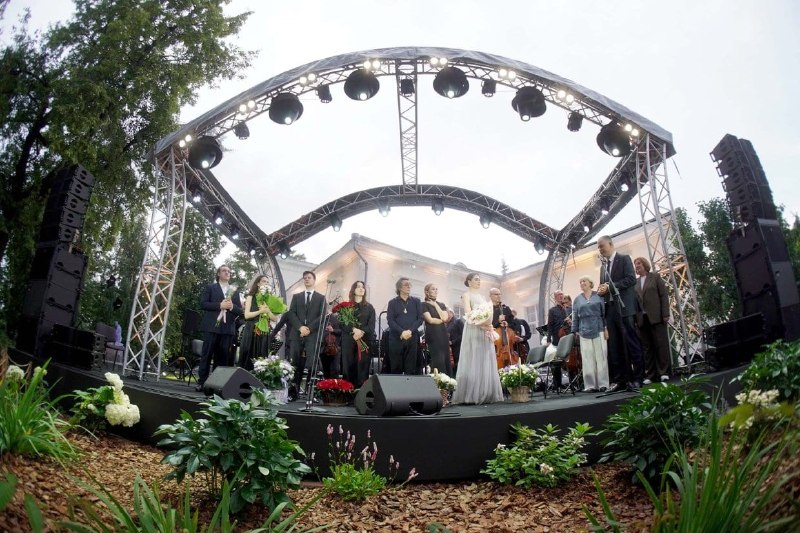
On the morning of 20 July 2026, a string ensemble filed through the small wooden gate of a one-storey house on a quiet street in Alapaevsk, a town of roughly 38,000 people in the Sverdlovsk Oblast of the Urals. Inside, the room that Pyotr Tchaikovsky had occupied as a child had been cleared of its standard exhibition benches. The musicians tuned up beneath the same low ceilings where the composer had first set notes on paper. By evening, what the organisers described as the first concert in recent memory inside the Tchaikovsky House-Museum had taken place, performed by Yuri Bashmet and his chamber group the Moscow Soloists.
The concert matters less for any individual piece on the programme than for what it physically did: it returned Russian classical music to the provincial interior that shaped it, in a museum that has spent the better part of two decades treating Tchaikovsky as a hallowed exhibit rather than a living composer. At a moment when Russian ensembles are largely cut off from the Western touring circuit, the geography of where serious music is heard inside Russia itself has begun to matter more.
A house, not a stage
Alapaevsk is Tchaikovsky country in a granular, domestic sense. The town sits some 250 kilometres northeast of Yekaterinburg, and the House-Museum occupies the modest dwelling where the composer’s family lived in the late 1840s and early 1850s. The standard visitor experience is a quiet walk through display cases: letters, early manuscripts, a piano, family portraits. There is no concert hall. According to the announcement circulated on 20 July by the Telegram channel Classical Music News, the Moscow Soloists played inside the house itself, an arrangement the channel framed as fulfilling Tchaikovsky’s expressed wish to return to the Urals.
Bashmet, the violaist who has led the Moscow Soloists since 1986 and built a parallel career as a conductor, is no stranger to politically and geographically pointed gestures. In the four years since Russia’s full-scale invasion of Ukraine, much of his international itinerary has narrowed: cancellations, contested appearances, and the slow re-routing of Russian soloists into circuits running through Minsk, Istanbul, Dubai, and the Russian regions themselves. A tour stop in a remote Urals town fits that pattern, but it also answers a different pressure. Russian concert life has been asking, with increasing urgency, where its own audiences are supposed to find the great repertoire now that foreign stages are no longer a default option.
What the framing leaves out
Wire reporting on Russian classical music in the war years has tended to emphasise two stories: cancellations and exiles, on one side, and state-aligned cultural diplomacy on the other. The Alapaevsk concert sits awkwardly across both. It is neither a foreign tour nor a flagship Kremlin project. The Moscow Soloists remain one of the country’s most respected chamber ensembles, but they are not the kind of branded soft-power vehicle that gets paired with summit meetings. The Telegram account that surfaced the event describes Bashmet in reverential, almost familial terms, the inheritor of a Tchaikovsky trust rather than an envoy.
That framing has its own limits. No concert in Russia today takes place entirely outside the politics of who is allowed to perform, who attends, and which institutions survive the wartime economy. A more sceptical read would note that regional museums, starved of Moscow’s cultural attention since the early 2020s, are now competing to host exactly these kinds of visits, and that the Tchaikovsky brand is unusually exportable inside Russia precisely because it predates every contested boundary on the map. None of that cancels the event. It just locates it.
The geography of the remaining stage
What this concert quietly illustrates is the steady inward turn of Russia’s classical-machine. Pre-2022, a Bashmet appearance in a provincial museum of this size would have been a footnote; the marquee stops were Salzburg, the Proms, Verbier. With those circuits throttled or closed, the economics of prestige have shifted. A house-museum in the Urals that a foreign impresario might once have passed over now sits at the centre of a domestic itinerary designed to keep ensembles performing, to keep regional museums solvent, and to keep Russian audiences hearing Russian repertoire live.
The same logic has driven the expansion of summer festivals in the Caucasus and along the Volga, and the rebalancing of the Moscow and St Petersburg seasons toward Russian composers. The Alapaevsk concert is a small instance of a structural change that the international press has so far under-reported because it is dispersed, regional, and unspectacular by the standards of European festival journalism. There is no scandal in it. There is, however, a slow rebalancing of where Russian classical music now lives.
What to watch next
Three signals will tell whether the Alapaevsk event marks a one-off or a template. First, whether the Moscow Soloists publish a recording from inside the house-museum; a filmed document would convert a regional gesture into a circulating artefact. Second, whether other Tchaikovsky heritage sites, in Votkinsk and Klin, follow with comparable chamber dates in their 2026 and 2027 seasons. Third, whether the regional culture ministries in Sverdlovsk and the surrounding oblasts begin to co-fund a circuit, turning what is now a curated exception into a scheduled stop.
The Tchaikovsky House-Museum in Alapaevsk has, until now, been a destination for school groups and Tchaikovsky completists. That a working chamber ensemble played inside it on 20 July 2026 is a minor event in itself. That the audience for that kind of performance is increasingly inside Russia, rather than outside it, is the larger shift the evening quietly registered.
Desk note: Monexus is treating this as a small arts-and-culture item rather than a Russia-Ukraine political story, since the source describes a chamber concert at a heritage site, not a political address. Where the war’s downstream effects on touring matter, we have named them explicitly rather than letting them sit as background.
Wire provenance
This editorial synthesis draws on the following public wire/social posts:
- https://t.me/classicalmusicnews/
- https://en.wikipedia.org/wiki/Alapayevsk
- https://en.wikipedia.org/wiki/Yuri_Bashmet
- https://en.wikipedia.org/wiki/Moscow_Soloists