Argentina's night of shame: what the BBC montage didn't show
The confetti had barely settled on 2026's showcase when Argentina's players were trading kicks and accusations in the tunnel. FIFA now has a discipline file to answer.
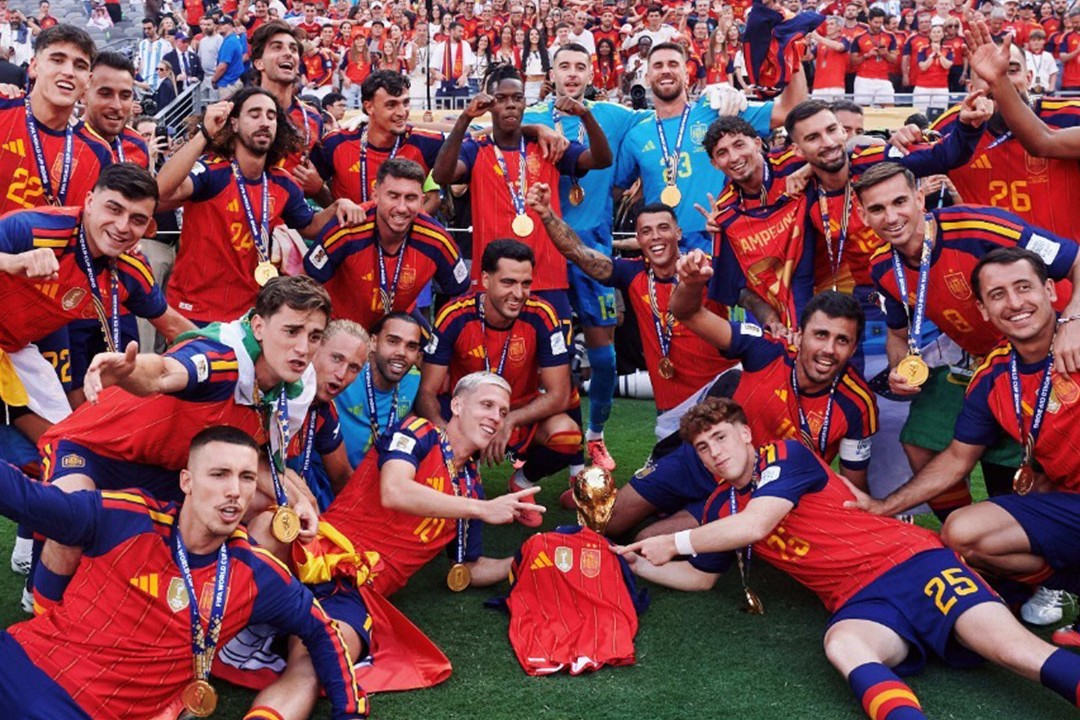
Argentina's players walked off the pitch on 19 July 2026 carrying a trophy and, within minutes, a misconduct file. The 2026 FIFA World Cup final had ended in a swirl of red and white ribbons, and almost as soon as the whistle went, television cameras caught members of the Argentine squad squaring up to Spanish players and, in one sequence that ricocheted around social media, appearing to confront match officials inside the players' tunnel.
Within hours of the final whistle, the BBC reported on 20 July 2026 that Argentina were "likely to face a Fifa investigation" over the ugly post-match scenes. FIFA's disciplinary machinery, dormant for most of the tournament's feel-good run, now has a live case file. The football, for once, will not be the story this week.
A final that boiled over
The match itself went the distance and beyond, which is its own partial explanation for the temperature on the pitch at full time. Spanish players had spent 120 minutes celebrating a tournament they largely controlled; Argentine players had spent the same span trying to deny them. According to the BBC's reporting on 20 July 2026, scuffles broke out at the final whistle and continued into the tunnel area, where staff and substitutes joined in. The footage that has done the most damage for Argentina shows players crowding the officials' path; another sequence shows hands raised near a Spanish player's face.
For FIFA, the question is whether any of that crosses the lines drawn in its disciplinary code: aggression toward officials is treated categorically differently from aggression toward opponents. Both are open to sanction, but the former carries the heavier range of penalties, including match bans and fines that can be levied against federations rather than individuals.
What the broadcaster showed, and what it didn't
The BBC's closing World Cup montage, also published on 20 July 2026, was a different animal by design: a celebration reel built from the tournament's full five weeks. The package leant into the colour, the goals, the underdog runs, and the closing ceremony. It did not feature the tunnel altercation in any extended form. That is editorially defensible for a closing montage, but it also points to a tension in how the host broadcaster has covered Argentina's run. The country that defends the title on the back of a generation-defining captain has, at several points in this tournament, been treated more gently on broadcast than on the wire copy.
Spanish-language and Argentine outlets have run hotter versions of the same incident, with some commentators framing the players' response as protecting a teammate from rough treatment, others as indefensible. The BBC report flagged that FIFA will need to decide whose version of events the disciplinary file carries weight.
Why the case is awkward for FIFA
Argentina is one of the two or three most marketable national teams in the men's game. Lionel Scaloni's squad generated more broadcast minutes, more sponsorship impressions, and more replica-shirt sales than any other at this tournament. That commercial reality does not insulate the federation from FIFA's rules, but it does shape the political appetite for harsh sanctions inside FIFA House. A heavy hand reads, in some quarters, as the governing body picking a fight with its own asset. A light hand reads, in others, as the governing body declining to police the players who fund it.
Both readings are wrong, FIFA will argue, because the disciplinary process is supposed to be insulated from commercial considerations. Whether that insulation holds in practice is a separate question. The federation's recent record on disciplining superstar players at major tournaments has been inconsistent; the precedents this committee cites will matter.
What comes next, and what stays murky
FIFA's standard procedure is to open a formal review, request the referee's match report and the broadcast footage, give the Argentine federation a window to respond, and then announce charges or clear the file. Cases opened during a tournament can take weeks to resolve; some stretch into the next international windows. There is no published deadline for this one.
What remains uncertain, and where the sources disagree, is the precise chain of causation. The BBC's reporting describes the scenes as "ugly" and signals an investigation but does not name specific officials targeted or specific sanctions sought. Argentine-aligned outlets have pushed back on the framing, arguing the players were responding to provocation; Spanish-aligned outlets have framed the same footage as unprovoked aggression. Neither side has produced an authoritative timeline. Until FIFA's review concludes, the narrative will continue to be a contest as much off the pitch as the match was on it.
For now, the trophy is in Argentina's hands and the disciplinary file is in Zurich's. How those two things reconcile will define the closing image of this World Cup more than any montage.
How Monexus framed this: the wire copy led on the FIFA angle; we held to the same factual line and pushed one step further on the structural tension between commercial incentives and disciplinary enforcement, which neither BBC item addressed directly.