Aoun walks a Hezbollah disarmament pitch into the Oval Office, and asks Washington for the army to back it up
Lebanese President Joseph Aun met Donald Trump at the White House on 20 July 2026 with a disarmament plan for Hezbollah and a request for US backing of the Lebanese army. The energy stakes around the eastern Mediterranean sit just below the surface.
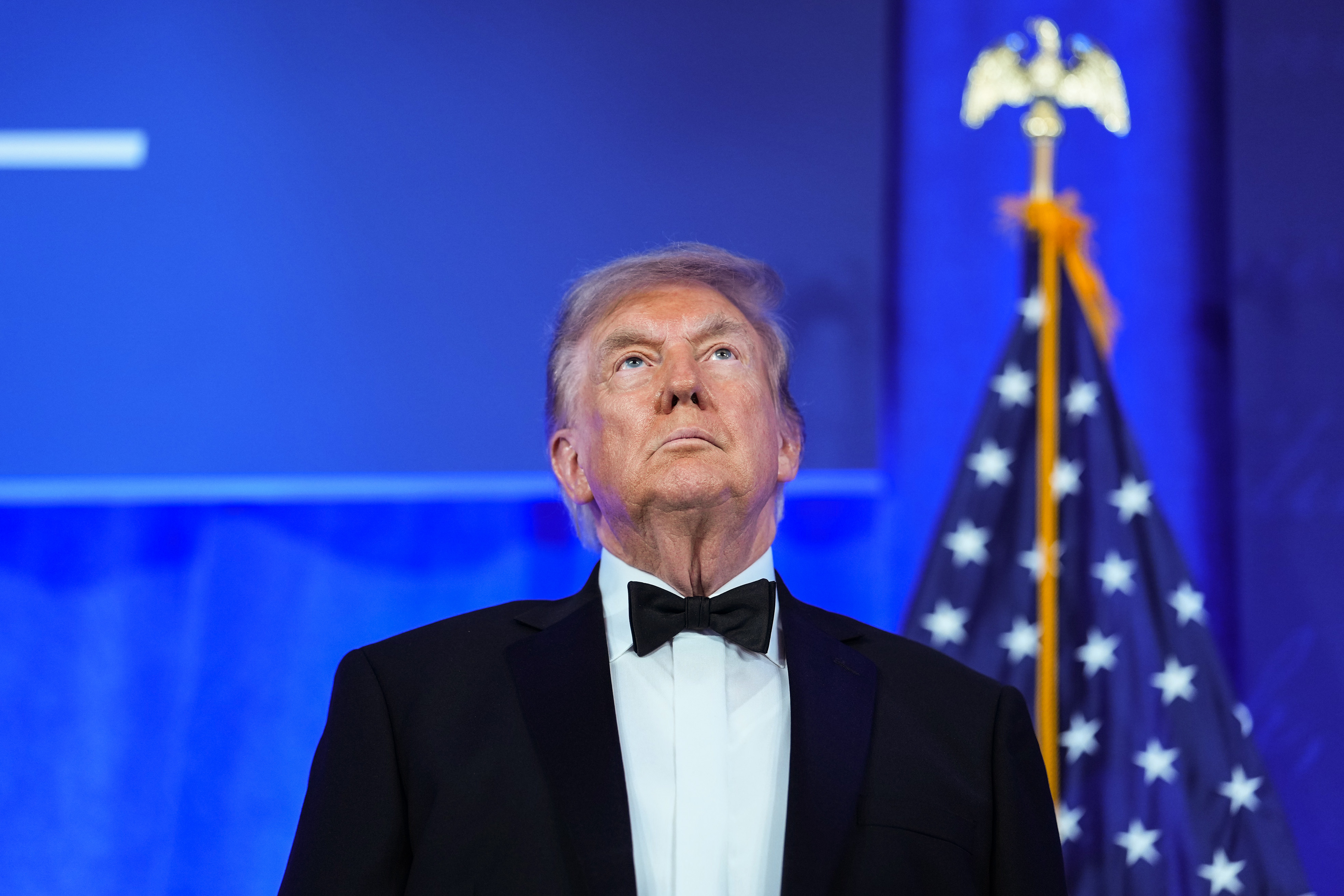
Joseph Aun, the president of Lebanon, walked into the Oval Office on the afternoon of 20 July 2026 carrying a disarmament plan for Hezbollah and a short shopping list for Washington: political backing and help for the Lebanese armed forces. Hours later, the proposal was still being characterised by attendees as a working draft, not a signed framework.
What is unusual is the pairing. A Lebanese president asking an American president to underwrite the disarmament of a Lebanese non-state actor is, on its face, a request to outsource a sovereign security problem. The Lebanese army, the institution Aun wants Washington to underwrite, is the same force that reported being fired on by Israeli units in southern Lebanon earlier the same day, according to open-source monitoring channels tracking the exchange. The diplomatic choreography is being conducted against live fire.
What Aun actually asked for
The substantive ask, as Aun described it in remarks circulated by Lebanese and regional outlets, was narrow on paper and broad in implication. Two items, in his own framing: political support, and support for the Lebanese army so that it can extend state authority into areas where Hezbollah's paramilitary infrastructure has been the dominant armed presence since at least the 1990s. The framing puts the burden on Beirut's conventional forces, not on a foreign disarmament mission, and treats American backing as the multiplier that makes the plan credible.
Reporting from the White House meeting, carried by The Cradle, framed the exchange in transactional terms: American support for the Lebanese army in return for movement on Hezbollah's weapons, with Israel-Lebanon border arrangements folded into the same package. Trump, in his public read-out with the Lebanese president at his side, said the United States "will help" Lebanon. The word "help" is doing the work of an entire treaty text. Whether it translates into money, training, intelligence, or simply diplomatic cover in talks with Israel is, on the public record, undefined.
The Israeli variable, set on a hair trigger
The meeting cannot be read in isolation from the southern border. On the same day as the White House talks, the Lebanese army said its positions were fired on by Israeli forces in southern Lebanon. The incident, relayed by the open-source monitoring account OSINTdefender on 21 July, came amid what the same channel described as ongoing US-brokered Israel-Lebanon dialogue. That is the texture of the file Aun brought with him: an exchange rate measured in ceasefire minutes, not communiqués.
Israeli framing of the southern border is straightforward. Hezbollah's armed wing, even diminished after the 2024 conflict, retains residual rocket and drone capability that Israeli planners take seriously. Israeli security concerns are legitimate and well-documented in the Western wire record; they are also the lens through which any disarmament plan will be judged in Jerusalem. A Lebanese army deployment that credibly fills the security vacuum in the south is one thing. A plan that hands Hezbollah a political amnesty in exchange for a partial weapons handover is another, and the Israeli reading of the Aun proposal leans toward the second interpretation until proven otherwise.
The energy stakes sitting underneath the diplomacy
Lebanon's eastern Mediterranean offshore blocks, dormant through years of dispute with Israel and complicated further by the 2024 conflict, are the quiet subtext of any US-brokered security arrangement. Eastern Mediterranean gas has been on the agenda in Washington, Tel Aviv, and Beirut for the better part of a decade; the unresolved maritime border between Lebanon and Israel is one of the few files where a Lebanese-American-Israeli trilateral has a measurable economic upside independent of the security question. A US-backed Lebanese army with a defined southern border mandate is a precondition for any operator, whether TotalEnergies, Eni, or QatarEnergy, returning to the Lebanese offshore with confidence.
That structural fact does not appear in any of the readouts from the Oval Office meeting. It does not need to. It shapes the patience of every capital in the room.
Counterpoint: what the disarmament pitch actually delivers
The realist counter-reading is straightforward. Hezbollah's political and military apparatus is not a uniformed army that can be disarmed by decree. Its weapons are embedded in a social welfare network, a political bloc inside the Lebanese state, and a regional deterrence posture against Israel. A Lebanese army that is asked to absorb this function without a political settlement inside Lebanon will end up, at best, a tenant of the status quo. At worst, it becomes the target of the very constituency it is supposed to displace.
The structural argument the Western press makes, with varying degrees of directness, is that disarmament of a non-state armed group requires either a political settlement or overwhelming force. Lebanon is unlikely to author either alone. That is the gap the American "help" is being asked to fill.
What remains genuinely unsettled
Three things are not yet on the public record. First, the size and shape of the American commitment: a State Department spokesperson's read-out is not a funding line, and Congressional notification on any new assistance package will be the first hard number. Second, the Israeli position: the same Israeli forces that fired on Lebanese army positions on 20 July are the audience Aun is performing for, and Jerusalem's response has not been published in any of the wire exchanges circulated so far. Third, the timeline: the Polymarket feed treating the meeting as a discrete event says nothing about whether a follow-up framework is weeks or quarters away. The next scheduled contact, on the public record, is the Israel-Lebanon track that was already in motion before the Oval Office meeting.
What can be said with confidence is that the meeting happened, that two specific asks were put on the table, and that the response from Washington was warm enough to be characterised as a commitment but vague enough to be characterised as nothing. The energy of the next phase of this file will come from those two characterisations colliding.
This piece leans on Lebanese and regional outlet reporting for the substantive content of the Aun asks, and on open-source monitoring channels for the security context. Where the Western wire and the regional outlets diverge on framing, the divergence is itself the story.
Wire provenance
This editorial synthesis draws on the following public wire/social posts:
- https://t.me/wfwitness
- https://t.me/osintlive
- https://t.me/thecradlemedia