Airstrike on the Al-Masri house in Gaza kills children, exposes a widening targeting gap
An Israeli strike on a home belonging to the head of a Gaza chamber of commerce killed children and underscored how the wire services are diverging on what counts as a verifiable civilian toll.
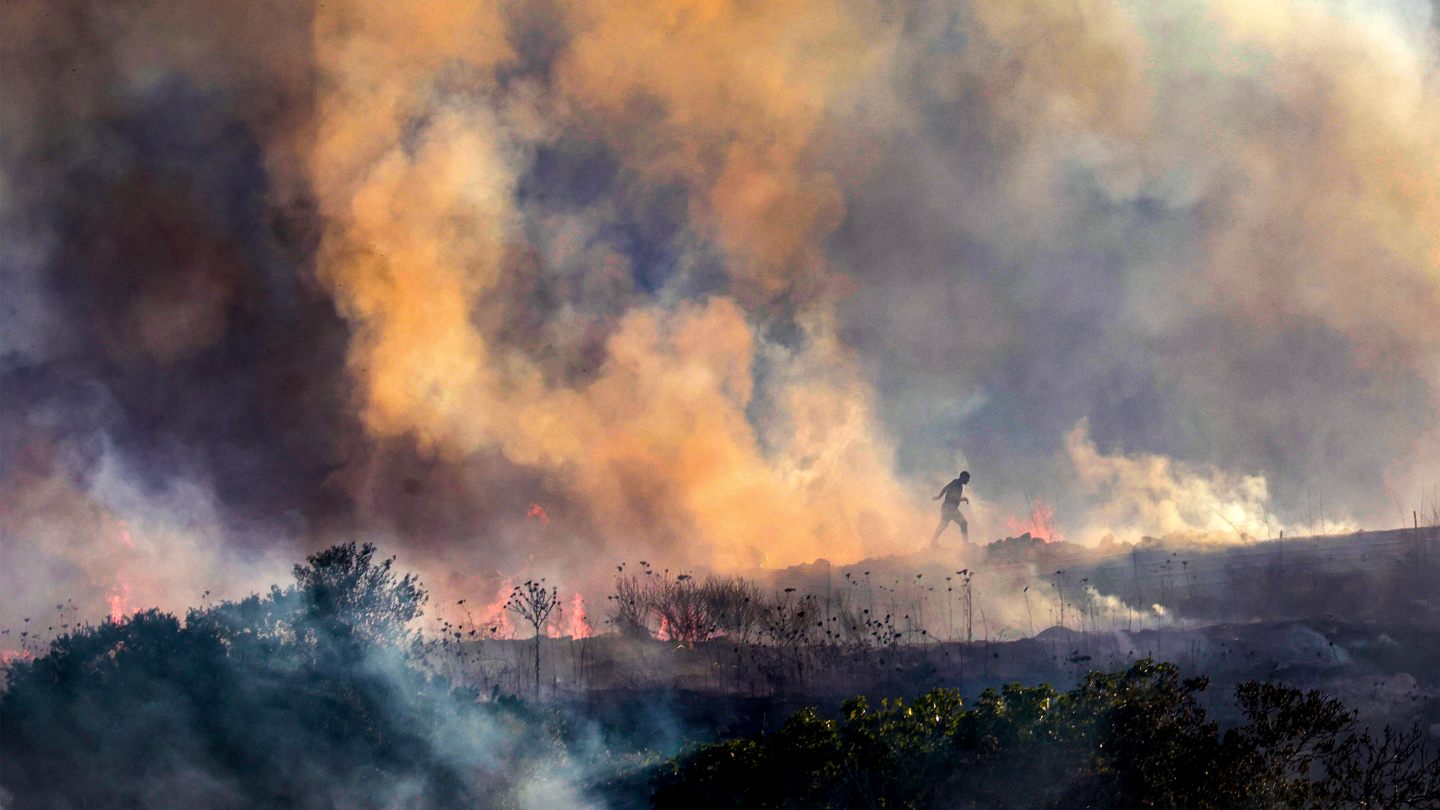
At 05:28 UTC on 21 July 2026, channels in Gaza circulated the first footage of retrieval crews pulling the charred remains of children from a residential compound hit overnight. The target, identified in the same posts as a house belonging to the Al-Masri family, was described as belonging to the head of a local chamber of commerce. The footage, hosted by the Telegram channel gazaenglishupdates, showed dismembered bodies wrapped in plastic sheeting at the foot of a stairwell still dusted with powdered concrete.
The strike lands at a moment when the information environment around the war in Gaza has grown narrower, not wider. Western wires continue to publish IDF Spokesperson briefings at face value. Gaza-based outlets publish casualty counts the IDF rejects as inflated. The result is a public record in which the most basic facts about a single house strike on a single morning in July are still being contested two hours after the event.
The strike, as the sources allow it to be reconstructed
The thread circulating on 21 July 2026 at 05:28 UTC contains a single descriptive paragraph and a single short clip. It identifies the targeted structure as a house belonging to the Al-Masri family and names the head of that family as the head of a Gaza chamber of commerce. It uses the phrase "the occupation's air force", a framing common to Gaza-based outlets that places responsibility on the Israeli Air Force rather than neutrally attributing the strike.
No Israeli military statement had been published in the materials available at the time of writing identifying the target by name, confirming the civilian status of those killed, or commenting on whether the strike was directed at a named individual rather than the structure. No wire service had filed its own casualty count. No name of a survivor or relative had yet been independently verified.
That asymmetry is the story.
What a chamber-of-commerce address usually means in Gaza
The framing of the building as belonging to "the head of the Chamber of Commerce" deserves more weight than it has so far received in Western coverage. The Palestinian Chambers of Commerce federation, headquartered in Ramallah, operates a network of city-level chambers that function as quasi-official commercial registries, intermediaries between local merchants and the Palestinian Authority, and conveners of donor-funded reconstruction coordination. The head of such a chamber is not, in most cases, a political-security figure of the kind that would justify a pre-announced targeted killing.
That does not foreclose the possibility that the named individual held a secondary function, or that the IDF has intelligence about the structure that has not been disclosed. It does, however, mean that the available public description of the target does not, on its face, match the standard pre-strike disclosure the IDF has used elsewhere in the war, where named militant figures are typically identified by name and affiliation within hours of a strike.
Why the wire consensus has thinned
Two structural pressures explain why the gap between Gaza-based reporting and Western-wire reporting has widened rather than narrowed as the war has progressed. The first is access. International wire journalists have not been able to enter and exit Gaza freely for months. Most named-byline Gaza coverage is now produced by stringers operating under local reporting conditions whose independence cannot be externally verified at the point of publication. The second is institutional caution. Mainstream outlets have tightened pre-publication review on casualty claims after several early-war figures, drawn from a single Hamas-run ministry source, were later revised down by the same source itself. The corrective was legitimate. The cumulative effect has been that any figure, including verifiable civilian deaths from a single named house, now arrives in Western editions with a thicket of hedges that Gaza-side outlets do not impose on themselves.
The result is a public record in which the IDF's most consequential claims about who is being struck and why are carried with minimal friction, while claims about who has been killed carry maximal friction even when the underlying footage is gruesome and the location named.
The stakes if the gap holds
If the gap between Gaza-based footage and Western-wire text continues to widen through the summer, three downstream effects become likely. First, the diplomatic audience for Israeli strike justifications will become even narrower than it is today, as allied capitals find themselves unable to cite a single uncontested civilian-casualty figure across an entire week of reporting. Second, donor governments coordinating reconstruction will find themselves negotiating with Palestinian commercial intermediaries, including the chamber-of-commerce layer represented by the family struck overnight, whose own risk of being targeted in future strikes has now been visibly raised. Third, the standing of Western-wire Gaza coverage itself will continue to erode, as readers who can read Arabic or follow Gaza-side channels in real time notice how thin the wire version of the day's events has become.
The next test will be whether the IDF publishes a named-target justification for the Al-Masri house within the standard 12-to-24-hour window, or whether the strike joins the long list of overnight actions that pass from footage into archive without a formal accounting.
How Monexus framed this: the desk treated the Telegram clip as primary scene-setting evidence only, and resisted the temptation to assign a casualty count, identify survivors, or attribute motive beyond what the source itself states. Where Western-wire coverage of Gaza has narrowed, Monexus leans on Gaza-side sources for the visible record while marking the framing difference in prose.
Wire provenance
This editorial synthesis draws on the following public wire/social posts:
- https://t.me/gazaenglishupdates