Yemen's provinces roll out street backing for a Saudi-bound maritime shutdown
Public rallies across four Yemeni provinces on 20 July 2026 throw a civilian frame around the armed forces' order to halt shipping headed for Saudi Arabia, raising fresh questions about who controls the country's levers of escalation.
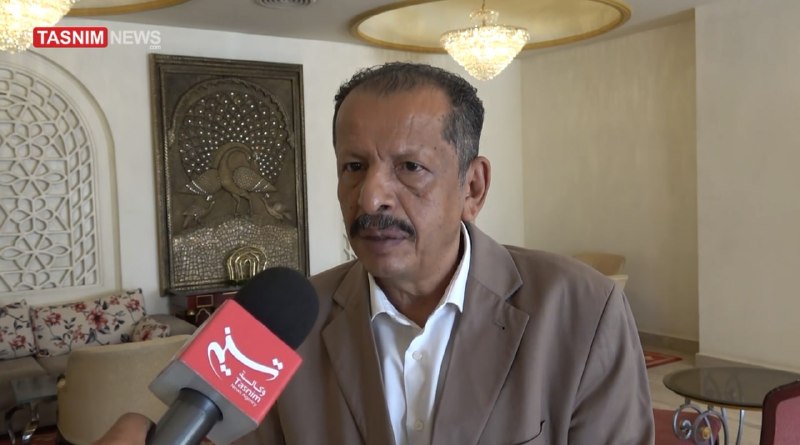
Public squares in Saada, al-Mahwit, Hajjah and al-Jawf filled on 20 July 2026 with residents answering a call to back the armed forces' decision to halt maritime traffic bound for Saudi Arabia, according to a cluster of dispatches from the Beirut-based outlet Al Alam carried on its Telegram channel between 13:51 and 13:57 UTC.
The rallies are the street-level accompaniment to an escalation that has been building inside Yemen's command structure for weeks. They convert what had been a military order into a popular mandate, and they arrive at a moment when Red Sea shipping, Saudi coastal infrastructure, and the wider choreography of the Yemeni file are all in play. The choreography matters as much as the shipping.
Four provinces, one script
Al Alam's feed moved through the map in roughly the order of Yemen's northern heartland. At 13:51 UTC, the channel reported that residents of Bart al-Anan, in al-Jawf province, declared support for the ban. At 13:54 UTC, the city of Hajjah in Hajjah province followed. At 13:56 UTC came al-Mahwit province. At 13:57 UTC, Saada, the political centre of gravity for the country's ruling armed movement, hosted what the channel described as a massive rally.
The sequencing tells the reader two things. First, the geographic base of public mobilisation remains concentrated in the Houthi-controlled north, with the provinces bordering Saudi Arabia (Saada, Hajjah, al-Jawf) carrying the heaviest visible weight. Second, the timing compresses what could have been days of regional coverage into a single news cycle, allowing a unified message to reach external audiences inside one newsroom shift.
Whose shipping, whose closure
The substance behind the rallies is a maritime interdiction aimed at vessels headed for Saudi ports. That interdiction, when it lands on the water, operates inside one of the world's most sensitive corridors: the Bab el-Mandeb and the southern Red Sea approach to the Suez Canal, which together carry a meaningful share of global container traffic and the bulk of Gulf energy exports to Europe.
The framing inside Yemen is that this is a defensive, sovereign act, a popular seal on an armed-forces order. The framing from Riyadh, when it engages at all, treats maritime pressure of this kind as a threat to the kingdom's economic security and to the freedom of navigation that underwrites global trade. Both framings are partial; the corridor itself is the third actor, because any sustained enforcement effort there will quickly draw in insurers, naval escorts, and the commercial decisions of shippers who can reroute around Africa at a cost the market eventually passes to consumers.
What the public square signals
Rallies of this kind do not by themselves change a single ship's heading. They do something quieter and more durable. They narrow the political space in which a future de-escalation can be negotiated, by making any rollback look like a betrayal of an expressed popular will. They also test the cohesion of the governing coalition: turnouts in Hajjah and al-Mahwit, where the armed movement's grip is less total than in Saada, give an early read on whether the call still travels across provincial lines.
For external observers, the rallies are a reminder that the Yemeni armed forces do not act as a free-standing militia. They sit on top of a mobilised civilian base that is asked, periodically, to demonstrate, endorse, and bear the cost of decisions taken in the name of national defence. Whether that base would be asked to celebrate a climbdown is the open question the current choreography has not yet had to answer.
The road that runs through the water
A maritime interdiction backed by street mobilisation is a specific kind of pressure tool. It punishes a counterparty's revenue, tests international tolerance, and creates a pretext for outside navies to reposition. It also raises the price of any eventual settlement, because the domestic audience that rallied today will be the audience that any future peace must not humiliate.
For Saudi Arabia, the operational question is how to harden port approaches, reroute exposed cargo, and keep the oil-export machinery running at the cadence global markets expect. For the international shipping industry, the question is whether the insurance and routing calculus that followed earlier Red Sea disruptions returns in force. For the armed authorities in Sanaa, the question is whether the maritime instrument retains its punch as the gap between street mobilisation and concrete results widens. Watch the insurance premia, the escort-task-force deployments, and the next round of provincial rallies. That is where the politics of this corridor will be visible before it is named.
Monexus framed this around the civilian mobilisation layer that Al Alam documented, rather than the military order itself, on the working assumption that the rallies shape the negotiating ceiling as much as the navy's tasking shapes the waterline.
Wire provenance
This editorial synthesis draws on the following public wire/social posts:
- https://t.me/alalamfa/0
- https://t.me/alalamfa/0
- https://t.me/alalamfa/0
- https://t.me/alalamfa/0