Yemen's Houthis declare a maritime blockade on Saudi Arabia, escalating a twelve-year feud into the Red Sea corridor
On 20 July 2026, Yemen's Houthis announced an immediate ban on maritime navigation to and from Saudi Arabia, the most direct challenge to the kingdom's shipping since the start of the Gaza war-era Red Sea campaign.
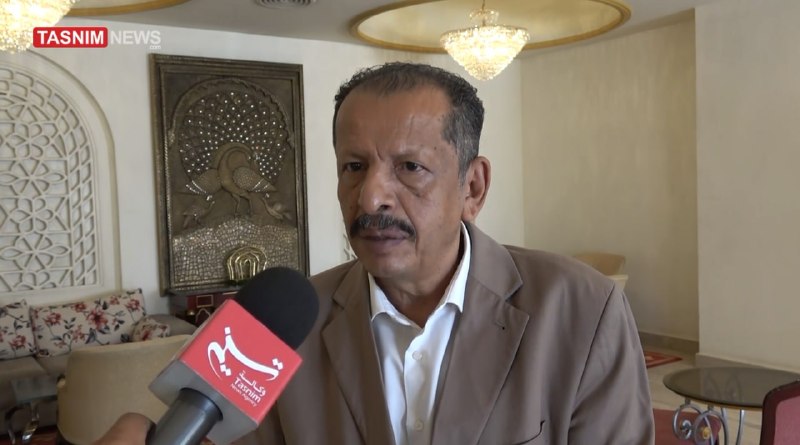
At 12:04 UTC on 20 July 2026, the spokesperson of the Yemeni Armed Forces read a statement declaring a ban on maritime navigation to and from Saudi Arabia, framing the move as a "blockade for blockade" response to what the group described as nearly twelve years of Saudi-led siege against Yemen. The announcement, carried in full by The Cradle and amplified within minutes by Clash Report and Haqq Intel channels on Telegram, marks the first time Ansar Allah has formally extended its naval campaign from the southern Red Sea corridor into a direct embargo of the kingdom's coastline.
The escalation is procedural as much as military. Until now, the group's maritime pressure has run through third-country hulls: commercial vessels transiting the Bab el-Mandeb that the movement judged connected to Israeli trade or to states backing the Gaza war. A blockade targeting Saudi-flagged and Saudi-bound shipping inside the Red Sea is a different proposition. It puts the kingdom's own import routes, particularly the Jeddah and Yanbu terminals on the western coast, inside the operational scope of the Yemeni forces that have spent two years refining anti-ship ballistic missiles, naval drones, and unmanned surface vessels.
The wording, and what it signals
The Cradle's text of the armed forces' statement frames the order in language designed to echo, deliberately, the Saudi-led coalition's own naval embargo of Yemeni ports between 2015 and 2022. The phrase "blockade for blockade" is a rhetorical inversion: what the coalition imposed by air and sea for years, the movement now claims to impose in return. According to the Telegram channel The Cradle, the announcement also calls for continued general mobilization inside Yemen, suggesting the political leadership intends the declaration to be read as durable rather than tactical.
That matters because the group has invested considerable effort, since the November 2023 attacks on shipping in the Red Sea began, in presenting its operations as conditional and reversible: tied to the war in Gaza, calibrated to specific cargoes, and announced in advance. A standing maritime embargo against a single neighbouring state, with no obvious off-ramp, marks a break with that pattern.
Why Saudi Arabia, and why now
The targeting of Saudi Arabia rather than Israel or its Western enablers is the most consequential feature of the announcement. The kingdom withdrew from direct frontline confrontation in Yemen after the 2022 Beijing-brokered détente with Iran, and has spent the intervening years rebuilding trade ties and managing a fragile internal calm. A formal Houthi naval embargo inside the Red Sea complicates that posture, and does so at a moment when Saudi Arabia is the only Arab state with the maritime surveillance and strike capacity to act on it.
According to the Telegram channel RN Intel, the announcement was framed as a response to "ongoing aggression" rather than to any specific incident on 20 July. That framing leaves open the question of whether the trigger is kinetic, political, or both. The sources do not specify an immediate precipitating event on the Saudi-Yemeni land border or in the Saudi-led coalition's air activity; the Yemeni statement itself grounds the decision in the cumulative weight of the long siege.
The Houthis have also used the announcement to mobilise politically inside Yemen. The Cradle's text quotes the movement calling on "the sons of our great people to continue general mobilization," language that mirrors earlier wartime statements and signals that the political leadership in Sanaa intends the maritime order to be matched by a renewed domestic posture.
What stays uncertain
The sources do not specify how the blockade will be enforced operationally, nor which classes of vessels it covers. The Cradle's text frames the order in general terms, and the Telegram channels relaying it do not add technical detail. It is also unclear whether the order extends to third-country vessels trading with Saudi Arabia, or only to Saudi-flagged and Saudi-owned hulls. The difference between the two is the difference between a symbolic gesture and a serious disruption of Red Sea traffic.
A second open question is the response from the Saudi-led coalition and from the Combined Maritime Forces, which has run the multinational naval operation in the region since the Houthi campaign against shipping began in late 2023. None of the source items reviewed here carries a Saudi official statement on the embargo; the kingdom's silence in the immediate hours after the announcement is itself a data point. Whether that silence reflects operational planning, diplomatic back-channeling, or a deliberate decision not to amplify the Yemeni statement is not yet visible in the public record.
The political timing is also unclear. Canadian Foreign Minister Anita Anand was in Pakistan on 20 July for the first Canadian ministerial visit to Islamabad in roughly two decades, a trip that followed a Canadian premier's earlier stop in Saudi Arabia and reflects Ottawa's attempt to widen its Middle East and South Asia engagement. Whether Western governments with skin in the Red Sea corridor will read the Houthi declaration as an opportunity to engage Riyadh, or as a reason to keep their distance while diplomacy runs in private, is a question the next forty-eight hours will probably answer.
The stakes in the corridor
The Red Sea carries roughly twelve percent of global seaborne trade, and the southern stretch from the Bab el-Mandeb through the Suez Canal is the chokepoint the Houthi campaign has already pressured once. Container shipping through the corridor collapsed in early 2024 before a partial recovery as major liners rerouted around the Cape of Good Hope. A second wave of disruption, this time aimed explicitly at Saudi trade rather than Israeli-linked cargo, would force the same commercial calculations again: insurance premiums up, transit times longer, energy and container rates reactive.
The strategic stakes sit higher than freight. The Houthi declaration, if enforced, becomes a working test of whether the post-2022 Saudi-Iranian détente can survive a maritime provocation in the busiest waterway either state touches. Tehran is not named in the sources reviewed here, but the announcement lands inside the same week in which Gulf states and Western capitals are managing a wide portfolio of Middle East files, from the Gaza war's aftermath to the still-unsettled question of a US-Iran nuclear track.
The Houthi movement has spent two years learning how to convert a regional grievance into a global shipping story. By formally extending that story to Saudi Arabia, it has invited the kingdom, the Combined Maritime Forces, and the shipping industry to treat the Red Sea not as a corridor at risk of intermittent disruption, but as a contested maritime space in which the prior rules no longer hold. What the Saudi response will be, and whether the announced embargo translates from Telegram statement into operational enforcement, is the question now moving on every desk in the region.
Desk note: the wire on this story runs almost entirely through Telegram channels sympathetic to or aligned with the Yemeni armed forces (The Cradle, Clash Report, Haqq Intel, RN Intel). Monexus has reported the announcement using those channels as primary text sources and has flagged where independent Saudi, UN, or wire confirmation is not yet in the public record. As Saudi and Western official statements emerge, this story will be updated with the counter-narrative made explicit.
Wire provenance
This editorial synthesis draws on the following public wire/social posts:
- https://t.me/thecradlemedia
- https://t.me/ClashReport
- https://t.me/haqqintel
- https://t.me/rnintel
- https://t.me/thecradlemedia