Yamuna floodplains shrank by a third in a century. Delhi is building on the answer
A new study links a century of floodplain shrinkage to rising flood risk in Delhi, and the policy response so far has been to keep building.
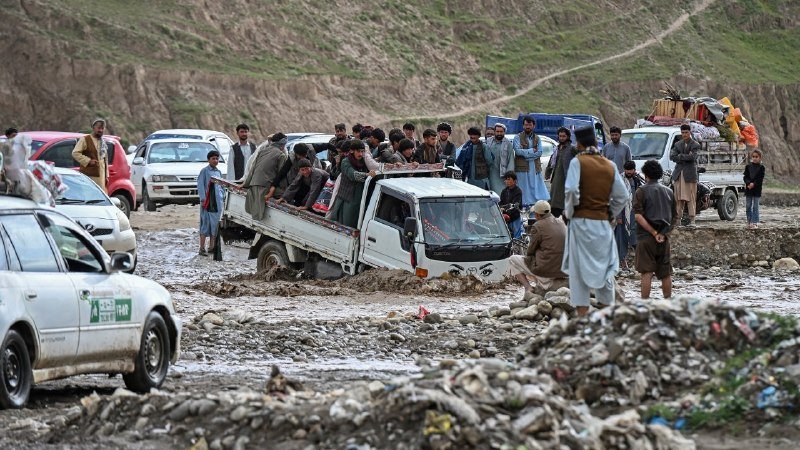
At 03:52 UTC on 20 July 2026, The Indian Express published a study with a finding that ought to be uncontroversial: the Yamuna's floodplains around Delhi have contracted by roughly a third over the past century, and that contraction correlates with the higher flood risk the capital now endures every monsoon. The framing is careful, the methodology is sober, and the policy implication is uncomfortable. Delhi has been paving over the very land that absorbed its floods.
The headline is the easy part. The harder question is why a city that knows its floodplain matters keeps treating it as spare land.
The shape of the loss
The study, as summarised by The Indian Express, traces the shrinkage of the Yamuna's floodplain around Delhi across roughly a hundred years. A third is a conservative read of what residents can see on the ground: satellite imagery going back to the 1990s shows built-up area pressing against the river's low terraces, with the most aggressive encroachment concentrated in the post-2000 window, when Delhi's population crossed twenty million and the city's master plan revisions green-lit exactly the kind of high-density riverside development that floodplains are meant to forbid.
The correlation the study flags is structural, not anecdotal. Every square kilometre of paved floodplain reduces the river's ability to spread its monsoon peak, which forces the same volume of water into a narrower channel, which raises velocity, which raises the height of the flood line in the next low-lying neighbourhood. The flood then hits harder, more often, and farther upstream of the historic flood zone. The mechanism is mechanical. The response, so far, has been more construction.
The Punjab question next door
The same morning's Indian Express feed carried a second story with a different shape but a similar political geometry: the Punjab government's U-turn on a new rural employment scheme, and the political row it triggered. The Indian Express frames the reversal as a fiscal-versus-federal fight, with the state pulling back from a scheme the central government has questioned. Strip away the partisan prose and the pattern rhymes with Delhi's floodplain story. A state administers a policy, the ground beneath it shifts, and the people at the receiving end absorb the cost of the reversal.
What ties the two threads together is the question of who pays when infrastructure decisions are made for short-term political cover. Punjab's scheme and Delhi's floodplain are not the same policy domain, but they share an operating logic: a visible delivery promise that outruns the institutional capacity to keep it.
Why the plains keep getting built on
The Indian Express piece is careful to attribute the shrinkage to a long list of actors: riverfront beautification projects, real-estate pressure on low-lying land, encroachments that have been regularised by successive city governments, and the slow erosion of a regulatory regime that was never strongly enforced to begin with. Each individual project is defended on its own merits. A flyover here, a riverside park there, a slum-clearance scheme that relocates the displaced onto land that used to absorb water. The cumulative effect is the policy, even if no one ever voted for it.
This is the structural point the wire framing tends to flatten. A floodplain is a public good. It does not lobby for itself, it does not file writ petitions, and it does not turn up at public hearings. The constituency for keeping it intact is dispersed, future, and silent. The constituency for paving it is concentrated, present, and loud. Delhi's land politics has, for thirty years, resolved that asymmetry in favour of the loud.
What a serious response would look like
A serious response would start by admitting the asymmetry. The Yamuna's floodplain cannot be rebuilt on a five-year electoral cycle. Restoration timelines run in decades, not in budget windows. That means the institutional answer has to outlast any single government, which is exactly the kind of answer India's urban governance has been least willing to build.
The Indian Express study will, in the short run, become a citation in the next flood tribunal and a footnote in the next court order. In the medium run, the test is whether the finding changes anything on the ground. Delhi is currently mid-cycle on another revision of its master plan, and riverside real estate remains some of the most valuable land in north India. The floodplain will be defended in committee rooms by people who do not live in its flood line.
The study itself is the easy news. The harder story is whether a city that has the data, the law, and the precedent will do anything before the next monsoon writes the next paragraph.
This publication read the Indian Express feed on 20 July 2026 as the wire source. The floodplain study is treated here as a structural land-use story rather than a one-day weather story; the Punjab jobs reversal is used as a parallel case, not a thematic stretch.